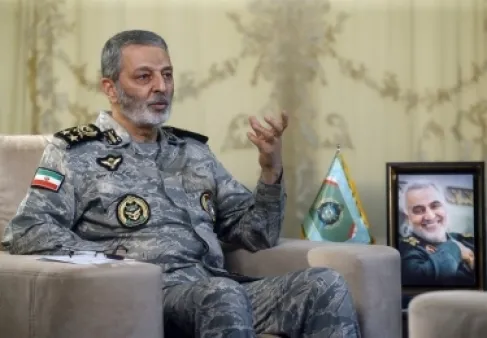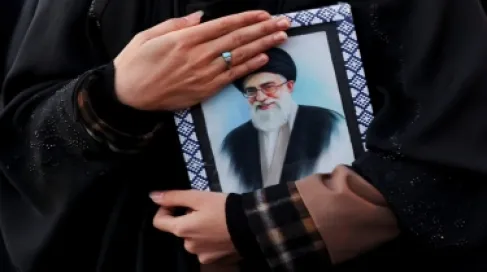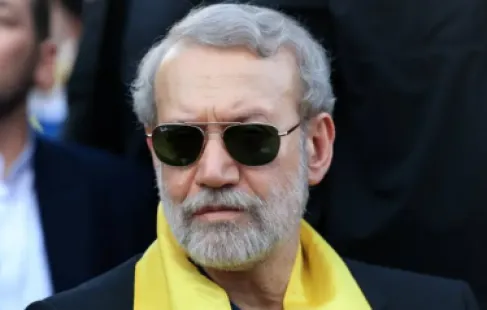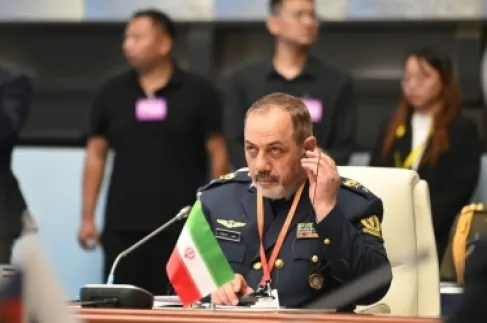
Khaberni - The Israeli occupying army announced on Saturday evening the killing of 7 senior Iranian military leaders during what it described as a "surprise attack" targeting two sites where the leaders were meeting in Tehran.
Meanwhile, the American "CBS News" channel reported, citing intelligence and military sources, that about 40 Iranian officials were killed in American and Israeli raids.
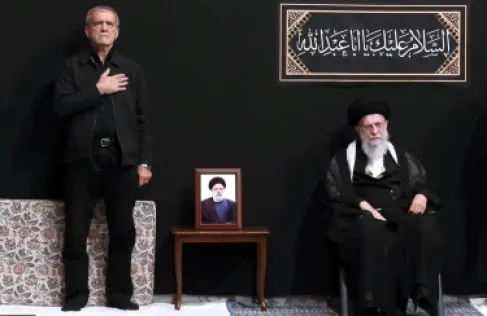
Among the leaders, according to the spokesperson of the occupying army, Evi Dvren, were the commander of the Iranian Revolutionary Guard, the Minister of Defense, in addition to Ali Shamkhani, the security advisor to the Supreme Leader of Iran, Ali Khamenei.
Here is a brief profile of the seven Iranian leaders
Ali Shamkhani
Shamkhani, targeted by Israel in the June 2025 war and thought to have been killed, was appointed as the secretary of the Defense Council at the beginning of February.
Holding the rank of admiral in the Iranian Revolutionary Guard, Shamkhani presided over the Ministry of Defense and the secretariat of the Supreme National Security Council. He was also the first commander of the Revolutionary Guard in Khuzestan province, then led the ground forces of the Guard before becoming the deputy to the chief commander of the Guard.
He rose through the ranks in significant military and political positions over decades before becoming a political advisor to the leader Ali Khamenei since 2023.
Shamkhani played a role in the nuclear negotiations with the United States in 2025 and was the signer of the Beijing agreement to resume relations with Saudi Arabia in 2023.
Mohammad Pakpour
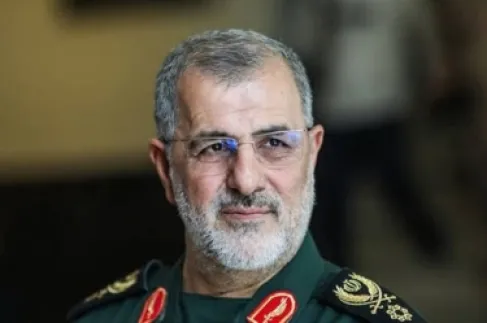
The military leader Mohammad Pakpour was appointed as the general commander of the Iranian Revolutionary Guard in June 2025, succeeding Major General Hossein Salami.
Pakpour, who holds a PhD in political geography, rose through ranks to command the ground forces of the Revolutionary Guard and the "Sabereen" special unit before becoming the commander of the Guard.
The Israeli occupying army claims that Pakpour, born in 1961, led "Iran's plan to destroy Israel," and was responsible for missile attacks and drone attacks on Israel.
Salah Asadi
Asadi held the position of chief of intelligence in the military emergency command, and is the senior intelligence officer in the high command of the Iranian forces.
The occupying army claimed that Asadi participated in "shaping the Iranian strategy" towards Israel and the United States, and was extensively involved in the "plan to destroy Israel."
Mohammad Shirazi
Brigadier General Mohammad Shirazi was appointed head of the military office for the leader Ali Khamenei since 1989, and is always accompanying him.
The Israeli army claimed that he was responsible for "coordinating between the senior leaders of the armed forces and the leader."
Aziz Nasirzadeh
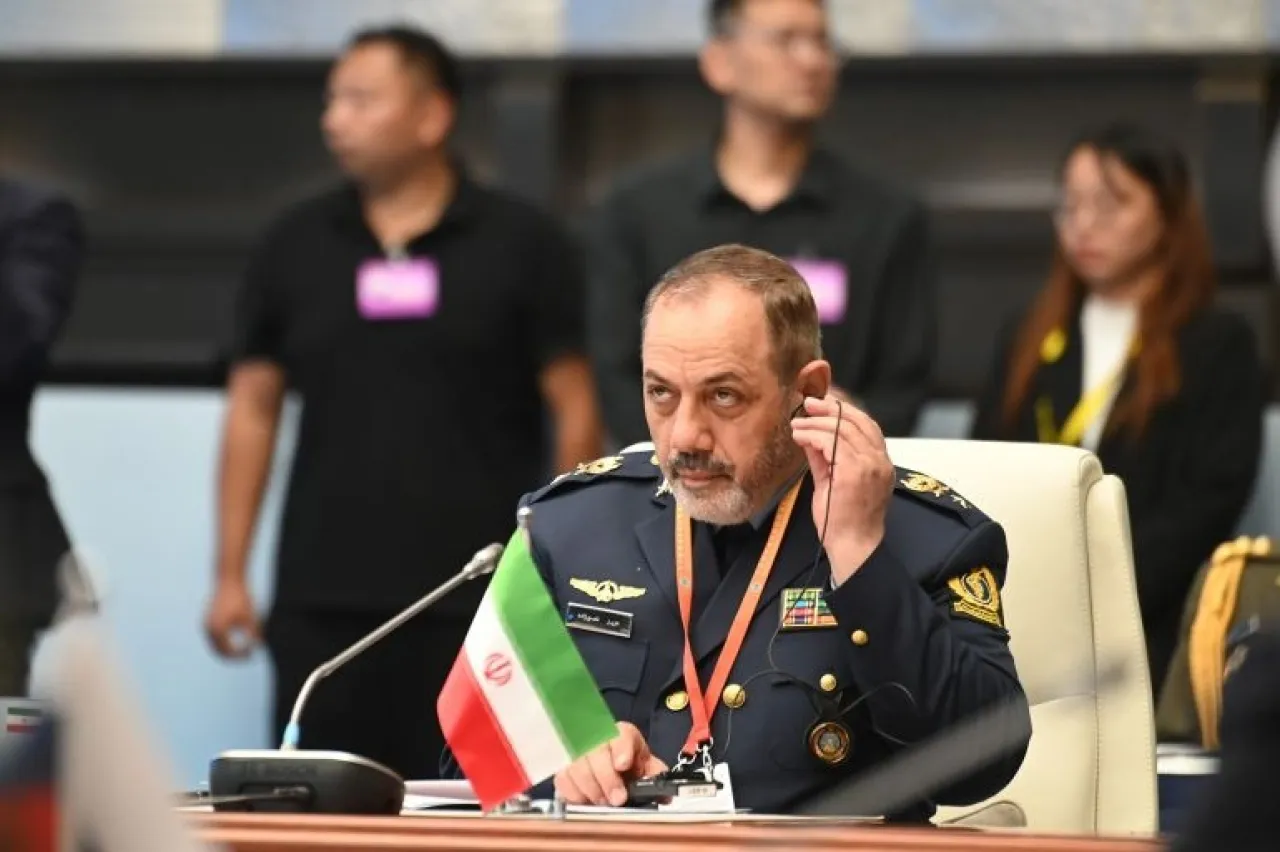
A military leader in Iran, he joined the country's air force at the age of 19 and participated as a pilot in an "F-14" in the Iran-Iraq war (1988-1980), and rose through military ranks until he was appointed deputy to the commander of the Iranian General Staff in 2021.
After Masoud Bazshkian's victory in the 2024 presidential elections, he nominated him to take over the defense portfolio, gaining the parliament's confidence on August 21, 2024, with the highest percentage of votes.
The Israeli army claimed that he was responsible for "missile production industries and long-range weapons," and claimed his responsibility for the Iranian defense innovation organization "Sepand" (SPND), which works on developing advanced defense technology and military technologies.
Hussein Jabal Amil
According to Iran International channel, Hussein Jabal Amil commands the maritime industries in the Iranian Revolutionary Guard.
According to a statement by the occupying army, Amilian was responsible for "developing advanced technologies and weapons" and enhanced "projects in the fields of nuclear, biological, and chemical weapons" over the years.
Reza Mozaffarinia
A commander in the Revolutionary Guard, and the former head of the Iranian organization "Sepand," the Israeli army claims he "enhanced efforts to develop nuclear weapons."
Fars Agency quoted a commander in the Iranian Revolutionary Guard as saying "assassinating the leaders will not leave the slightest impact on the course of progress in this battle," noting that the structure of the Iranian system is designed in a way that allows for the appointment of "competent individuals immediately upon the martyrdom of any of the leaders," according to the agency.
"A highly precise deception operation"
Regarding the details of the raids targeting the Iranian leaders, the Israeli newspaper Maariv quoted a high-level defense official as saying that it was "a highly precise deception operation" led by the intelligence branch of the Israeli army, adding "We launched an attack on Iran and managed to surprise it, which it did not expect."
The official added "We divided the operation area between the Israeli and American air forces," explaining that Israel took responsibility for attacking senior Iranian officials simultaneously, in addition to attacking the city of Tehran.
The Americans, according to the same source, attacked the rest of the areas in Iran.
The plan, the defense official continued, was to attack with a crushing blow from the start, noting "We managed to mobilize almost all of the air forces, which took off approximately simultaneously and reached their targets at the same time," adding that more than 200 Israeli aircraft launched hundreds of shells at 500 targets in Iran simultaneously.