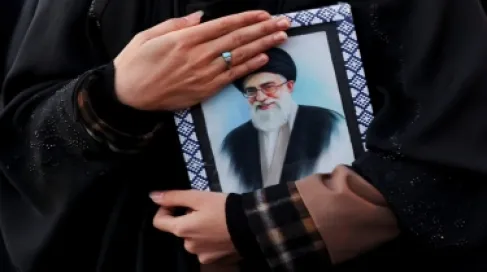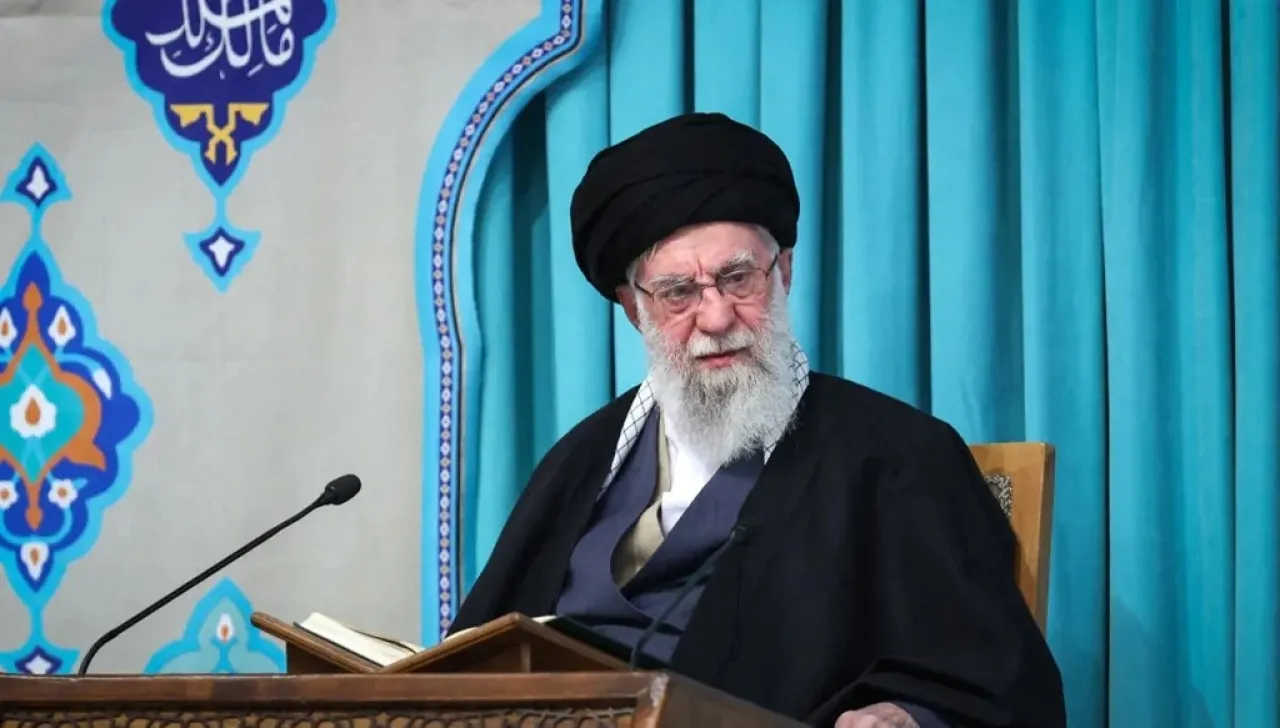
Khaberni - U.S. President Donald Trump, announced early Sunday the killing of Iran’s Supreme Leader Ali Khamenei, during the Israeli-American military strikes on Iran.
Trump said, "This is the greatest opportunity for the Iranian people to reclaim their country."
Due to the complexities of the governing system in Iran, the ideological nature of its popular base, and the strength of the Revolutionary Guard, it is difficult to predict how resilient or weak it may be in the face of any external attack, or what might happen thereafter.
Here is an explanation of how the ruling system there is managed and how a new supreme leader is chosen, and how the attack on Iran might have changed the equation:
The Iranian Constitution
Article 111 of the Constitution of the Islamic Republic of Iran stipulates the arrangement for the position of the Supreme Leader in case he loses the ability or the legal requirements to continue in office.
The article states, "If the leader is unable to perform his duties or loses one of the required qualifications for the position (or it is proven that he lost it from the beginning), he shall be dismissed from his position, and the Expediency Discernment Council of the System shall appoint this matter."
It adds, "In the event of the leader's death or resignation or dismissal, the Council must appoint a new leader as quickly as possible and announce it."
Interpretations of the article indicate that during a period of vacancy or temporary disability, a body or council takes over the leadership duties until a new leader is chosen.
Who could succeed Khamenei?
The supreme leader must be a clergyman according to the Iranian system of the Guardianship of the Islamic Jurist. The theory states that "until the return of the twelfth Shia Imam, who disappeared in the ninth century, a senior cleric must assume authority on Earth."
During the reigns of Khamenei and his predecessor, founder of the Islamic Republic of Iran Ruhollah Khomeini, the supreme leader had the final say in all state affairs, but such a challenge has never been faced before.
Khamenei often exercised his influence through his close advisers. However, following the attacks last Saturday, it is unclear how many prominent figures survived.
Khamenei (86 years old) has never publicly stated that he appointed a successor, and it is unclear who might replace him if his death is confirmed.
His son, Mojtaba Khamenei, was sometimes seen as a potential candidate, but his fate is also unclear. The grandson of his predecessor, Hassan Khomeini, was another candidate, as well as some other senior clergymen.
No remaining figures have Khamenei's stature or influence, and any successor may struggle to control strong interest groups such as the Revolutionary Guard or the higher religious councils.
Emergency Plans
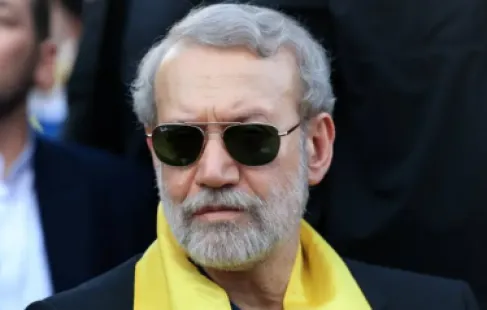
According to a report published by The New York Times, Khamenei had delegated the actual management of the country to Iranian politician Ali Larijani since January 2026, including dealing with protests and preparing for war and managing negotiations.
The report indicates that this delegation grants Larijani an influence that practically exceeds the powers of President Masoud Bzshkyan, with the goal of "ensuring the survival of the regime."
Will the religious ruling system continue in Iran?
The religious elite in Iran controls powerful bodies that extend their influence over all aspects of the political system.
The Assembly of Experts consists of senior religious authorities (Ayatollahs) and is elected every eight years; it is responsible for appointing the supreme leader or guide, and the constitution grants this council the authority to hold the supreme leader accountable and even to dismiss him, although it has never done so.
The Guardian Council, half of whose members are appointed by the supreme leader and the other half by the head of the judiciary, can use veto power to block laws passed by parliament and exclude candidates from elections, powers that have indeed been used to prevent potential critics of Khamenei from running.
Another religious body, the Expediency Discernment Council of the System, appointed by Khamenei, resolves disputes between the elected parliament and the Guardian Council.
Judges in Iran are also clerics, and Khamenei appoints the head of the judiciary. Western countries have imposed sanctions on the current head of the judiciary, Gholam Hossein Mohseni Ejei, due to his violent repression of protesters in 2009 when he was Minister of Intelligence.
Among other influential clerics are the head of the Expediency Discernment Council and former head of the judiciary Sadegh Larijani, brother of Ali Larijani, and also a member of the Assembly of Experts and the Expediency Discernment Council Mohsen Araki and Tehran Friday prayer leader Ahmad Khatami.
How "powerful" is the Revolutionary Guard?
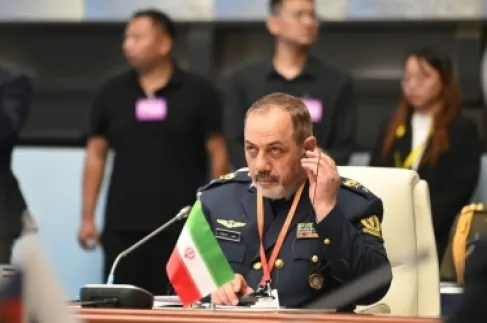
Unlike the regular army, which is under the Ministry of Defense in an elected government, the Iranian Revolutionary Guard receives direct orders from the supreme leader.
The Revolutionary Guard was established shortly after the Iranian Revolution and significantly expanded its role in protecting the Iranian regime during the war with Iraq from 1980-1988, becoming today the most powerful and well-equipped of the Iranian armed forces formations.
Over the past decades, the Revolutionary Guard has expanded its influence in the political and economic scenes, thereby gaining power both domestically and internationally.
The Quds Force, an elite unit of the Revolutionary Guard, has led Iran's regional strategy to support Shia groups across the Middle East, especially in Lebanon and Iraq. This strategy received a blow after the United States assassinated Quds Force commander Qassem Soleimani in an airstrike in Iraq in 2020, and Israel bombed the Lebanese Hezbollah group in a war in 2024.
Authorities resort to the Basij, a paramilitary force under the control of the Revolutionary Guard, to suppress protests.
However, the Revolutionary Guard is likely to play a crucial role in what happens to the Iranian Republic in the future.
Is Iran also a democratic country?
Iranians elect a president and parliament for a four-year term. The president appoints a government to manage daily affairs within the limits allowed by the supreme leader.
In the early years of the "Islamic" Republic of Iran, elections saw significant voter turnout. However, the restrictions imposed by the Guardian Council on candidates and the disputed results in 2009 have undermined many voters' confidence in the process, as well as the dominant role of the supreme leader diminishing the powers of the elected bodies.
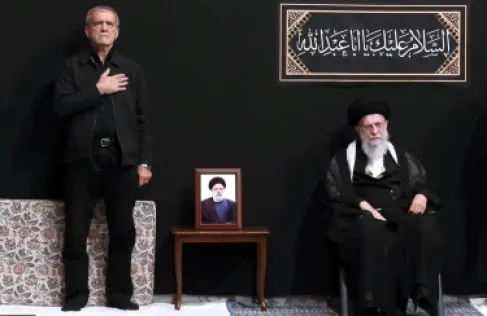
President Masoud Bzshkian, considered a moderate, was elected in 2024 after a first round with about 40 percent voter turnout, and a second round in which about half of the voters participated. At that time, he defeated Said Jalili, a pro-Khamenei, anti-Western figure who remains highly influential.