Khaberni - During the holy month of Ramadan, markets in Arab countries witness a fundamental shift in consumption patterns, where squares and shopping centers become bustling hives of activity.
Despite economic challenges, food spending remains exceptional; market data indicates a rise in family spending between 25% and 50% compared to other months of the year, according to an economic study by the Dubai Chamber of Commerce and Industry, and official data from the Ministry of Supply and Internal Trade Development in Egypt.
The Internal Trade Development Authority in Egypt estimates the consumption of food commodities in Ramadan at about 100 billion Egyptian pounds (2 billion dollars), double the consumption in the other months.
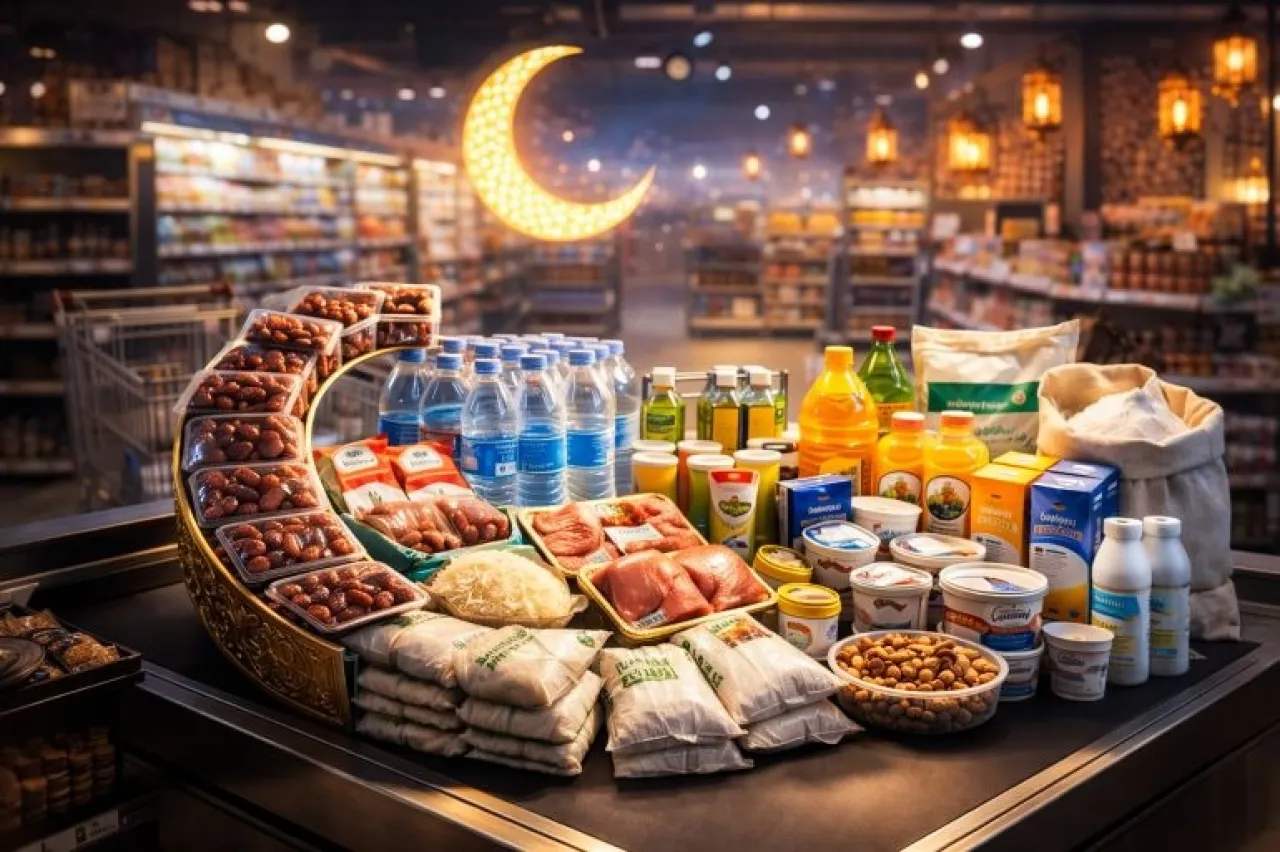
This detailed report lists the top 10 most consumed goods in the Arab world during Ramadan, according to prevailing consumption patterns, according to Al Jazeera:
1- Dates.. Culture and Prophetic Tradition
One cannot discuss Ramadan without starting with dates, as they are universally agreed upon in Arab and Islamic cultures, and the Gulf countries, Iraq, and Egypt are among the largest consumers and influencers in this market.
Date sales peak annually (about 90% of retail sales for some types) in the weeks leading up to the blessed month, according to the Saudi Ministry of Environment, Water and Agriculture.
Dates such as "Sukkari", "Medjool", and "Khalas" top the preference list, and transform from just a fruit into luxurious gifts exchanged among families.
2- Rice.. The Backbone of Meals
Rice is the strategic commodity in most Arab countries, particularly in the Gulf states, Egypt, Iraq, and the Levant.
• In the Gulf, Basmati rice (produced in Pakistan and India) is essential for dishes like "Kabsa" and "Mandi".
• In Egypt, large amounts of rice are consumed, used in "Mahshi" and side dishes.
3- Meat and Poultry.. Protein for "Invitations"
Meat is a gauge of spending in Ramadan, and despite global price rises, demand for it records record numbers this month.
• Poultry: Demand in Ramadan increases up to 45% above normal rates according to data from the Internal Trade Development Authority in Egypt, preferred by families as an economically viable and essential part of daily meals.
• Red meats: Consumption of sheep increases in the Gulf for dishes such as "Thareed" and "Harees", while demand for beef rises in Egypt and the Levant for preparing casseroles and mansaf.
Despite a decline in per capita consumption of red meat in some countries due to inflation (between 8 and 9 kilograms annually) according to reports from the chambers of commerce in Egypt, Ramadan remains the peak season for consuming these meats.
4- Bottled Water.. "Quenching the Thirst of the Fasting"
Some might be surprised to see bottled water on this list, but it is the highest-selling commodity in terms of "unit count".
• Home consumption: Increases significantly to compensate for fasting periods.
• Charitable giving: The major driver for this commodity is "watering mosques", where hundreds of millions of small bottles are purchased for distribution during Tarawih and Qiyam prayers, making it top the sales list in the beverage category.
The size of the bottled water market in Saudi Arabia alone is expected to reach about 2.87 billion dollars by 2025, with a noticeable increase in the consumption of small retail packs in Ramadan due to charities, and distribution in mosques, according to a report by Mordor Intelligence, a market research firm.
5- Vegetable Oils and Ghee
Ramadan is truly the month of "fried foods", with samosas in the Gulf, briks in Tunisia, and luqaimat and qatayef in many Eastern Arab countries; all rely on oils and ghee.
Oil companies record an increase in demand, as huge amounts of frying oil are used in homes and popular restaurants, with reported sales exceeding 50%, according to consumer goods sales reports.
6- Flour.. The Basis of Pastries
The flour trade flourishes in its various forms for preparing bread and homemade pastries.
• The Maghreb: "Semolina" stands out as the primary commodity for preparing couscous, traditional bread, and other dishes.
• The Levant: Demand for fine white flour increases for making sweets, samosa dough, and qatayef.
7- Juices and Ramadan Beverages
There are beverages that appear only in Ramadan, and are considered part of the cultural identity of the holy month:
• Vimto: The most famous beverage in the Gulf, with sales reaching about 30 million bottles annually, most sold during the Ramadan season alone according to company reports.
• Traditional beverages like Qamar al-Din, Licorice, and Tamarind in Egypt and the Levant, commodities that often see demand exceed supply.