Khaberni - The US Embassy in Israel today urged its nationals to leave immediately, while the UK, France, Germany, Poland, and China directed their citizens to take necessary security precautions and prepare for emergencies.
The US Embassy in Israel informed its staff today that they may leave and urged everyone considering departure to do so immediately, amid growing fears of an impending US strike on Iran.
US Ambassador Mike Huckabee stated in an email that discussions with officials in Washington had resulted in a decision allowing staff in Israel to leave if they wish.
According to the Associated Press, a source revealed that the message urged employees wanting to leave to act quickly and begin booking any available flights out of Israel, subsequently heading to Washington.
Huckabee also emphasized in his message the necessity for those wishing to leave to do so today, noting that while some flights might be available in the coming days, this could not be guaranteed, and he advised against panic.
The embassy also noted on X that on February 27, the State Department authorized non-essential US government employees and their family members in Israel to leave due to security risks.
It was clarified that in response to security incidents, the US Embassy might impose additional restrictions or prohibit US government employees and their family members from traveling to certain areas in Israel, including the Old City of Jerusalem and the West Bank, advising departure from Israel while commercial flights are available.
International Warnings
The British government stated that the Foreign Office "advises against all but essential travel to Israel and Palestine," noting that it had taken precautionary measures by temporarily relocating some of its staff and their families "from Tel Aviv to another location within Israel."
While the German Foreign Ministry "strongly advises against travel to Israel as it remains in a state of war," Reuters cited the French Foreign Ministry as saying, "We advise the French in Israel and the West Bank to exercise caution and identify shelter locations."
The Polish Foreign Ministry on X today urged its nationals to leave Israel, Iran, and Lebanon immediately.
It explained that "the security situation in the Middle East is unstable and the risk of escalation is high," indicating the possibility of airspace closure to civilian air traffic, which could make returning by air "impossible or very difficult."
Meanwhile, the Chinese Embassy in Israel today urged its residents there to enhance security precautions and prepare for emergencies, noting "increased security risks in the Middle East."
The embassy stated that Chinese residents in Israel should closely follow new developments and information issued by Israeli authorities. It added that citizens should refrain from traveling abroad unless necessary.
The Chinese Foreign Ministry also stated in a communiqué that Chinese citizens in Iran are also required to strengthen safety measures and leave as soon as possible.
The ministry added that, given the current security situation in Iran, the Chinese Foreign Ministry and its embassies and consulates in the country advise against traveling to Iran at this time.
The embassies and consulates of China in Iran and neighboring countries would provide necessary assistance to those wanting to leave the country, whether by commercial flights or by land.
Escalation of Tension
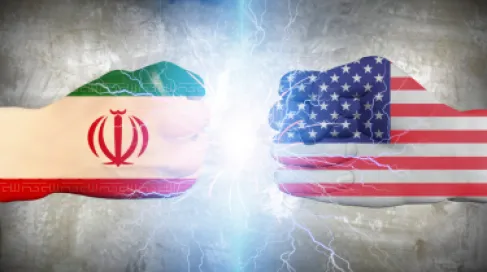
Tensions loom over the Middle East as fears of a military confrontation escalate, prompting several countries to take emergency steps that included withdrawing diplomats' families and non-essential staff, and issuing strict travel warnings to Iran and other countries in the region.
The United States earlier decided to withdraw non-essential staff and their families from its embassy in Lebanon, coinciding with an increase in its military presence in the Middle East.
In Britain, the Foreign Office urged its citizens not to travel to Iran at all, warning residents there, as well as cautioning its nationals in the UAE about potential disturbances related to the increasing regional tensions.
Canada warned of the potential sudden escalation of tensions which could lead to canceled flights or airspace closures, while Germany urged its citizens to leave Iran, confirming that commercial flights continue and land departure is possible.
In Finland, the Ministry of Foreign Affairs recommended avoiding travel to Iran and departing Yemen and Libya immediately in a recent travel advisory update, while Australia requested diplomats' families in Israel and Lebanon to leave.
Serbia urged its citizens to leave urgently, Poland advised its nationals to depart without delay, and Sweden instructed its citizens to avoid travel to Iran and to leave immediately, with India advising its nationals in Tehran to leave by any available means.
Cyprus issued similar instructions, advising against travel and immediate departure, and Singapore emphasized the necessity of continuing to postpone all trips to Iran. Brazil also urged its citizens last week to leave after a similar warning previously issued to its nationals in Lebanon.
Potential Military Escalation
The UN High Commissioner for Human Rights, Volker Turk, today expressed deep concern about the risk of a large-scale military escalation in the Middle East, amid repeated threats from the United States to conduct military strikes against Iran.
Turk stated during a session of the UN Human Rights Council that he was deeply concerned about the potential for regional military escalation and the serious effects this could have on civilians, hoping that reason and wisdom would prevail.
Turk's statements followed a new round of talks between the United States and Iran in Geneva, considered a last attempt to avoid a direct military confrontation between the two sides.
US President Donald Trump had given Tehran a fifteen-day deadline to reach an agreement, as Washington continues its largest military build-up in the Middle East in decades.
Turk also touched on the internal situation in Iran, confirming that conditions remain volatile following the recent security campaign. He noted that the past few days saw a new wave of protests inside universities, reflecting the ongoing existence of grievances and demands among Iranians.