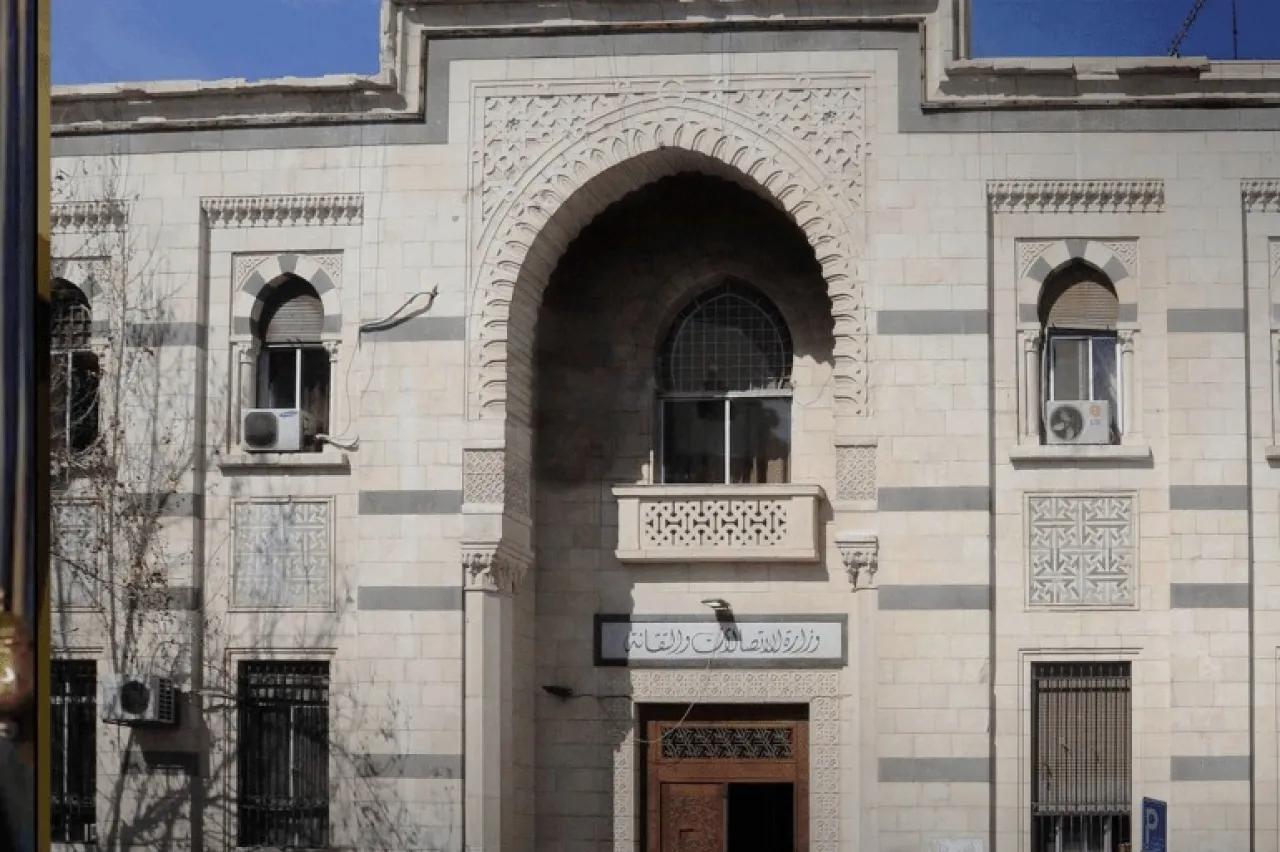
Khaberni - The United States has warned Syria against adopting Chinese telecom technology due to its security risks and its conflict with Washington's interests, according to informed sources at Reuters.
The message was delivered last Tuesday in an undisclosed meeting between a team from the U.S. Department of State and Syrian Minister of Communications Abdul Salam Heikal in San Francisco.
An American diplomat familiar with the meeting said that the U.S. Department of State clearly urged the Syrians to use either American technology or that of allied countries in the telecommunications sector.
An informed source on the discussions stated that Syria is open to partnerships with American companies, but the matter is urgent, and export control and "overcommitment" to them still pose obstacles.
Another source informed on the discussions noted the American side requested clarification regarding the ministry’s plans concerning Chinese telecommunications equipment, explaining that Syrian officials said infrastructure development projects are time-sensitive and that Damascus seeks greater diversification in suppliers.
National Standards
The Syrian Ministry of Communications indicated that any decisions concerning equipment and infrastructure are taken according to national technical and security standards, ensuring data protection and service continuity.
A Syrian businessman explained that Syria is considering purchasing Chinese technology to support communication towers and the infrastructure of local internet service providers.
A spokesperson for the U.S. Department of State affirmed that Washington is urging countries to prioritize national security and privacy over cheaper equipment and services in all infrastructure-related purchases.
The spokesperson added that Chinese intelligence and security authorities legally have the right to compel Chinese citizens and companies to share sensitive data or provide them unauthorized access to their clients' systems.
The spokesperson stated that the promises by Chinese companies to protect the privacy of their clients "completely contradict Chinese laws and established practices".
China has repeatedly denied allegations of using its technology for espionage purposes.
Weakness in Communications Infrastructure
The communications infrastructure in Syria heavily relies on Chinese technology due to U.S. sanctions imposed on successive Bashar al-Assad regime governments following the revolution that erupted after the suppression of anti-government protests in 2011.
Technology from Huawei accounts for more than 50% of the infrastructure of “Syriatel” and “MTN,” the only two telecom operators in Syria, according to a senior source at one of the companies and documents reviewed by Reuters.
Syria aims to develop the telecommunications sector that was destroyed during the 14-year-long revolution by attracting foreign investments.
The Saudi Telecom Company (STC) - the largest telecom operator in the Kingdom - announced in early February that it was investing $800 million to enhance telecommunications infrastructure and to connect Syria regionally and internationally via an optical fiber network stretching over 4500 kilometers.
Syria suffers from a lack of communications infrastructure; network coverage is weak outside urban centers and internet speed in many areas is very poor.