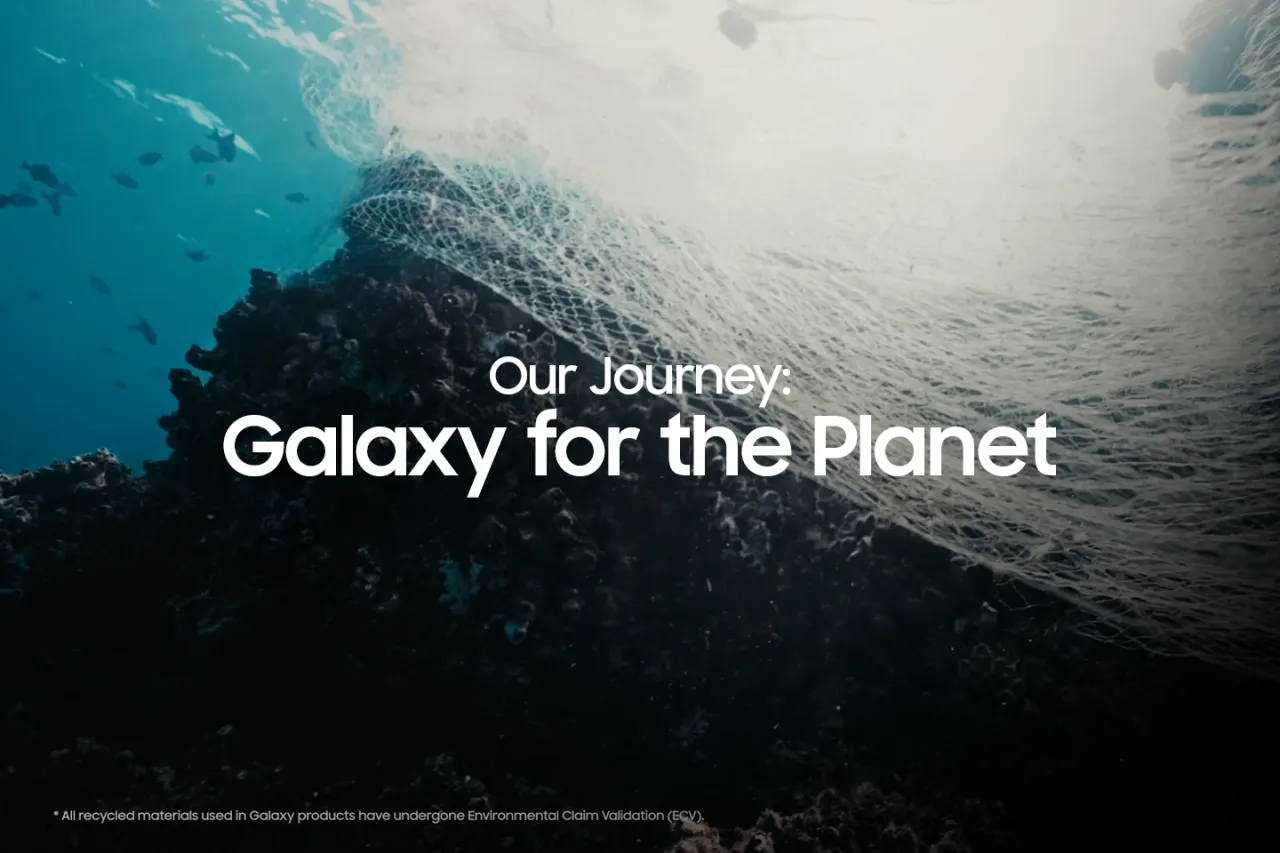
After successfully achieving its goals for 2025, Samsung is expanding the scope of the initiative to address more environmental impacts including water and biodiversity.
Khaberni - Samsung Electronics has announced the launch of the next phase of its Galaxy for the Planet initiative, setting new goals for the initiative for 2030. These new goals follow the great success the company achieved in implementing the four sustainability commitments it set for 2025, aimed at reducing the environmental footprint of product design, manufacturing processes, and operations.
Galaxy for the Planet represents the sustainability platform for Samsung's Mobile eXperience sector, contributing to the long-term business methodology to enhance environmental sustainability. Since its launch, the initiative has made continuous progress in various focus areas, keeping up with developments in technologies, materials, and operational capabilities.
Commenting on this matter, the CEO, Chairman of the Board and Head of Mobile eXperience at Samsung Electronics, TM Roh said: "The remarkable progress we have made in the Galaxy for the Planet initiative reflects the concerted efforts of our teams and partners over the past years. Sustainability is the fundamental pillar of our business methodology and innovation, as it defines mechanisms for designing our products, managing our resources, and providing value beyond the intended purposes of our devices. As we continue working to achieve the goals set for 2030, we are expanding our commitments to encompass broader environmental impacts beyond products and operations."
The progress in the Galaxy for the Planet initiative
Samsung has achieved all four sustainability goals set for 2025 as part of the Galaxy for the Planet initiative, which the company established to reduce the environmental impacts of its mobile devices and operational processes.
Expanding the use of recycled and responsibly sourced materials in Galaxy products has been a key focus for these efforts. Today, Samsung uses 10 types of recycled materials in the external and internal components of its devices, supported by ongoing activities in research, testing, and verification.
Enhancing the concept of a circular economy through innovation in used materials is one of the most important areas of progress in the initiative, integrating types of plastics recycled and retrieved from discarded fishing nets found in seas and oceans. The company has also continued to develop closed-loop operation systems, like the circular supply chain for batteries, which allows for the recovery and reuse of materials from used Galaxy devices.
Samsung has also succeeded in eliminating the use of single-use plastic materials in the packaging of its mobile devices, switching to paper materials and recycled alternatives. While ongoing research and development activities in standby power consumption technologies have reduced the power consumption in Galaxy phone chargers to nearly zero levels, an innovation currently applied in many chargers.
As part of its continuous efforts to enhance sustainability within its global manufacturing operations, Samsung has made significant progress in reducing waste through the application of "zero waste to landfill" practices globally. All ten eligible mobile device manufacturing sites have achieved platinum certification in zero waste to landfill practices according to UL Solutions standards, reflecting waste diversion rates away from landfills of 100%. Waste management practices have been adapted in accordance with regulatory standards and infrastructure in each region.
These achievements embody the progress made by the company under the Galaxy for the Planet initiative, and provide additional momentum for expanding the scope of the initiative in the future. After achieving its initial goals within the set timeline, Samsung is moving forward in expanding its environmental commitments by setting new goals that extend until 2030.
Preserving our environmental commitments
In its next phase, the Galaxy for the Planet initiative will exceed the scope of product-related initiatives to include the broader environmental impact of Samsung's global operations. The new 2030 goals focus on three main areas: the circular economy, sustainable water management, and biodiversity protection.
- Establishing circular practices
Samsung will continue to drive circular economy efforts in all its mobile device products, aiming to incorporate at least one recycled material in each unit of every mobile device it produces. This approach reaffirms the company's commitment to adopting more responsible and efficient material sourcing practices across the entire Galaxy ecosystem.
- Enhancing sustainable water management
Samsung enhances its approach to sustainable water resource management across its mobile device operations, targeting the reuse of 110% of the water consumed. This includes striving to attain the highest level of certification from the "Water Management Alliance," strengthening the implementation of best practices in responsible water management.
- Protecting ecosystems
In recognition of the impact of its operations on ecosystems, Samsung has set a goal to preserve ecosystems equating in size to the geographical footprint of its global mobile device operations. This goal focuses on protecting and restoring natural environments, contributing to enhancing biodiversity and ecological resilience in regions where the company operates globally.
As Samsung continues its journey towards a more sustainable future, the Galaxy for the Planet initiative embodies the company's steadfast commitment to environmental responsibility as a pivotal element in its innovation, operation, and long-term value creation mechanisms, further enhancing sustainability as a fundamental pillar in its corporate strategy.
You can watch the video documenting the initiative's journey via this link.
For more information about the Galaxy for the Planet initiative, please visit the website. Additional details about Samsung's sustainability standards, verification mechanisms, and progress updates are available via Samsung Electronics' sustainability webpage.