Khaberni - The president of the Jordanian Astronomical Society, Ammar Al-Skaji, said that the world will witness a total lunar eclipse on Tuesday, March 3, considered one of the most prominent astronomical events of this year; however, it will not be visible from Jordan as the moon will be below the horizon during the eclipse phases.
He explained that the peak of the eclipse will be at 2:34 PM Jordan time, while the total eclipse phase will last about 58 minutes within a total duration of approximately three and a half hours.
He stated that the event will be visible to about three billion people in East Asia, Australia, the Pacific region, and the Americas, as well as parts of Europe, East Africa, the oceans, and polar areas.
He noted that the full moon will occur on Tuesday at 2:39 PM Jordan time, while the moonrise will be in the evening of the same day between 5:40 PM and 6:40 PM from the eastern horizon, varying by region and elevation within the kingdom, appearing as a normal full moon after all phases of the eclipse.
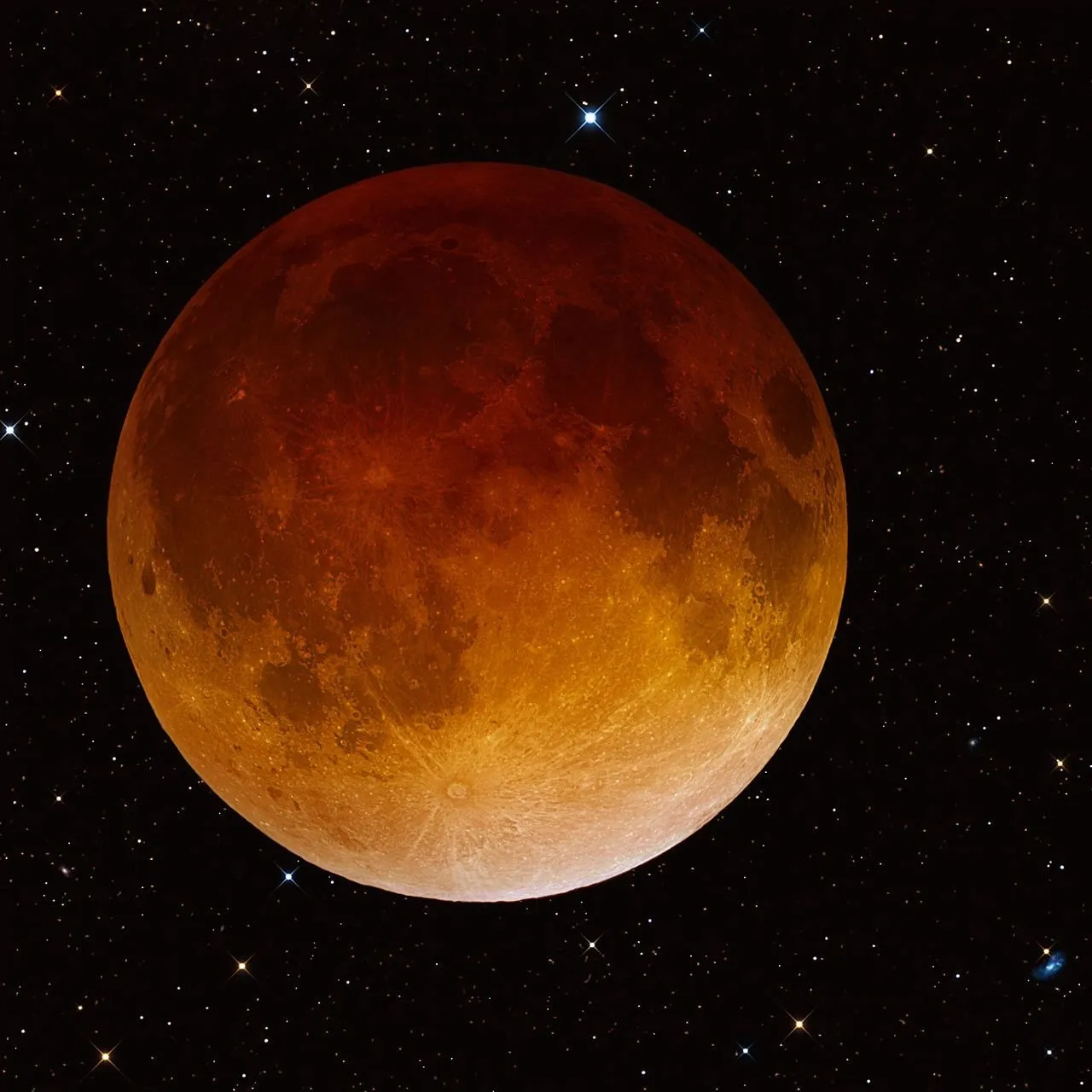
He pointed out that a total lunar eclipse occurs when the sun, Earth, and moon are almost exactly in line during the full moon phase, with the Earth passing between the sun and the moon, causing the moon to fully enter its shadow (total shadow) and gradually turning a coppery red in what is known as a "blood moon."
This red color is due to a physical phenomenon called Rayleigh scattering, where the Earth's atmosphere scatters shorter blue wavelengths of sunlight, while allowing longer red wavelengths to pass through, which is the same reason that gives the sky its red and orange colors at sunrise and sunset.
He added that during the eclipse, the moon will be in the constellation of Leo and the event comes about a week after the moon reaches the closest point to Earth (perigee), making it appear slightly larger than average.
This eclipse belongs to Saros series number 133, which is the twenty-seventh event in this series stretching over many centuries, preceded two weeks earlier by an annular solar eclipse on February 17, 2026, and both events fall within the same eclipse season, reflecting the precision and regularity of the orbital movement of celestial bodies.