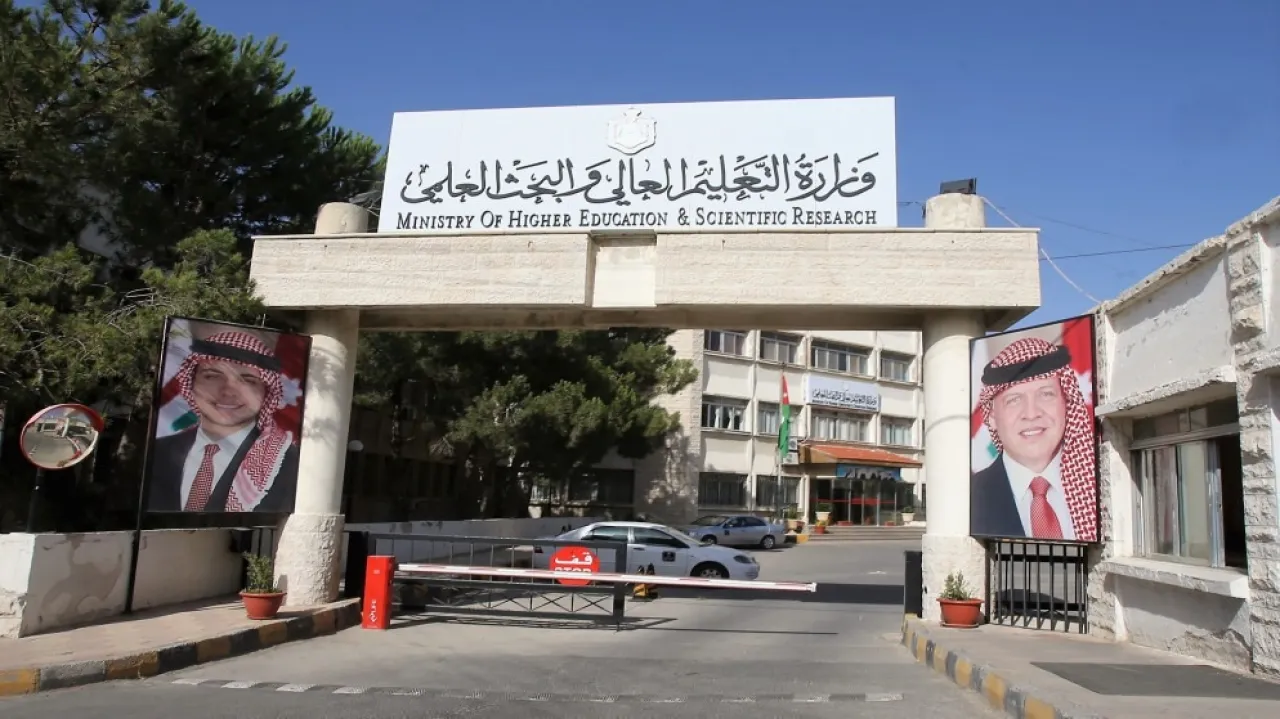
Khaberni - The director of the Unified Admission Coordination Unit at the Ministry of Higher Education, Mohannad Al-Khatib, stated that the decision to cancel the comprehensive exam for diploma students came after a detailed study and considering the students' interests, in line with developments in the technical and vocational education sector in Jordan.
Al-Khatib explained that the comprehensive exam is currently unnecessary as a tool for student assessment, noting that throughout their studies, students are subjected to various known academic evaluation methods, such as monthly, semester, and final exams, as well as graduation projects, which accurately measure the student's level without the need for an additional exam, according to the Kingdom.
He added that the original purpose of the comprehensive exam was to ensure the student's readiness to join the Bachelor's degree program after passing the intermediate diploma, especially for students whose high school GPA did not directly qualify them, but it is now unnecessary after the existence of the Accreditation and Quality Assurance Agency, which ensures that all higher education institutions meet accreditation standards and the quality of outputs, including community colleges and intermediate diploma graduates.
He pointed out that Jordan is heading towards expanding technical and vocational education, and official universities are encouraged to establish technical colleges and specializations at the intermediate diploma level, as happened at Al al-Bayt University and Mu'tah University, which makes it unacceptable for an official university to hold an exam for students belonging to another university, confirming that this violates the laws of Jordanian universities and the Higher Education Law.
Al-Khatib stated that canceling the comprehensive exam will provide an incentive for students to enroll in the intermediate diploma in vocational and applied fields, as some students previously opted to retake the general high school to attain a GPA that qualifies them for private universities, instead of enrolling in intermediate diploma programs for fear of the comprehensive exam.
Al-Khatib explained that the ministry has put practical alternatives in place for student assessment, clarifying that bridging in official universities in the parallel program or private universities will depend on the cumulative GPA in the college or the previous comprehensive exam score, whichever serves the student's best interest. As for the regular program, students will be subjected to an entrance exam organized by the Unified Admission Coordination Unit as assigned by the Higher Education Council, which is a single-session exam aimed at achieving differentiation among students and ensuring academic fairness without inflating grades.
He confirmed that the decision includes all current and former students who have taken the comprehensive exam before, whether they passed it or could not pass, explaining that each college will determine 5% of its top students to compete for bridging seats, rather than determining it at the national level as previously, which provides greater opportunities for outstanding students.
Al-Khatib clarified that the entrance exam will be an achievement test that measures the general level of the student who has earned the intermediate diploma degree, maintaining the quality of educational outputs and ensuring equal opportunities.
Regarding bridging criteria, Al-Khatib stated that the minimum cumulative GPA for general specialties is 68%, and for engineering and veterinary medicine specialties, 70%. He added that students whose GPA does not meet these percentages will only be affected by the decision in the next comprehensive exam session, ensuring that the council will continue to monitor all cases to ensure the comprehensiveness of the decision and address any affected groups.
Al-Khatib reaffirmed that the aim of these measures is to motivate students, maintain the quality of outputs, and provide fair opportunities for academic excellence for all intermediate diploma students.
The Higher Education Council, on February 17, 2026, canceled the comprehensive exam held by Al-Balqa Applied University for all diploma students who complete the requirements of the approved academic plan for an intermediate diploma degree, effective from February 16, 2026, according to a statement issued by the Ministry of Higher Education and Scientific Research.