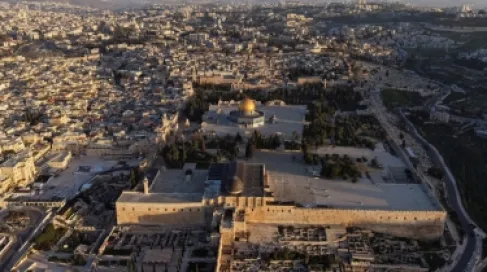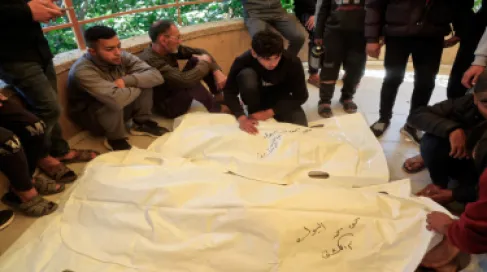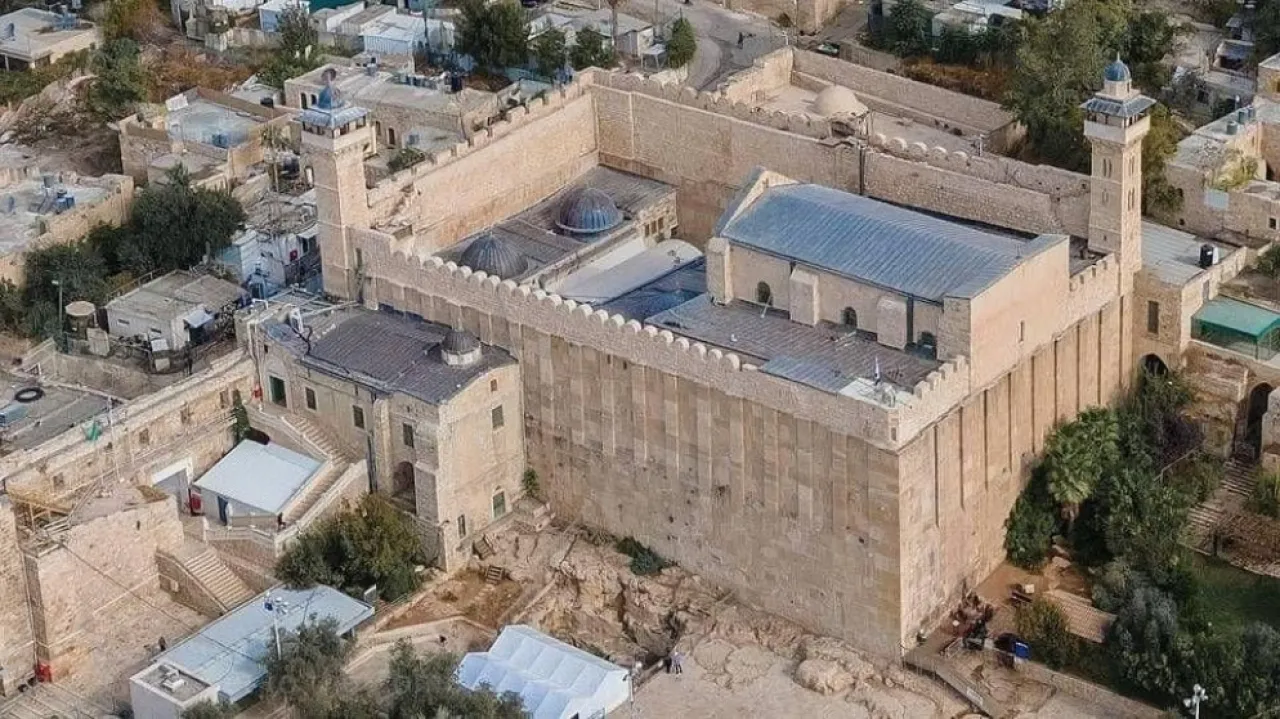
Khaberni - Wednesday marks the 32nd anniversary of the Ibrahimi Mosque massacre, which resulted in the martyrdom of 29 worshipers and the injury of 150 others.
On Friday, February 25, 1994, the 15th of Ramadan, settler Baruch Goldstein carried out the massacre when he entered the Ibrahimi Mosque and opened fire on the worshipers.
Israeli occupation soldiers stationed at the mosque closed the doors to prevent worshipers from leaving and also prevented those coming from outside the mosque from accessing the courtyard to rescue the wounded. Later, others were martyred by the occupation soldiers’ fire outside the mosque and during the funeral processions of the martyrs, bringing the total to 50 martyrs, with 29 of them martyred inside the mosque.
On the same day, tensions escalated in the city of Hebron, its villages, and all Palestinian cities, with the number of martyrs who fell due to confrontations with occupation soldiers reaching 60 martyrs and hundreds injured.
Following the massacre, the occupation forces closed the Ibrahimi Mosque and the Old City for six full months under the pretext of investigating the crime, and unilaterally formed the "Shamgar" committee to investigate the massacre and its causes. The committee issued several recommendations, including: dividing the Ibrahimi Mosque into two parts, imposing a harsh occupational reality on the lives of citizens in the Old Town, implementing strict guards on the mosque, and giving the occupation the right to sovereignty over the larger part of it, about 60%, with the aim of Judaization and takeover. The occupation has repeatedly prevented the calling of the Azan in the Ibrahimi Mosque multiple times.
The section of the mosque seized includes the tombs and graves of prophets, historical figures, as well as the Ibrahimi Mosque’s courtyard, which is the open area within it.
Subsequently, the occupation authorities installed cameras and electronic gates at all entrances, closed most of the roads leading to it to Muslims, except for one gate with stringent military procedures, in addition to closing the Al-Hasba market, Khan Al-Halil and Shahin, and the Streets of the Martyrs and Sahl. These measures separated the city and the Old Town from their surroundings.
It is noteworthy that Baruch Goldstein, who was 42 years old when he committed the massacre, is one of the founders of the "Kach" religious movement. He immigrated from the United States in 1980 and resided in the settlement of "Kiryat Arba," built on the lands of Hebron city.
"Benjamin Goldstein was born in New York to a strict Jewish family, received his education at "Yeshiva" Jewish schools in Brooklyn, earned an honors degree from Albert Einstein College of Medicine at Yeshiva University, achieved remarkable successes in the field of medicine, then changed his name to "Baruch" in his early steps towards racism and terrorism."
There is nothing spontaneous about the Ibrahimi Mosque massacre; it wasn't a result of individual madness that Baruch Goldstein orchestrated, as individual madness doesn't meticulously plan details. Choosing Hebron, specifically the Ibrahimi Mosque, and choosing the dawn of a Friday during Ramadan, and the moment of prostration for the slaughter, could not have been the choice of a madman. From the book “Bloody Friday.. Goldstein’s Doctrine”.