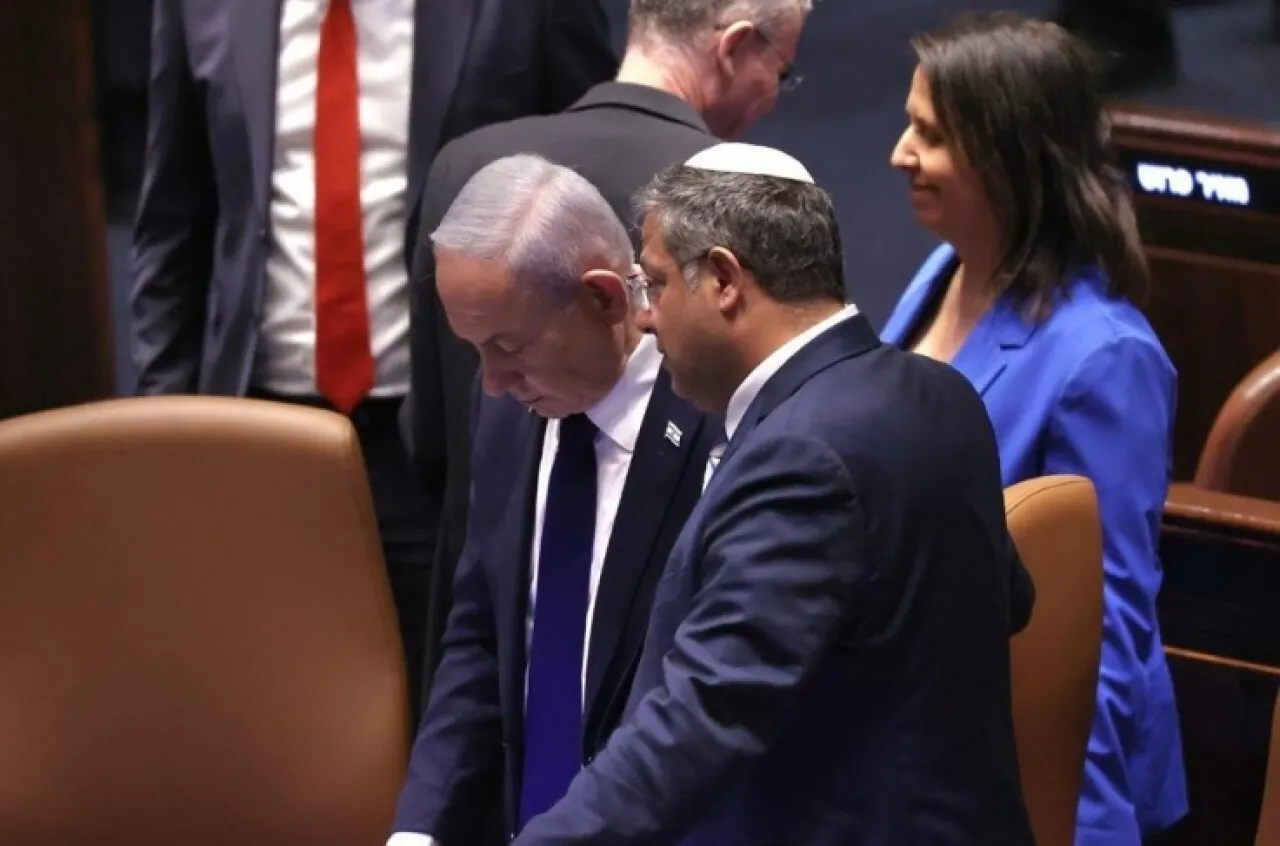
Khaberni - Israeli Prime Minister Benjamin Netanyahu and National Security Minister Itamar Ben Gvir have reached a crystallized settlement on the bill to impose the death penalty on prisoners, following disputes within the government and concerns over potential international repercussions if the stringent version of the law were adopted.
According to Israeli media reports, the settlement came after Netanyahu asked Ben Gvir to soften the draft law, fearing that it might even be harsher than the standards practiced in the United States, which could expose Israel to international criticism and pressure.
The settlement, which still awaits final approval from the Prime Minister and the relevant legal authorities, stipulates that the imposition of the death penalty on a "terrorist" from the West Bank tried in its courts shall be mandatory, yet the practical application will allow the courts the authority to exempt certain cases for special reasons or under exceptional circumstances. The possibility of appealing and requesting a reduction of the sentence will remain.
Under this formulation, Ben Gvir secures his initial demand for including the death penalty as a mandatory punishment in the text of the law, yet he effectively concedes on removing the discretion from judges, as the court will retain space to make decisions based on the circumstances of each case.
Reports indicate that the primary obstacles still remain before the legal advisory of the Knesset, particularly concerning the clause stating that the death penalty will only be applied if the victim was a "citizen" or an Israeli resident, a matter that raises legal issues regarding discrimination if the "victims" are not citizens or residents.
Before reaching this settlement, Netanyahu refused to approve the version pushed by Ben Gvir, and in an unusual move, the Prime Minister’s office requested to formally present reservations about the version approved by the parliamentary committee.
The bill is still in the drafting stage within the committees, in preparation for presentation to the Knesset for voting in the second and third readings, amidst ongoing political and legal debate.