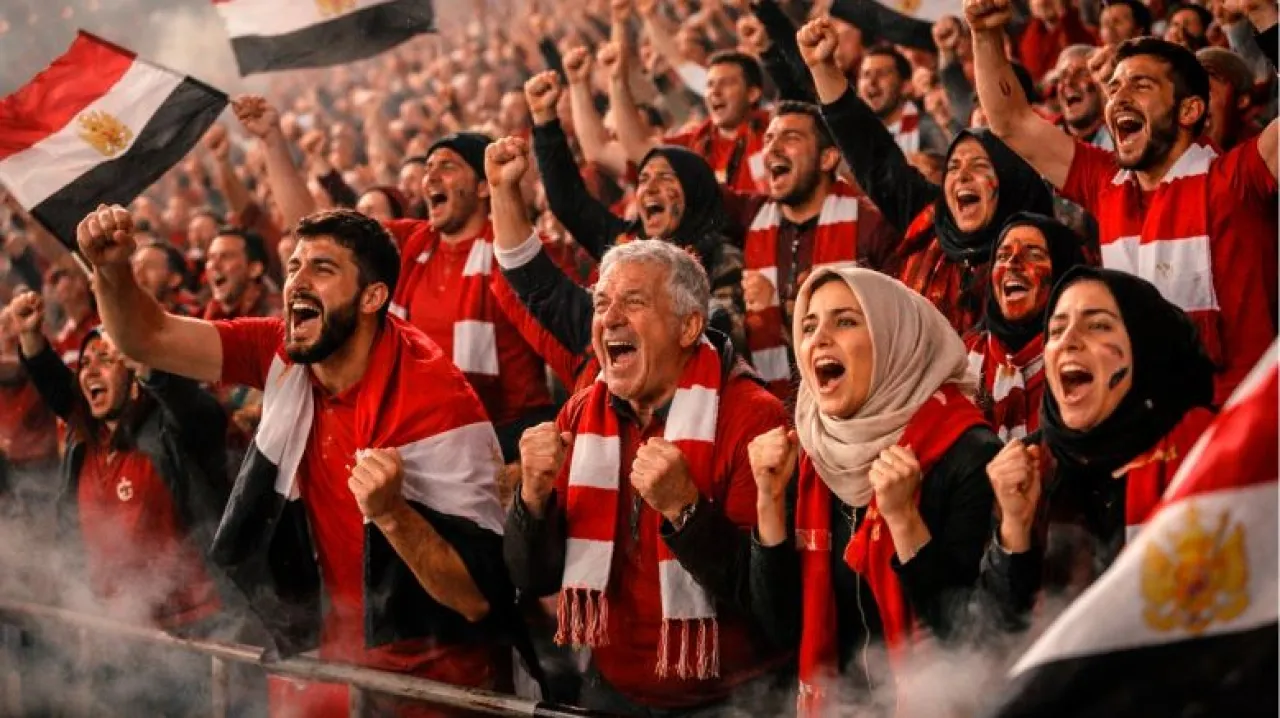
Khaberni - In major matches, it is not only the ball that moves. The stands move too. A sound that shakes confidence, applause that lifts a player an extra meter, and a whistle of disapproval that can turn a small decision into a moment of tension. Here you will read how the “energy of the crowd” works on the psyche of the players, how it affects the referee's decisions, and why sometimes the coach changes his plan just because the stadium is full. We will go through real examples and clear statements from reliable Arab sources, then we put all of that into a practical picture that helps you understand what happens when the atmosphere ignites, even if you are watching through the Chicken Road game instead of the stands.
Before anything: Why is the question “the best” linked to the fans?
In football debates, one question always appears: who is the best player in history. This question is not only related to numbers. It also relates to who can handle the pressure of the stadium when every mistake becomes a “story,” and every touch a “decision.” Some stars thrive under the yelling, and others vanish. It's amusing that many of these comparisons are built on individual awards and golden years, as summarized by Arabic reports that gather the historical record of major awards.
How does “stadium contagion” work inside the field?
Excitement moves faster than the ball
The crowd does not pass the ball, but it passes the feeling. The player hears his name, feeling that he is “needed.” He hears the whistle against him, and hesitates for a second. In football, a fraction of a second can equal a goal. That's why you find teams relying on the rush in the first quarter of an hour, because the psychological boost is at its peak.
Psychological pressure in international matches is greater
In national team matches, the pressure doubles because the player represents not just a club, but a country and the expectations of media and fans. Some players turn this pressure into motivation, while others freeze at the crucial moment. This meaning was clearly discussed when talking about “national symbolism” and its impact on performance.
Does the crowd's influence on the referee’s decisions... Is it real?
Yes, in an indirect way
The referee is human. When the yelling increases in a 50/50 situation, the decision becomes harder. Nobody says the referee “is afraid,” but the atmosphere increases the tension and accelerates the feeling that “there is a mistake.” Thus, coaches demand their fans to raise their voices at specific moments, especially near the penalty area.
Matches without fans revealed something important
When matches were played without fans for periods, many felt that something was missing. Even the watching experience changed: the echo of sounds, an unusual quietness, and less tense atmospheres. This debate clearly appeared in Arab coverages discussing football in the era of empty stadiums.
When the crowd becomes an “extra player”
A quote that explains the idea simply
Al Ahly coach, Marcel Koller, said a very direct meaning when he requested full stands: “The crowd should be ‘player number one’ and enliven the atmosphere inside the stadium.” This is not just a statement for consumption. It describes the role of the crowd when the match turns into a nerve test.
What does the crowd do practically?
-
Raises the rhythm: The team pressures more because the surrounding energy is high.
-
Gives courage: A young player dares to dribble because he feels supported.
-
Amplifies the opponent’s mistakes: The opponent passes too quickly or hurries under the whistle.
Coaches' strategies change due to the stands
Playing at home is a clear advantage
Coaches often talk about “home advantage.” Not just because it's different grass. But because the crowd pushes the team to dominate and reduces their fear of taking risks. Even in predictions for final matches, the idea that playing at home is a “big advantage” is mentioned as an influential factor.
How is this related to modern tracking?
Today, many fans follow details moment by moment. Some do so through various apps and means, and sometimes the interest is part of a sports betting culture among a segment of followers, because they monitor the psychological state inside the field as they watch the numbers.
Quick table: Where does the impact of the crowd appear most?
|
The situation within the match |
Expected impact of the crowd |
The most likely outcome |