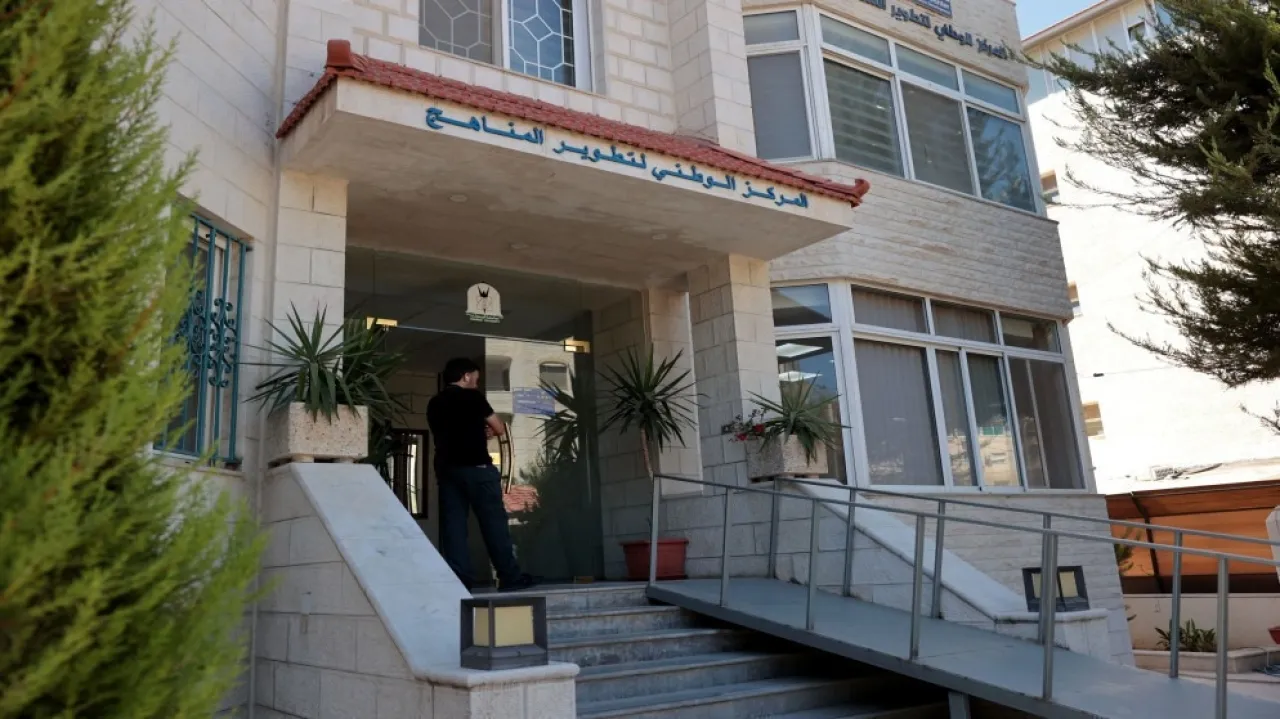
Khaberni - The National Center for Curriculum Development and Evaluation announced the results of a set of recent national studies, which were implemented by the Studies and Research Unit; aimed at evaluating the curricula and measuring their impact on student learning in Jordanian schools, and analyzing the content of textbooks in light of frameworks and standards of international assessments such as (PISA) and (TIMSS), to enhance the quality of education and improve student learning outcomes.
These studies included the following research: the compatibility of the content of ninth-grade school science books with the content measured by the PISA study, the compatibility of the content of tenth-grade school science books with the content measured by the PISA study, and a multi-level hierarchical analysis of the determinants of eighth-grade mathematics achievement in Jordan: a comparative study in light of the results of the best-performing education systems in the (TIMSS 2023) test, and the impact of developed curricula in Arabic and English in developing language skills, critical and creative thinking, and problem-solving in students.
The results of the studies related to the science books for the ninth and tenth grades showed that the content of the current curricula contributes to building a good understanding of scientific concepts and phenomena among students, which forms an important basis for building their scientific knowledge.
On the other hand, the results indicated the need to enhance skills in data analysis and interpretation, and to link scientific knowledge to daily life, which helps students employ what they learn in practical life situations.
The study of eighth-grade mathematics achievement, based on the results of (TIMSS 2023), revealed that the school environment plays an important role in student performance, and that students' confidence in themselves in mathematics, regular attendance, and the presence of a supportive educational environment, all contribute to improving their academic achievement. These results emphasize the importance of providing a motivating school environment that enhances learning and supports students.
Regarding the developed curricula in Arabic and English, the results showed that the English language curriculum has made a positive contribution to developing language skills among students, and has helped enhance their thinking skills, especially for ninth-grade students. Conversely, the results indicated that the Arabic language curriculum still needs more support at the classroom application level, through enhancing teacher training, activating educational activities that help students think and interact more, and developing performance-related assessment tools.
The center affirmed that the goal of these studies is to support curriculum development and improve education quality, which helps students acquire the knowledge and skills they need in their daily lives and future academic and professional careers.
It also emphasized that the development of education is an ongoing process that relies on scientific research and periodic evaluation, to ensure providing better education for our student children.