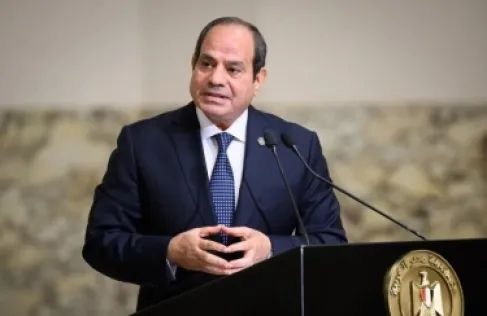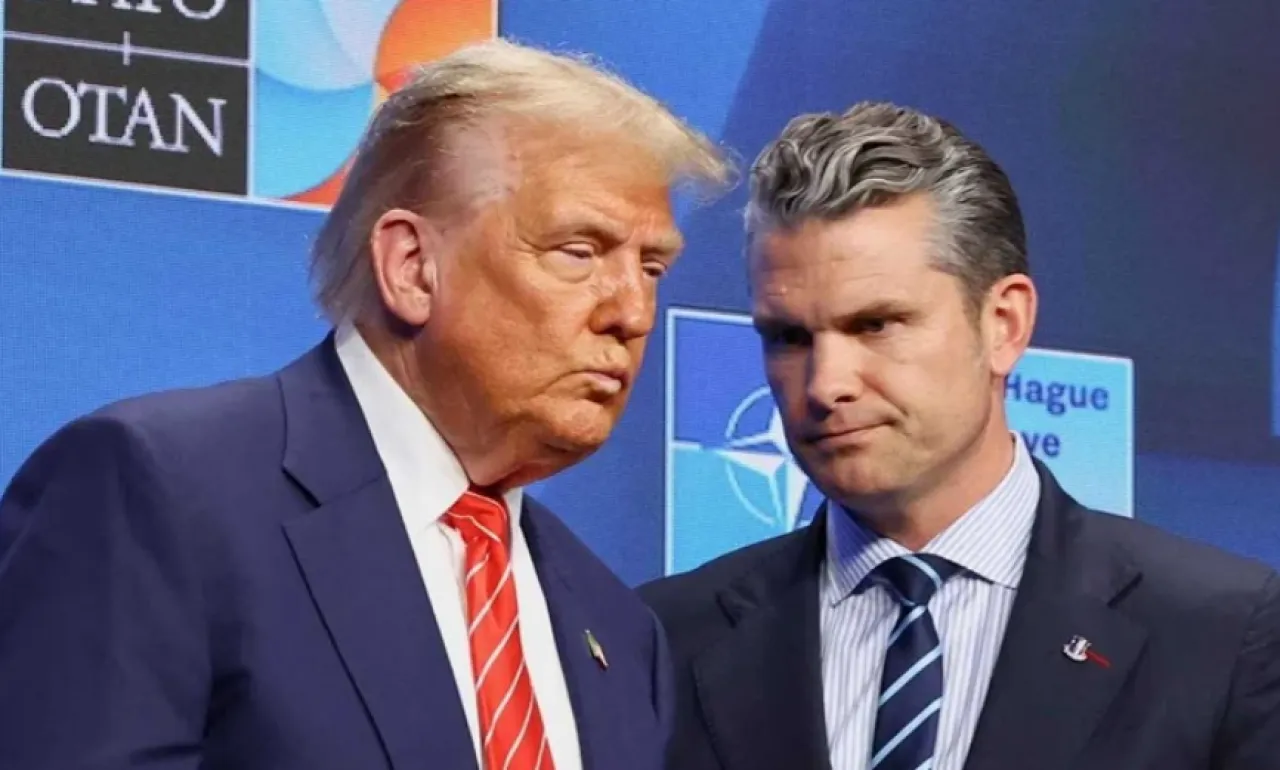
Khaberni - American sources said that officials in President Donald Trump's administration faced difficulties in figuring out how to increase American military spending by $500 billion in their upcoming budget, slowing down the White House's general spending plan.
Last month, Trump agreed to a nearly 50% funding increase, based on a request from Defense Secretary Pete Hegseth, in the White House's annual budget proposal, and this idea was criticized internally by several other officials, including White House Budget Office Director Russell Vought, who warned of its potential impact on widening the federal deficit.
According to "The Washington Post," which reported from informed sources speaking on the condition of anonymity to preserve the confidentiality of internal deliberations.
They said, "Since Trump approved the higher amount, White House aides and defense officials have faced logistical challenges regarding how to spend the funds, given the enormity of the amount."
The White House is more than two weeks behind the legally-set deadline to submit the budget proposal to Congress, partly due to unclear plans on how to spend an additional $500 billion, according to the same sources.
An informed source reported that "senior Pentagon officials consulted former high-level defense officials as part of their efforts to meet this challenge, focusing part of the discussion on the extent to which emphasis should be placed on purchasing current military-used weapons versus investing in advanced technologies, like artificial intelligence, which the Pentagon sees as part of its future strategy."
According to the newspaper: "The defense budget approved last year was about $900 billion, the largest in U.S. history. While other countries increased their military spending,"
G. William Hoagland, Senior Vice President at the Bipartisan Policy Center, a non-partisan research center, said: "I'm not surprised by the difficulty of doing this. It's a huge amount of money in one year."
Trump, Hegseth, and many Republicans in Congress defended the proposed increase in the military budget, considering it necessary to fund a range of new priorities and counter adversaries.
Hegseth stated that the funds would be spent "wisely" and that the larger budget would send "a message to the world."
The upcoming White House budget for the fiscal year 2027 will set the spending levels proposed by the administration across various government sectors.
Its approval requires the consent of Congress, which poses significant difficulties.
Trump said via "Truth Social": "This will allow us to build the dream army we have always deserved, and more importantly, it will maintain our safety and security, regardless of the enemy."
The Pentagon faced difficulties in how to renew expensive ammunition it heavily relied on, including Tomahawk cruise missiles, Patriot missile defense missiles, and ship-launched munitions known as Standard Missiles 6 or SM-6.
The United States also faces challenges in how to modernize its Cold War-era nuclear weapons program with expensive next-generation systems, such as the B-21 bomber and the Columbia-class submarine, according to "The Washington Post."
The newspaper said: "These aircraft, estimated to cost about $700 million U.S. dollars each, are expected to replace the Air Force's fleet of B-1 and B-2 bombers. As for the Columbia-class submarines, they are expected to cost at least $9 billion U.S. dollars each."
Upon assuming office, Hegseth directed each branch of the armed forces to look for budget cuts of 8%; these funds are to be invested in other priorities of the Department of Defense (Pentagon) that better align with Trump’s agenda.