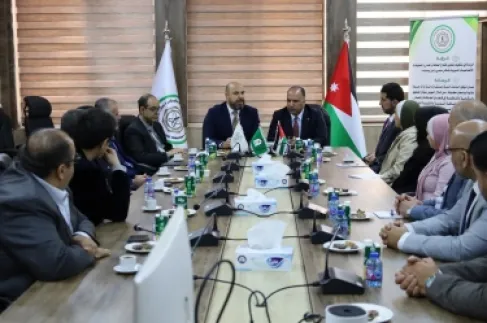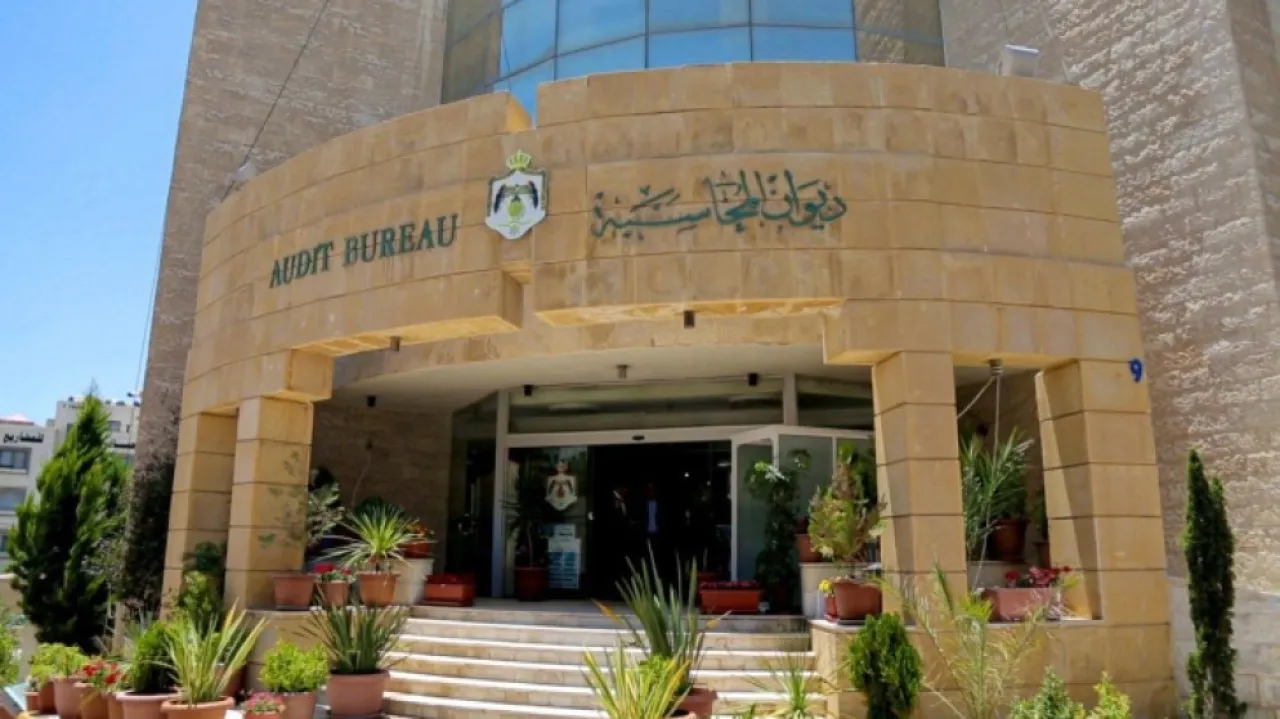
Khaberni - Radhi Al-Hammadin, the head of the Audit Bureau, stated on Sunday that "Peer Review" represents one of the best international practices in the activities of supreme financial and accounting control bodies, aiming to assess the extent of the bureau's compliance with international standards, and enhancing the integrity of its procedures and the credibility of its reports in the public view.
Al-Hammadin clarified in statements to the "Kingdom" channel that peer review involves a corresponding control body from another country reviewing the procedures, frameworks, governance, and legislations adopted by the bureau to ensure their consistency with international standards governing public sector control.
He explained that supreme control bodies in various countries are subject to parliamentary oversight, being public institutions, but the recourse to peer review is motivated by the reassurance of the professional practices' alignment with specialized international standards in public sector auditing, particularly those issued by the International Organization of Supreme Audit Institutions (INTOSAI).
He pointed out that these standards regulate all stages of the auditing process, starting from planning audit tasks, through gathering evidence and analyzing data, to preparing reports, emphasizing that obtaining a "Peer Review Certificate" from an external body is a reliable professional certification that contributes to enhancing the trust in the bureau's performance and the credibility of its reports, reflecting positively on accountability and serving the public interest.
Al-Hammadin noted that the current peer review mission is conducted by the National Audit Office of Britain, which is among the most prestigious audit bodies in the world, indicating that the mission began with an initial field visit and will continue for a period of four months.
He specified that the scope of the review includes the legal frameworks and legislations regulating the bureau's operations, the internal governance system, practices of managing and enabling human resources, especially audit staff, besides the audit methodologies adopted, mechanisms of planning and executing tasks, and report preparation, as well as the bureau’s relations with legislative and executive authorities and civil society institutions.
He clarified that the review team will conduct interviews with the senior management and audit teams, in addition to representatives from the legislative and executive branches and civil society institutions, along with reviewing working frameworks and files related to audit tasks, to evaluate the compliance with international standards and best professional practices.
Al-Hammadin anticipated that the field visits would be completed by the end of April 2026, with the final report on the review results to be issued between the end of May and mid-June 2026 at the latest, including necessary recommendations to develop performance and enhance the quality of auditing work.
Al-Hammadin confirmed that peer review is an important step towards improving the work methodologies within the bureau, contributing to the enhancement of the quality of audit reports, and bolstering their role in supporting parliamentary accountability and meeting the expectations of citizens.