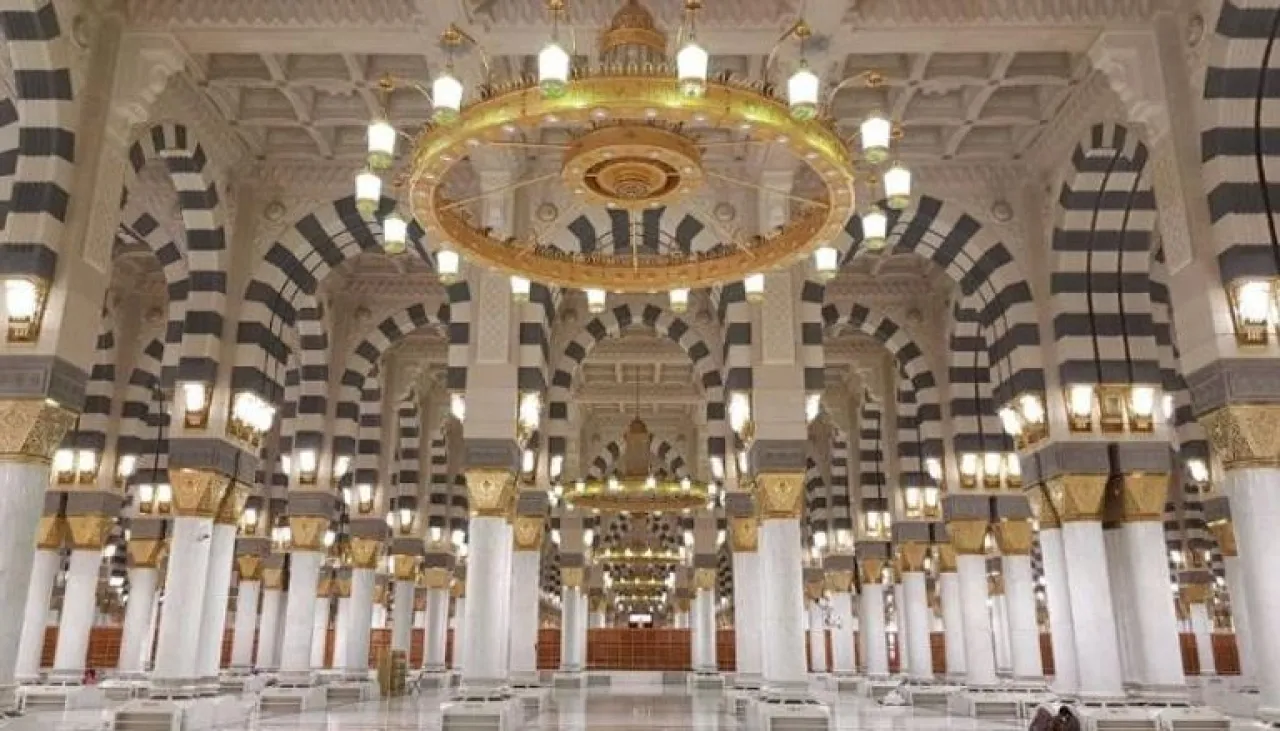
Khaberni - Green mosques help establish sustainability concepts and encourage people to adopt sustainable environmental practices within a religious context; especially with the coming of the holy month of Ramadan.
The integration of religious foundations with climate action was evident when the UAE hosted the "28th Conference of the Parties to the Climate Change Convention" (COP28) at Expo Dubai in 2023, where the conference events saw the launch of the first religions pavilion in the history of climate conferences, with the aim of enhancing the role of religious institutions in combating the climate crisis through solutions based on ethical and spiritual values.
Green Mosques
Mosques can become inspiring models for energy transition; especially given their great spiritual significance, in addition to the fact that Islam encourages environmental preservation and the avoidance of extravagance in using its resources. Therefore, establishing the concept of green mosques that rely on renewable energy sources, energy-saving technologies, sustainable architectural design, and the wise use of water is one of the most important ways to reduce electricity consumption whether in lighting or cooling, and consequently reduce the greenhouse emissions that may emanate from places of worship.
Sustainable Energy Transition Methods
There are several practices through which mosques can achieve sustainable energy transition, including:
1- Integrating Renewable Energy
Renewable energy systems, such as solar panels placed on mosque roofs, supply the mosque with all its energy and electricity needs, and the wide rooftops above mosques provide an excellent place to receive the maximum possible sunlight and convert it into energy through photovoltaic solar panels.
Dr. "Jawad Al-Kharraz", coordinator of the Pyramid Initiative for "Al-Ain News", stated that "using renewable energy in mosques and other general facilities helps accelerate the energy transition, and saves mosques the cost of electricity". He continues to explain that "though the cost may be relatively high initially, within a time frame; the mosque will save on energy consumption, which reduces electricity bills, and the cost of energy decreases".
2- Energy Efficiency
Focusing on energy efficiency is one of the most important ways to save energy, such as abandoning traditional lighting systems and relying on LED systems that reduce energy consumption for lighting. Energy efficiency can also be enhanced through smart control systems equipped with sensors that improve the performance of heating, ventilation, and air conditioning systems, operating only during prayer times, which in turn saves on total annual energy consumption.
3- Sustainable Architectural Design
Sustainable architectural design includes thermal insulation of the mosque; especially in hot climate areas; such a design reduces pressure on cooling systems, enhances ventilation and natural lighting, and involves the use of environmentally friendly building materials, which reduces the pressure on natural materials and resources or materials that emit large amounts of greenhouse gases.
Examples
There are many examples of mosques that adopt sustainable approaches, including:
1- Al-Nasr Mosque in Egypt
Al-Nasr Mosque is located in Dalga village, Deir Mawas center in Minya Governorate, Egypt, and is one of the first mosques in Egypt that operates and relies entirely on solar energy to meet all the mosque's facilities energy needs, with a battery system to ensure its operation around the clock.
In March 2025, the Egyptian Ministry of Awqaf announced that it is the first mosque in Upper Egypt to fully depend on clean energy. This mosque represents a model for encouraging the reduction of electricity consumption from non-renewable energy sources, which helps in reducing greenhouse gas emissions.
2- Sustainability Mosque in the UAE
In January 2024, Masdar City in Abu Dhabi, UAE, opened the Sustainability Mosque, which accommodates around 335 worshippers in the five daily prayers.
The mosque is distinguished by its full dependency on solar panels for electricity generation and meeting the mosque's energy needs, and it is designed in a way that reduces water and energy consumption, and it is one of the eco-friendly architectural projects, being a model that integrates sustainability with spirituality.
3- Cambridge Central Mosque in England
Cambridge Central Mosque is one of the first sustainable mosques in Europe, as it relies on its energy needs on solar panels, and features a building with sustainable building materials and a natural ventilation system. It was first opened in 2019, and it represents a sustainable model for religious institutions in the United Kingdom.
Mosques and places of worship in general, are excellent platforms to encourage local communities and raise environmental culture and establish sustainability concepts, which Islam calls for.
Dr. Jawad Al-Kharraz says that mosques can contribute to raising awareness among residents who attend mosques daily for prayers or notice that the mosque relies on solar panels for generating electricity, thus spreading the culture of their use, and contributing to their broader dissemination.