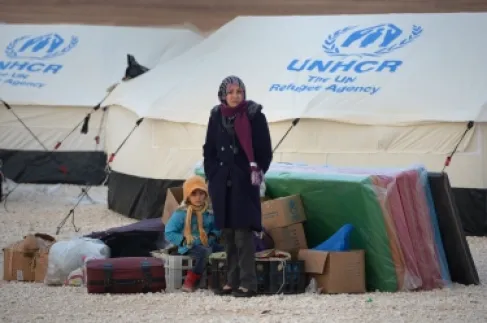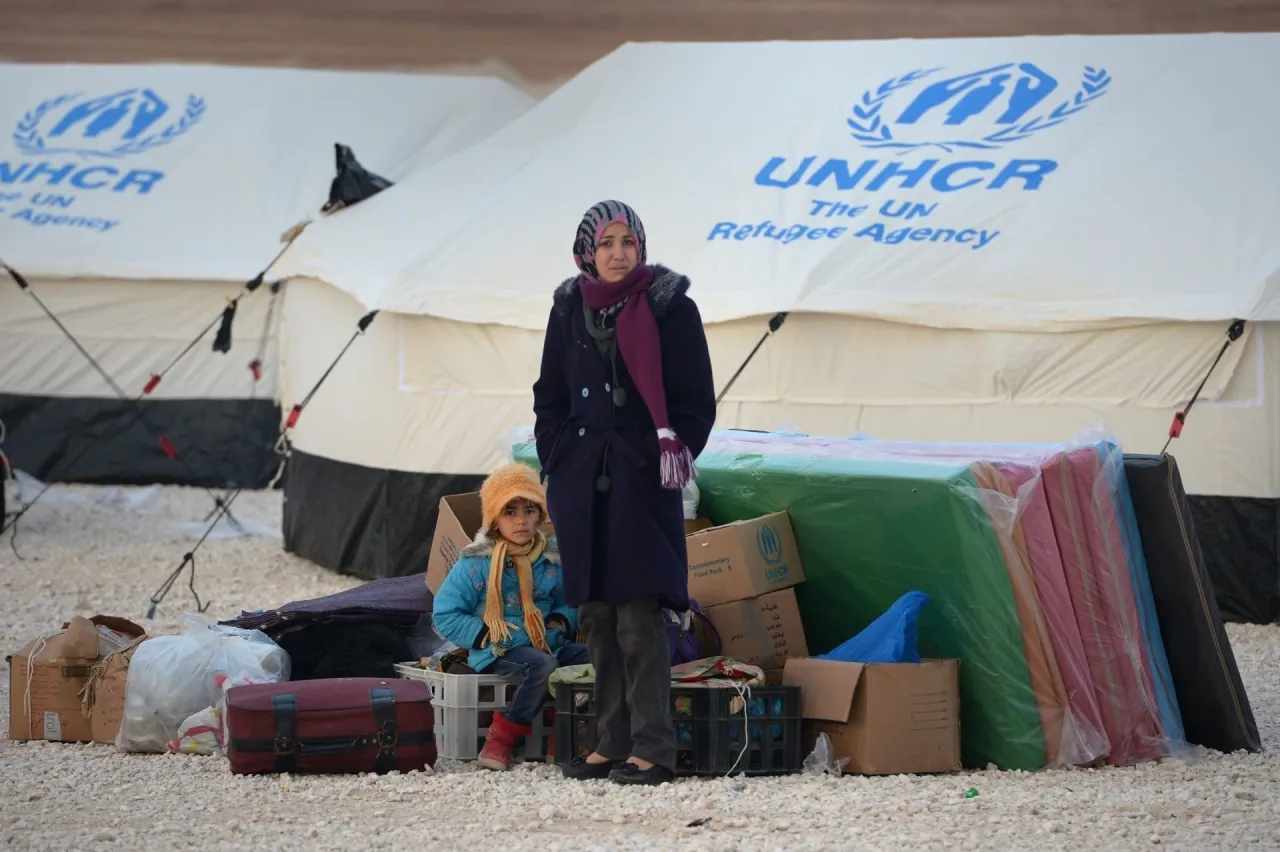
Khaberni - The World Food Program in Jordan confirmed the continuation of financial constraints that hinder its ability to deliver assistance at the required rate, noting that in January it was forced to reduce monthly food assistance to 15 dinars ($21) per person, targeting about 220,000 refugees in camps and host communities.
In its periodic report on its operations in the kingdom, the program mentioned that this aid covers only the minimum of the basic food needs of the most vulnerable families, according to Al-Ghad newspaper.
The report indicated that the program's priorities in the coming months are to raise sufficient funding to meet the urgent food needs of refugees in Jordan, as the current resources are only sufficient to cover monthly cash aid until April 2026, while the program needs $46 million to secure the basic needs of the refugees until the end of 2026.
Continuing the school feeding program in various provinces of the kingdom also requires providing $9.3 million to ensure that 90,000 children from the most vulnerable groups receive balanced meals, enhancing their school attendance and improving their academic achievement.
According to the report, Jordan faces challenges related to the scarcity of resources, deteriorating food security, limited agricultural land, and water resources.
Jordan hosts the second highest proportion of refugees in the world relative to its population, with a total of 3.5 million refugees, including more than two million Palestinian refugees, and 1.3 million Syrian refugees, among whom about 413,000 are registered with the commissioner until January 2026.
Since December 2024, about 182,000 Syrian refugees have returned to their country, representing 30% of those registered with the commission.
Although recent political reforms have helped enhance the resilience of the Jordanian economy, the repercussions of regional conflicts still cast a shadow over the local economic situation, particularly the labor market, as unemployment rates remain high. The program confirmed its continuation in 2026, implementing its National Strategic Plan (2023–2027), which focuses on providing unrestricted food aid to refugees and the most vulnerable groups, enhancing national social protection systems and programs, in addition to supporting education and nutrition initiatives and developing programs to enhance resilience.
Supporting the response to Gaza
The program continues, in coordination with the Jordanian government, to play a pivotal role in delivering food aid to Gaza, ensuring an effective and sustainable response to the increasing humanitarian needs.
In January, the Jordanian Humanitarian Corridor facilitated the arrival of 238 trucks loaded with 4,418 metric tons of food supplies to Gaza via the business-to-business (B2B) mechanism through the King Hussein Bridge - Allenby Crossing.
The corridor also supported the mobilization of 408 trucks loaded with shared goods among agencies within the logistics conglomerate mechanism. The program currently retains about 2,000 metric tons of ready-to-send food, along with 2,700 metric tons under production, to meet the growing needs in Gaza.
The government-to-government (G2G) aid mechanism, through the main channel of aid from Jordan to Gaza, has been suspended since the September 2025 incident at the King Abdulaziz - Allenby Crossing, the report noted, adding that Jordanian authorities and international community partners continue to demand an immediate resumption of government aid convoys.