Khaberni - The fate of the international force that US President Donald Trump is trying to form to preserve stability in the Gaza Strip remains unclear, prompting many countries to refuse to participate in it, says Nihad Abu Ghosh, an expert in Israeli affairs.
While Israeli media talks about the readiness of 4 countries to participate in this force, many other countries such as Indonesia and Pakistan are hesitant to join due to the unclear boundaries of operation and authority of this force.
Israeli media speaks about the readiness of 4 countries, namely Kosovo, Albania, Greece, Morocco, to participate in the force, but Abu Ghosh noted - in an interview with Al Jazeera - that these countries "have interests with Israel".
The international force faces a problem, represented by the insistence of Israel and America that it should disarm the resistance, which the latter confirmed that it will not accept, and that it will treat the presence of such a foreign force as an occupation.
Trump previously stated that countries that participated in the ceasefire agreement "will work to disarm Hamas, unless it voluntarily relinquishes its weapons," which has heightened fears that the international force intended to be formed will perform tasks on behalf of Israel.
American Base in Gaza
Earlier today, Thursday, the British newspaper The Guardian reported, based on documents and records, that the Trump administration "plans to build a military base hosting 5,000 soldiers in Gaza".
The Peace Council, which was established by Trump, is scheduled to hold its first meeting to discuss relief efforts and reconstruction of the sector, and the White House announced that the president will make an important announcement about the council's work.
The White House mentioned that 20 countries will participate in the council's first meeting in Washington, while the Associated Press reported from a senior US official that more than 40 countries confirmed sending officials.
However, Nihad Abu Ghosh, an expert in Israeli affairs, believes that the Palestinians "do not pin high hopes on this council, which seems to be a theatrical stage for Trump, without offering anything tangible for the Gaza Strip".
Trump has launched many promises that were not implemented because the countries nominated for funding "are not ready to contribute a single dollar as long as Israel is present in the sector", according to the Palestinian analyst.
This is not the first time Trump has spoken optimistically about what the council can do in Gaza, while the participating countries at the meeting are linked by interests with Israel, according to Abu Ghosh.
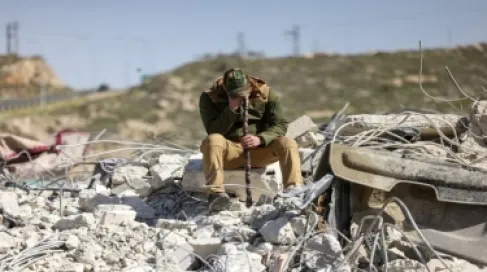
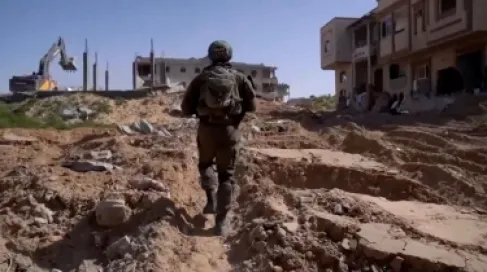
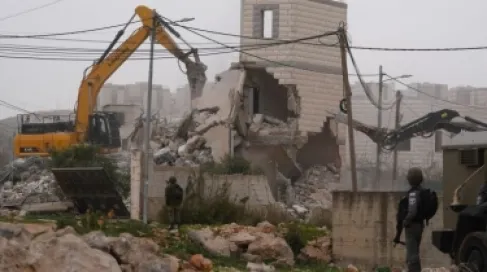
It seems that the United States is seeking to raise billions of dollars to rebuild areas under the control of the occupation army, which Abu Ghosh says "has not stopped destroying them since the ceasefire agreement took effect, as if paving the way for new projects unrelated to the Palestinians".
Among 18 countries in Latin America known for their support of the Palestinian cause, only Argentina and Paraguay will participate, according to Abu Ghosh, who also noted that Western Europe's participation is also limited to Hungary and Greece.
Central European countries have expressed fears about attempts to marginalize the United Nations, according to the spokesperson, who said that Arab and Islamic countries "will participate as mediators and as an entrance to protect the Palestinian people".
President Donald Trump announced on January 16th the formation of the "Peace Council" which he heads, based on his plan announced to stop the war on Gaza, which was later adopted by the UN Security Council in Resolution No. 2803 issued on November 17th, 2025, relating to post-war arrangements.
The Peace Council is supposed to oversee the transitional phase in Gaza and coordinate reconstruction and international aid efforts, provide its financial support, contribute to transitional security arrangements, and deploy an international stability force inside Gaza, supporting a broader political peace process in the region.