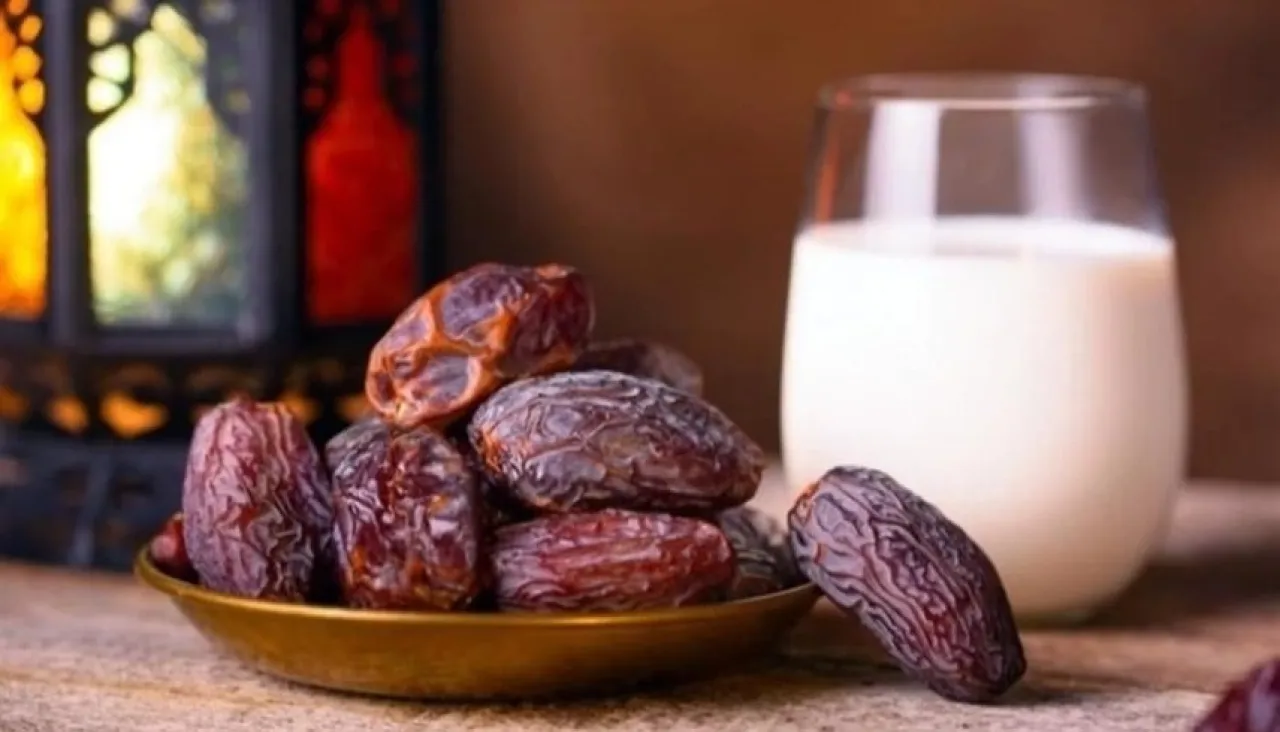
Khaberni - In the holy month of Ramadan, renewed nutritional warnings arise that concern fasting individuals about some traditional foods, among them dates with milk or yogurt which Muslims traditionally consume at iftar following the prophetic tradition. However, statements from some specialists about the danger of this combination have sparked a broad debate between scientific truth and popular beliefs.
Scientific statements refute the concerns
Dr. Shaimaa Hakim, a specialist in therapeutic nutrition and public health, revealed the truth about the rumored dangers of consuming dates with milk, confirming that this combination represents both a Prophetic practice and a scientific fact at the same time.
Hakim clarified that the Prophet Muhammad, peace be upon him, used to eat dates with milk, and this alone should be enough to reconsider before deeming this mixture as harmful, pointing out that modern science confirms the benefits of this combination.
The scientific explanation for the mix
The nutrition expert noted that dates contain relatively higher levels of oxalates compared to some other foods, but this does not pose a problem when eaten with milk. She explained that milk contains high levels of calcium which binds to the oxalates in the intestines and prevents their absorption and instead expels them from the body instead of letting them deposit in the kidneys.
Hakim confirmed that milk in this case does not increase the problem but solves it, pointing out that the calcium in the milk protects the body from the effects of oxalates and prevents the formation of kidney stones, which represent 70 to 80% of kidney and ureter stones.
A safe and beneficial mixture
Shaimaa Hakim emphasized that consuming dates with milk is safe and beneficial for most people. She explained that having calcium with plant-based foods reduces the absorption of oxalates and protects the kidneys, affirming a simple rule: "Oxalates fear calcium."
Shaimaa Hakim concluded that proper nutrition does not rely on the random separation between foods but on balance, quantity, and timing, warning that random prohibitions could be more dangerous than the food itself, confirming that fasting individuals can enjoy this traditional meal at iftar without worry.