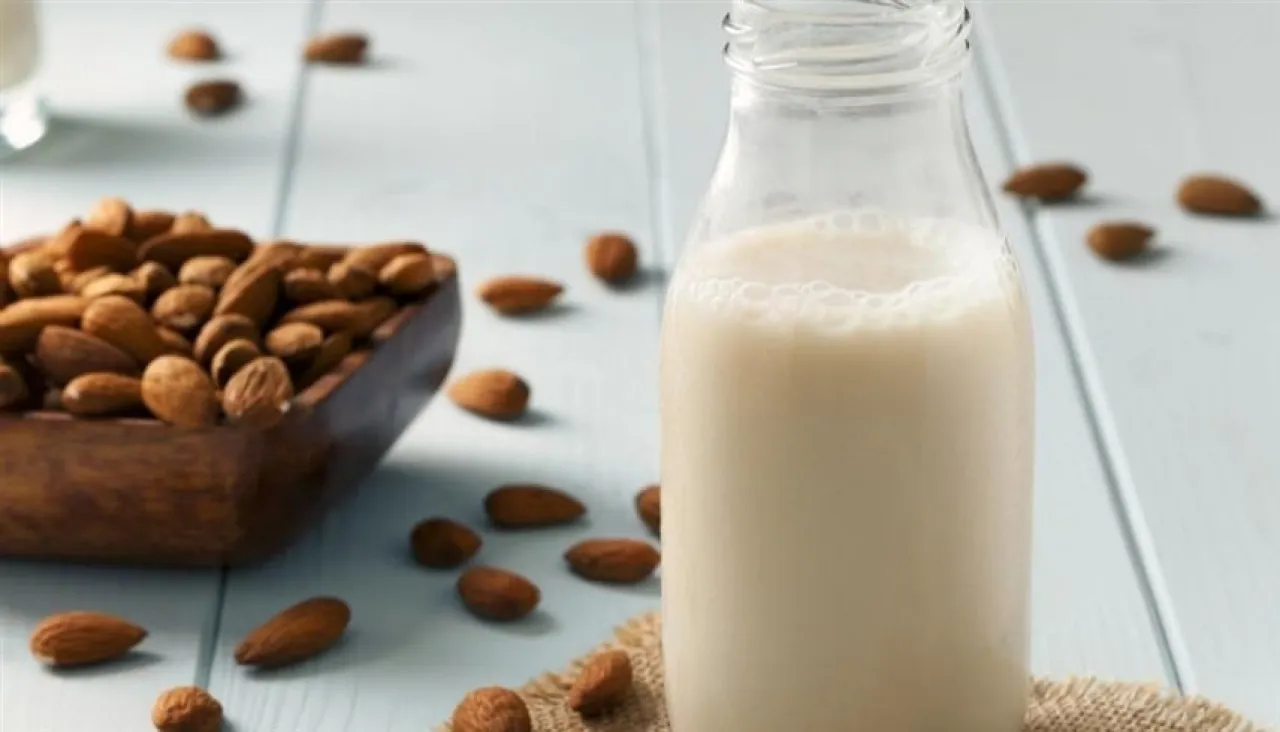
Khaberni - Some almond beverages, often consumed as an alternative to cow's milk, can pose a health risk to young children, according to the German Institute for Risk Assessment.
The Institute had examined 162 commercial oat, almond, and soy beverages in the lab to detect mycotoxins and plant toxins, and to determine their health effects on children aged between 6 months and under 6 years.
Almond beverages and cancer
The Institute found the fungal toxin "aflatoxin B1" in 31 out of 39 almond beverages, and since this can cause cancer by causing changes in the genetic material, it is impossible to determine a safe minimum impact level, and consuming these almond beverages might pose a health risk to children, classifying the likelihood of health damage as "moderate."
For other mycotoxins, the assessments were less severe, with "ochratoxin A" found in 33 out of 39 almond beverages and 23 out of 29 soy beverages in very small quantities, yet the Institute sees the risk to children consuming these beverages as "low."
The Institute noted that "deoxynivalenol" was detected in 67 out of 86 oat beverages. However, the likelihood of health damage after consumption is "unlikely," and the toxins "T-2" and "HT-2" were found in all 86 oat beverages that were examined.
Is almond milk bad for you?
The Institute classified the likelihood of damage after consumption as "low," but the total amount consumed could increase if other oat-containing products like oat flakes are also consumed.
In addition to mycotoxins, the Institute also identified plant toxins, and according to experts, there were usually no indications of risks associated with "tropane alkaloids," except for one soy beverage product, where "atropine" and "scopolamine" were repeatedly measured in high amounts that necessitate consideration of potential health damage.
Due to insufficient information currently available on the quantities of plant beverages consumed by children, data on cow's milk consumption was used as a basis.
The assessments were based on the assumption that only one type of plant beverage replaces cow's milk, and the Institute noted that mycotoxins can also be present in other foods like grains, fruits, vegetables, nuts, or cocoa.
Generally, adhering to a varied and balanced diet helps to keep the intake of undesirable substances at the lowest possible level.