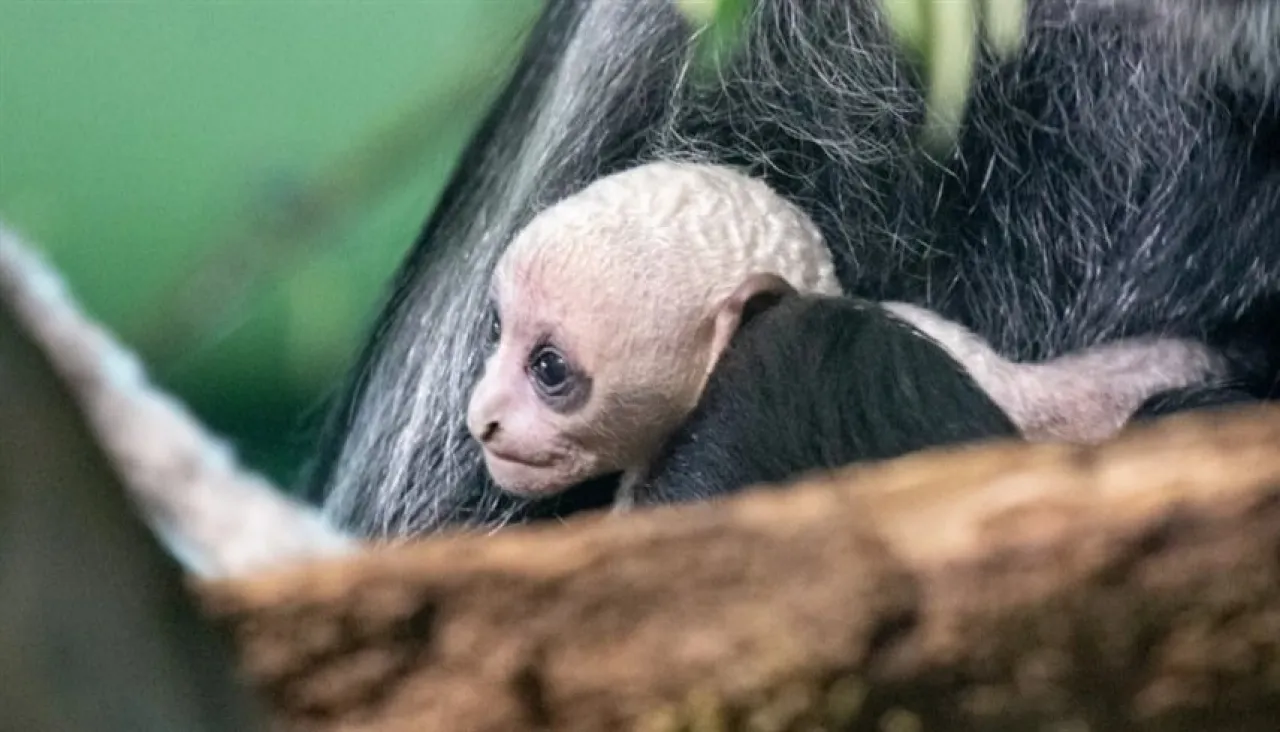
Khaberni - In a notable environmental event, Paignton Zoo in the United Kingdom witnessed the birth of a rare white monkey from the endangered "King Colobus" species, amid significant interest from wildlife scientists.
This event marks an important milestone in efforts to preserve biodiversity in Britain, especially since the King Colobus monkey originates from the rainforests and swamps and riverine forests in West Africa, where their numbers have significantly declined due to deforestation and overhunting, according to "The Sun".
The young of this species are notable for their striking white fur at birth, which helps mothers keep track of them during the first few weeks of their lives before their color gradually turns to black and white over a period ranging from one to three months as they grow.
Newborn Female
Over the past weeks, the zoo welcomed a new female baby to mother "Ivy," who is 23 years old, in a birth described by the zoo management as part of a rare breeding boom, after the zoo had received another baby from the same species last winter.
The new female joined the youngster "Limba," making the zoo currently responsible for caring for two King Colobus infants within the same family group, noting that "Ivy" is also the mother of the female "Lola," names given by the zoo management to the monkeys.
Both young are descended from the male "Lembali," who was introduced to the group to enhance genetic diversity and ensure the sustainability of the breed.
International Program to Rescue the Species
Nadia Gold, the team leader of mammals at the zoo, confirmed that they participate in an international breeding program aimed at protecting this rare species, noting that these births were the result of long-term planning and scientific cooperation among zoos worldwide to ensure the future of the endangered species.
She added that having more than one infant in the group has given the zoo noticeable positive energy, and provided an important opportunity to educate visitors about the importance of wildlife conservation and breeding programs to preserve them.
The efforts to preserve this species are not limited to Paignton Zoo only, as Blackpool Zoo recently announced the arrival of three young from the same species, all descendants of a male named "Bert," in a step considered a strong push for the efforts to save this species from the risk of extinction.