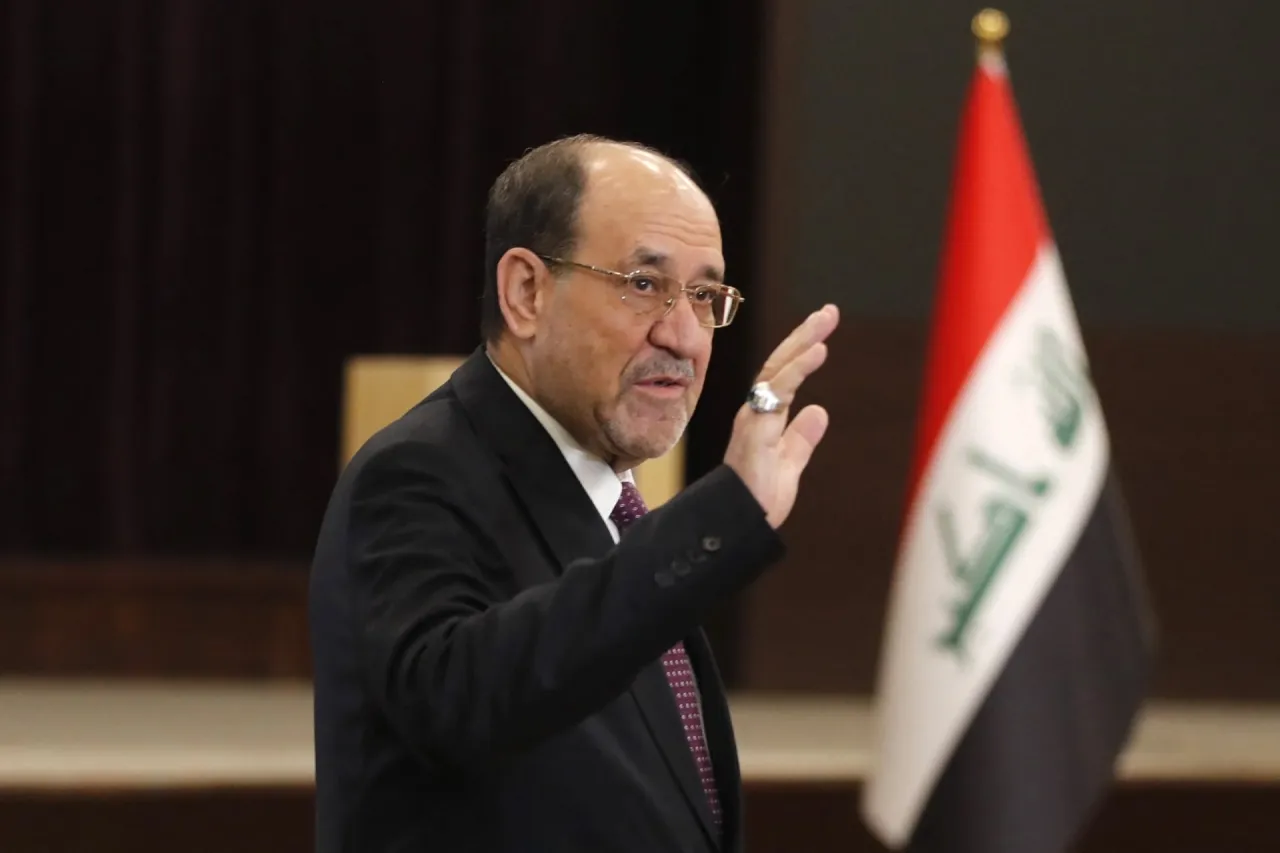
Khaberni - Developments are accelerating in Baghdad amidst a complex political crisis, prominently titled the nomination of Nouri al-Maliki for the premiership, which has stirred internal divisions and unprecedented external pressures. Amidst the difficulty of resolving the presidency position and differing positions within the "Coordination Framework", Iraqi political sources pointed to a decisive American message that included a deadline of no more than 48 hours to withdraw al-Maliki's nomination, threatening sanctions that could affect political and economic parties if the nomination proceeds, placing the Iraqi scene before a difficult test between internal calculations and external pressures.
A Serious American Message
Iraqi political sources revealed a confidential American message delivered through the Iraqi Ambassador in Washington, Nizar Khairallah, containing a deadline not exceeding 48 hours to withdraw al-Maliki's nomination, with a warning of sanctions that could extend to Iraq and its supporting entities if not complied with.
The former Iraqi Foreign Minister and a leader in the Kurdistan Democratic Party, Hoshyar Zebari, stated in press statements that severe American messages had arrived in the past two days, warning of surprises.
Zebari affirmed the difficulty of nominating al-Maliki under the current American rejection, noting that the list of candidates for the premiership had dropped to four individuals excluding al-Sudani.
Sanctions on the Table
According to the data, the potential sanctions include the Central Bank of Iraq and the State Oil Marketing Company "SOMO," in addition to individuals within the "Framework" who are proven to support al-Maliki. This comes as a translation of the warnings from American President Donald Trump who had sharply criticized the approach taken by al-Maliki during his eight years as prime minister.
As the circulated deadline expires, the caretaker government headed by Mohammed Shia' al-Sudani acted to contain the pressures, with sources stating that al-Sudani requested an additional deadline until the end of the week to settle the issue of al-Maliki's withdrawal before any American steps.
Internal Division within the "Framework"... and Intensive Meetings
The external pressures coincided with intensive internal movement. The head of the Supreme Islamic Council, Hammam Hammoudi, held a meeting that included Falih al-Fayyad, Hadi al-Amiri, and other figures to discuss the ramifications of the American message and ways to avoid a broader crisis.
Al-Maliki also visited Erbil and met with the president of the Kurdistan Democratic Party, Masoud Barzani, amid reports that the Kurdish forces would not be able to support a candidate facing clear American rejection, despite attempts to persuade Washington to accept the nomination.
Between Denial and the "Compromise Candidate"
Iraqi political sources said that the Coordination Framework plans to hold a session in the coming days to decide on nominating a new government head, following internal and external reactions rejecting al-Maliki's nomination for the position.
Aqeel al-Rudaini, spokesperson for the "Victory Coalition" within the Framework, stated that the stance on al-Maliki's nomination would become clear after the meeting.
The parties rejecting this nomination continue to hold their position, while al-Maliki’s office described what is being circulated about the Framework's intention to withdraw his nomination as a malicious media campaign.
The office manager of the media for the head of the State of Law coalition, Nouri al-Maliki, Hisham al-Rikabi, denied in a statement the accuracy of the news circulated regarding the withdrawal of al-Maliki’s nomination for the premiership by the "Coordination Framework," affirming that what is being circulated in this context "has no basis in truth."
The data indicates a division within the "Framework" between a team preferring a voluntary withdrawal that preserves the unity of the coalition, and another calling for an internal vote that may officially replace him with an alternate candidate who enjoys internal acceptance and international understandings.
As the moment of decision approaches, Iraq stands at a crossroads: either proceed with a nomination that threatens wide economic and political sanctions, or resort to a "forced" option that reorganizes the cards within the ruling coalition, and spares the country a crisis that could extend beyond forming the government to the future of the political balances altogether.