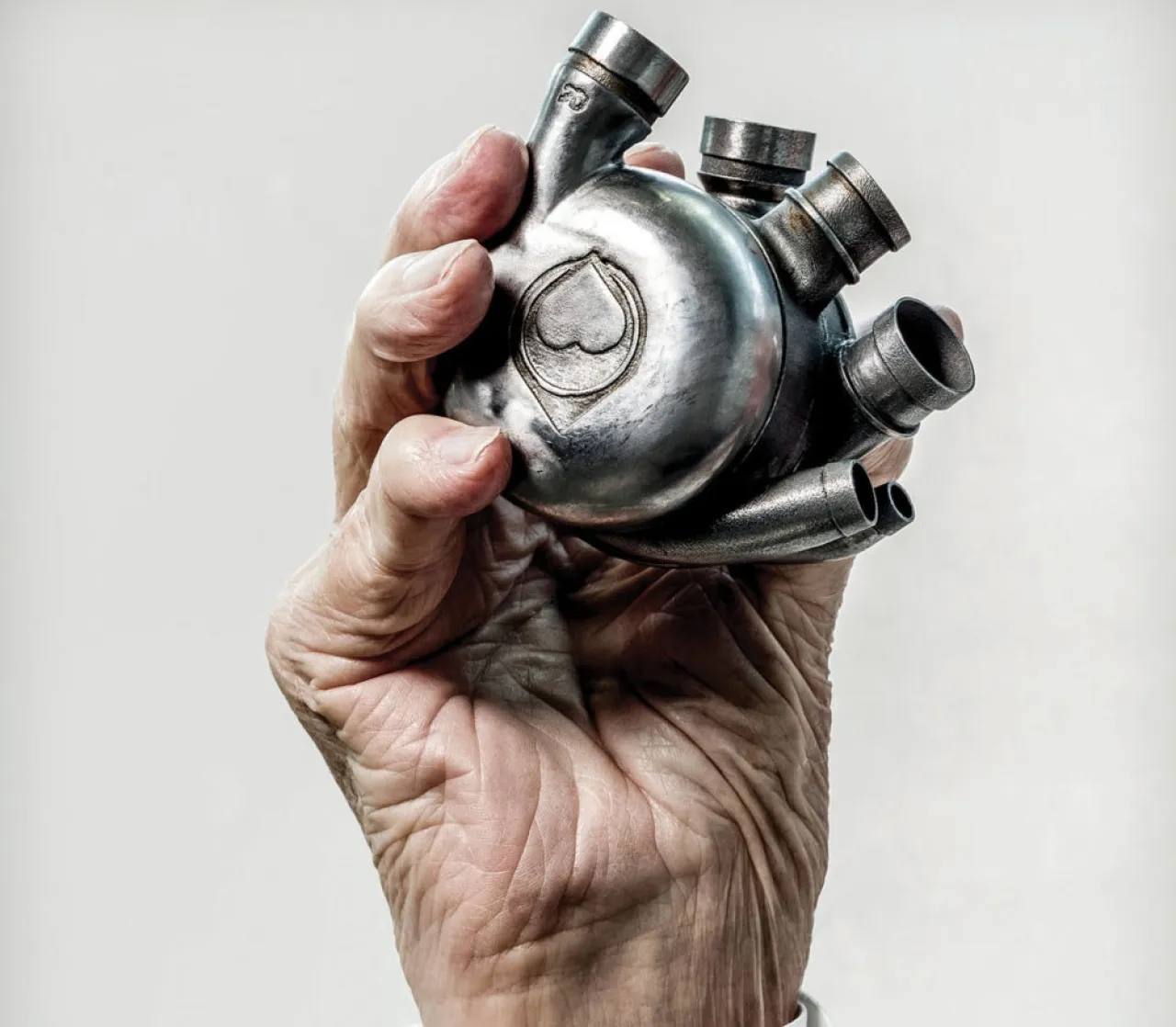
Khaberni - A team of Canadian scientists has created a three-dimensional cardiac device known as the "Heart on a Chip" (HOC), which could be a scientific breakthrough in combating the main cause of death worldwide, namely cardiovascular diseases.
This device allows for the testing of drug effects on the human heart without risking anyone's safety. The engineered cardiac tissue beats on its own and responds predictably to drugs, with a unique ability to monitor cardiac activity at the tissue and individual cell levels.
From tissue to cell
According to the "Nano Micro Small" site, this device is the first platform that integrates dual sensors allowing immediate, large-scale monitoring of cardiac activity down to the cellular level.
This represents a significant advancement compared to previous versions of HOC, which lacked high precision sensing at the cellular level. This is crucial as many heart diseases are linked to dysfunction in individual cardiac muscle cells, responsible for tissue contraction.
The method of manufacturing the heart on a chip
The researchers relied on cardiac muscle cells and connective tissue cells taken from mice, embedding them in a hydrogel rich with proteins and nutrients to stimulate growth, and then implanting them on flexible silicone chips.
The researchers plan to simulate specific heart diseases using cells from patients suffering from dilated cardiomyopathy and arrhythmias, with the goal of developing drug tests tailored to each patient.
As Hooman Savoji, the lead author of the study, states: "This achievement brings us closer to true precision health, by giving us the ability to determine the most effective drug for each person before administering treatment."
Ali Mosawi, a contributing researcher, notes: "The ability to monitor tissue response to various compounds in real-time represents a significant advantage for preclinical development and translational research."