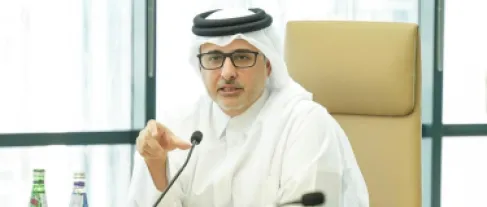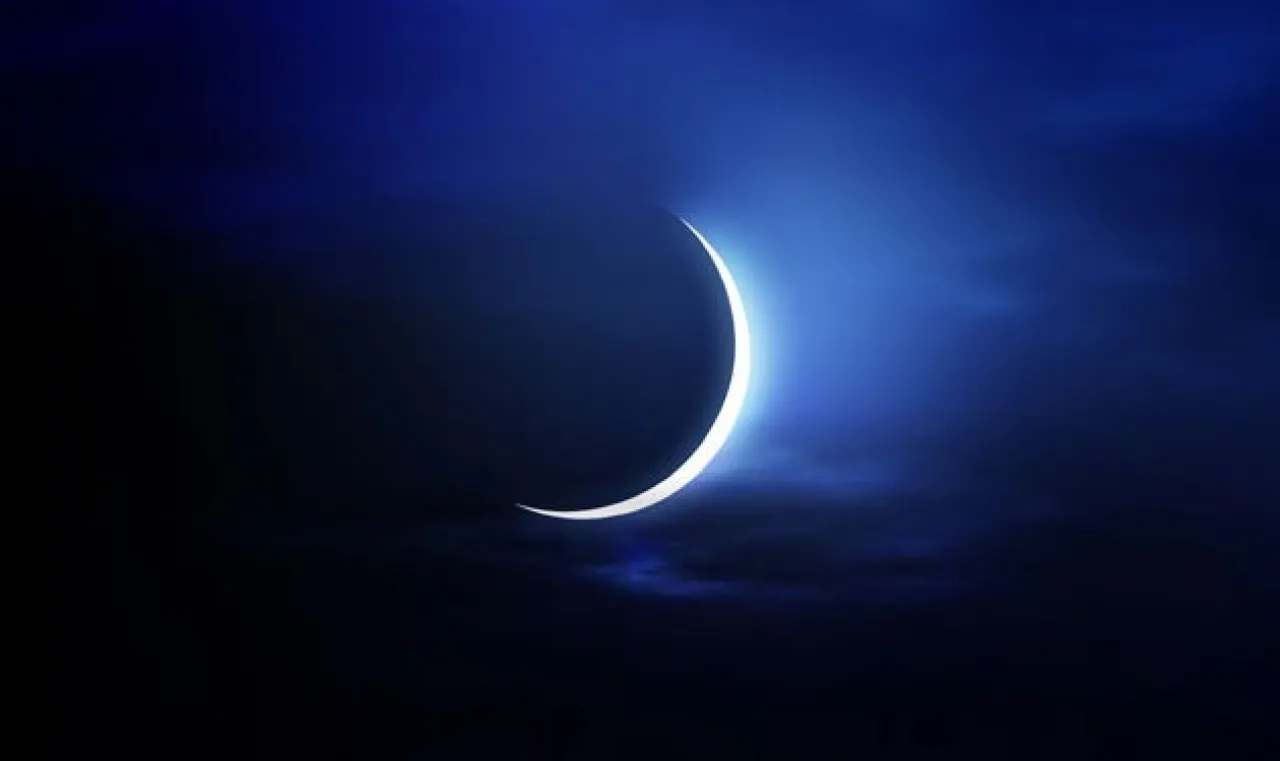
Khaberni - The president of the Emirates Astronomy Association, and a member of the Arab Union for Space and Astronomy Sciences, Ibrahim Al-Jarwan, stated that modern technologies and applications, including artificial intelligence, can monitor crescents with extreme precision; they can see what neither the naked eye nor terrestrial telescopes can, but at the same time, they cannot decisively determine the sighting of the crescent from a religious and legal standpoint, which is subject to the regulations of religious experts.
Al-Jarwan confirmed that the "drone" was successful as an experiment in monitoring the crescents, but it did not add any scientific value, although it is a technology capable of development as it did not detect anything that was not observed from the ground or from Mount Hafeet or Jebel Jais. Meanwhile, optical telescopes are used as a high magnification tool approved by religious scholars for monitoring the crescents.
He added that there are modern astronomical technologies and applications, one of the most important being the "CCD", which can monitor the new astronomical crescent with high accuracy; a technology known as Charge-Coupled Device—a charge coupling device or charge coupling sensor.
He explained that this technology relies on precise astronomical calculations which have proven accurate in estimating the position of the sun for calculating prayer times, and also in predicting astronomical phenomena such as eclipses, comet visits from deep space, and other phenomena like conjunctions and occultations, etc.
The (CCD) technology, digital sensors that convert light into high-precision electrical signals, is the same technology used in advanced astronomical cameras, functioning to take multiple photos rapidly (like compiling hundreds of photos per minute) then processing them to produce an image of the crescent even when visibility is very weak or before sunset.
He elaborated that this technology is used in cameras and advanced astronomical imaging devices installed on telescopes to capture highly sensitive images of celestial bodies, including the crescent before it becomes clearly visible to the naked eye.
Al Jarwan confirmed that from a scientific and astronomical perspective, (CCD) is very useful in monitoring and documenting the crescent, especially at astronomical research sites and observatories. However, from a religious standpoint, religious scholars have not endorsed it as a method for religious sighting because it detects what the human eye cannot.
Regarding the use of "the drone", Al Jarwan confirmed that it had been used in the past few years for two purposes: to guide observers using the naked eye or binoculars to a point in the sky where the moon actually is, predetermined by applications and astronomical calculations, to focus monitoring on this part of the sky, as well as aiding in observing using a telescope a wider horizon than the earth's surface horizon. It was a successful experiment in principle but is still under development, as the peaks of Jebel Jais or Jebel Hafeet provide a broad horizon and better sky for observation.
Al-Jarwan reiterated that "entering the religious months is a matter under the jurisdiction of religious authorities, and is sanctioned by the ruler or his delegate, and although we astronomers believe in the accuracy of astronomical calculations, we consider ourselves supporters of making the correct decision, not the ones who make the religious decision."