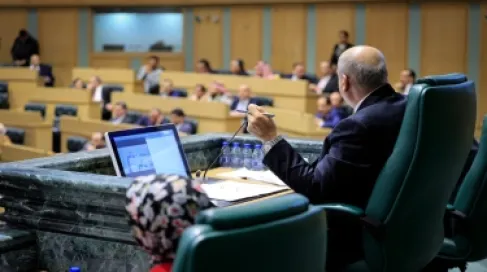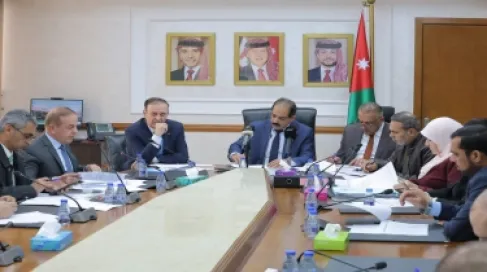
The Parliamentary Committee on Education continues, on Tuesday, discussing the Education and Human Resource Development Bill for the year 2026.
The meeting is attended by the presidents of both public and private universities.
The Cabinet approved in January the Education and Human Resource Development Bill for the year 2026; this is part of the efforts to restructure and modernize the education sector in the kingdom, as part of the government's commitment to implementing the vision of economic modernization, the public sector reform roadmap, and related initiatives, which includes the establishment of the Ministry of Education and Human Resource Development, replacing the ministries of Education and Higher Education and Scientific Research.
The bill reflects the results of scientific efforts during the past period, which included a comprehensive and methodological evaluation of the education sector's status according to best practices, with the participation of many experts, academics, and specialists.
The law project comes as a result of the need to unite the references responsible for the education and human resource development system for all educational stages, which supports the education path and its development, and forms the construction of a new structure for the education system.
The bill aims to improve the quality of education at all levels according to national and international standards, enhance its outputs, quality, and competitiveness, within the priorities, standards, and fundamental pillars that enhance scientific research and innovation, and ensure sustainability in development and modernization, alongside continuing to guarantee the right to free education at the basic stages.
The bill also targets developing the skills of graduates, enhancing their competitiveness in the labor market through alignment between educational outputs and labor market needs and development, and strengthening the autonomy of Jordanian universities.
Among the most prominent features of the new education system and legislative amendments is the establishment of a national council concerned with approving national policies for human resource development chaired by the Prime Minister, and the new Ministry of Education and Human Resource Development taking responsibility for creating policies for all educational stages, including early childhood education, basic and secondary education, higher education, and vocational and technical education and training.
The new system also aims to ensure advanced quality standards confined within the Accreditation and Quality Assurance Authority, and to expand its scope to include all educational and training institutions for all educational stages, including public and private, in addition to enhancing efficiency and effectiveness through designing a new organizational administrative structure for the Ministry of Education and Human Resource Development consisting of nine general administrations with extensive delegation of executive powers to education directorates that will be reduced in number in proportion to the number of students and geographical areas.
The law project also includes strengthening the autonomy of universities and reducing the ministry's role in higher education to be limited to setting policies and technical standards, licensing facilities, verifying the alignment of higher education, vocational and technical education outputs with labor market requirements, and approving strategies.