Khaberni - A recent analysis of the return of Syrian refugees from Jordan to Syria between December 2024 and last December highlights notable shifts in the return patterns and their intentions, amid political and security changes experienced by Syria during the past period.
The analysis, based on data from the United Nations High Commissioner for Refugees in Jordan, provides a detailed reading of the returnees' movement, their demographic characteristics, and the factors influencing their decisions to return, in addition to the development of cross-border movement procedures.
Following the fall of Bashar al-Assad’s regime on December 8, 2024, the UN High Commissioner for Refugees noted a significant increase in the numbers of actual returnees to Syria, as well as in the declared intentions of refugees to return, a trend that continued throughout 2025. A rapid regional survey of perceptions and intentions conducted in January 2025 showed that 40% of Syrian refugees in Jordan plan to return this year, while a subsequent survey conducted in June of the past year saw that proportion drop to 22%.
This decrease in return intentions indicates that a number of refugees who previously intended to return have already done so, and does not necessarily point to a significant decline in the desire to return. In both cases, refugees consistently pointed to ongoing security concerns, availability of housing and shelter, and limited livelihood opportunities in Syria, as primary factors influencing their decisions.
The return processes experienced two distinct waves during the year. The first wave came shortly after the political changes, with high return rates recorded in January and February 2025, characterized by a period of optimism and nostalgia, as many refugees sought to return for the first time in over a decade. However, return rates sharply dropped in March of last year, due to concurrent security incidents in coastal and southern Syria later that summer, which contributed to slowing the returns.
The second wave occurred during the summer months when June, July, and August of that year recorded the highest return rates. This trend was expected among the refugee communities, as many postponed their returns until after the end of the school year to minimize the impact on their children's education.
Since the reopening of the Jaber border crossing in 2018, Syrian refugees in Jordan have traveled between Jordan and Syria with the approval of the Jordanian government, often for personal and practical reasons, such as obtaining or renewing documents, checking properties, or attending important family events. Travel usually occurred via return permits issued by the Jordanian Ministry of Interior, which allowed refugees to enter Syria for a limited period, usually three months, and then return to Jordan legally.
After the downfall of the Assad regime, the issuance of return permits initially became more restrictive, although the Jordanian government gradually expanded the categories of Syrians allowed to travel between Jordan and Syria and exempted from the requirement to obtain a return permit during 2025.
These categories included individuals with Jordanian relatives, investors, students, property owners, Syrians residing in third countries, and other specific groups.
The UNHCR noted an increase in the second half of 2025 in the number of refugees who obtained re-entry permits, as well as in the number of returnees to Jordan under the expanded exemption criteria.
Between December 8, 2024, and December 31 of last year, more than 177,000 registered Syrian refugees returned to Syria from Jordan, with the return being largely gender-balanced, as women and girls made up 49% of returnees, compared to 51% for men and boys.
Conversely, women and girls represent 51% of the total registered Syrian refugees in Jordan, while men and boys constitute 49%. Children under the age of 18 made up 42% of the returnees, compared to 49.5% of the children among the total registered refugees.
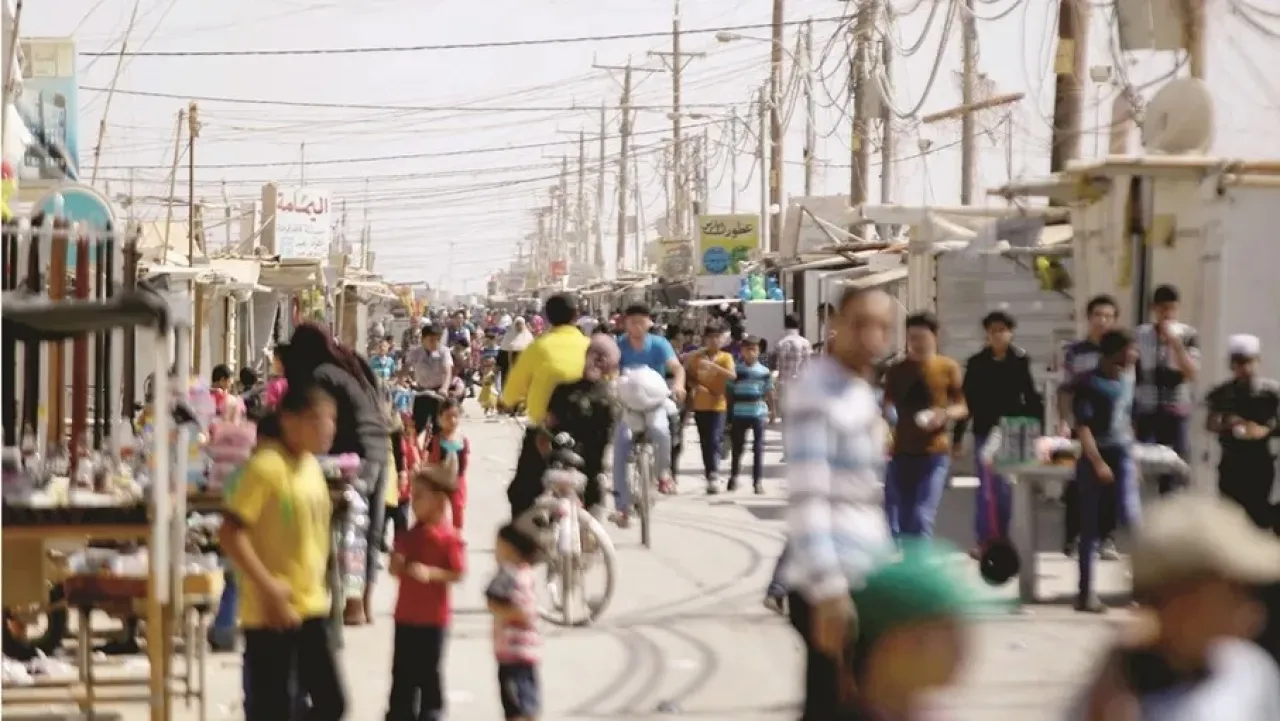
About 24% of the returnees left from refugee camps (Azraq, Zaatari, and Emirates Jordanian Camp 2), while 76% returned from outside the camps, particularly from the governorates of Amman, Irbid, and Mafraq.
The report noted that this distribution reflects the overall registration data of UNHCR and does not indicate a much higher tendency to return among those residing in camps compared to refugees in host communities.
According to the report, based on intention surveys, most refugees intend to return to their original governorates. Daraa was the original governorate for the majority of returnees, followed by Homs and Rural Damascus.
In terms of their residence areas in Jordan before returning, 23% of the returnees lived in Amman, and 22% in Irbid, with lower proportions from Zaatari camp (15%), Mafraq (14%), Zarqa (7%), and Azraq camp (6%).