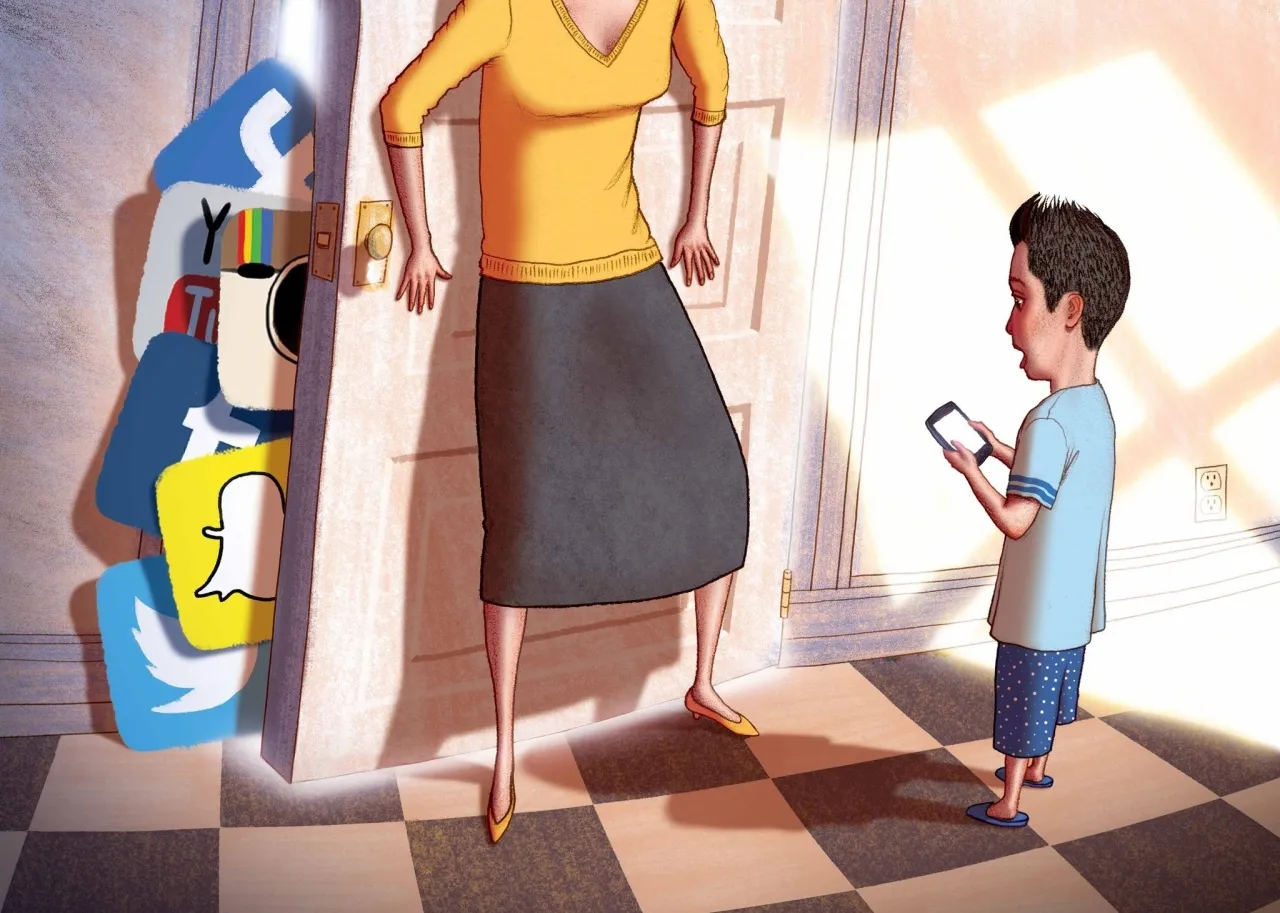
Several Western countries are moving towards adopting more stringent legislative measures to regulate children's use of social media platforms, in a movement led by Western governments to protect this group from digital risks.
These steps follow the Australian model, where Australia became - last December - the first country in the world to ban social media for minors under the age of 16.
Britain the Latest to Join
British Prime Minister Keir Starmer announced on Sunday that his government is seeking broader powers to regulate internet access, stating that "technology is evolving rapidly, and the laws must keep pace."
According to Starmer's office, the new powers aim to act quickly within months rather than waiting years, which could lead to reduced parliamentary oversight of future restrictions.
The British government announced last month its intention to consult on banning social media for children under 16, following the Australian model.
These measures will be introduced as an amendment to the current legislation on crime and child protection currently under consideration by Parliament.
Confronting the "Wild West"
Spain, Greece, and Slovenia have announced their intention to impose a similar ban, while France is close to completing this step after it was approved by Parliament late last month.
Spanish Prime Minister Pedro Sanchez described the current digital environment as the "wild west," emphasizing that his country would demand platforms to implement age verification systems to protect minors from what some describe as technology "designed to be addictive."
Sanchez also mentioned that his government will introduce a new bill to hold social media executives accountable for illegal content and hate speech, as well as criminalize the manipulation of algorithms and the amplification of illegal content.
Denmark has announced its intention to impose a ban on those under 15 years of age, allowing access to some platforms for those aged 13 with parental consent, while Norway is working to raise the digital consent age from 13 to 15 years, and is considering setting an absolute minimum usage age at 15 years.
The European Parliament adopted a non-binding resolution last November calling for a minimum social media usage age of 16, with the "digital age" unified at 13 years for accessing social media platforms, video sharing services, and some artificial intelligence apps.
Regionally, Turkey has joined this trend with intensive parliamentary movement, as a parliamentary investigation committee report revealed an anticipated new law aimed at banning social media for minors under the age of 16.
The Turkish recommendations include unprecedented measures, including enforcing nighttime restrictions on internet usage for devices used by minors under 18, and requiring service providers to build mandatory content filtering systems.
Artificial Intelligence
The proposed measures also extend to artificial intelligence tools, where the British government confirmed that more "chat robots" would be subject to a ban on creating sexual images without the person's consent, following measures against the chat robot "Grok" owned by American billionaire Elon Musk.
These new laws lead to a global debate about the limits of government intervention in regulating the digital space, as some believe stricter restrictions are necessary to protect new generations, with educational reports warning of teenagers losing their academic focus and withdrawing from social life.
Others fear that this could lead to restrictions on freedom of speech, especially with the increasing influence of technology companies.
Observers believe these shifts could be a first step towards reorganizing the relationship between society and the digital world, especially with increasing discussions on biometric verification tools aimed at protecting young users.