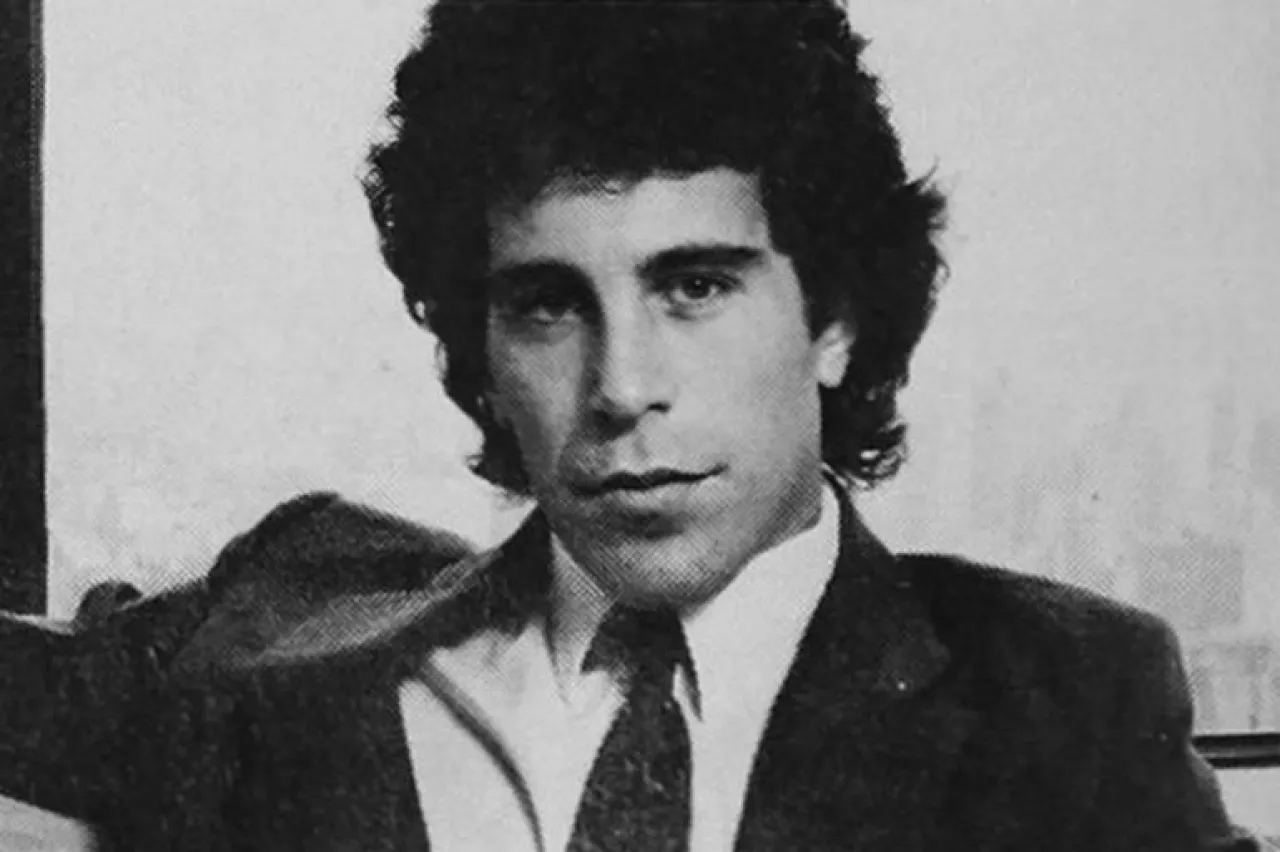
Khaberni - In two reports on the relations of the late Jeffrey Epstein - convicted of sex crimes and accused of trafficking minors - French newspaper Le Monde sheds light on how Epstein succeeded in weaving a global influence network that enabled him to penetrate the elite, also touching upon what it described as "deliberate judicial negligence" that Epstein's cases enjoyed before the courts.
In the first report, which was by their correspondent to San Francisco, Arnaud Leparmentier, the French newspaper provided a detailed reading of how Epstein succeeded in building a global influence network that enabled him to penetrate the elite ranks.
The writer likened Epstein to the character "The Great Gatsby" in Francis Scott Fitzgerald's novel, where this character exploited its ambiguity and dubious wealth to open the doors of presidential palaces and academic forums, amid complete silence from those around her.
Le Monde says that the comparison with Gatsby is not intended to justify Epstein's crimes against children, but rather to try to understand how a single man, born in 1953 into a modest Jewish family in Brooklyn, the son of a municipal gardener and a babysitter, managed to weave such a network of influence within the rich New York community.
The newspaper indicates that Epstein's rise was not by chance, but was the result of systematic manipulation that started in the seventies of the last century when he falsified his biography to enter the world of finance.
The report quotes an investigation by the New York Times describing him as "a conscienceless fraudster, who misused expense accounts, orchestrated dubious transactions, and showed remarkable talent in extracting money from well-reputed businessmen." Businessman Leslie Wexner's wealth formed the platform from which Epstein built his dark empire.
Epstein's activities ranged between Manhattan palaces and his private island in the Bahamas, which turned into a stage for widespread sexual violations. According to the report, prominent political leaders, including former US President Bill Clinton and former British Prince Andrew, fell into the trap of this network.
In this context, the report notes a striking statement by US President Donald Trump in 2002 where he says, "I've known Jeff for 15 years. He's a terrific guy ... It is said that he likes beautiful women as much as I do, and many of them are on the younger side."
Epstein's ambitions did not stop at politics, but extended to include the scientific and academic community at Harvard University and the Massachusetts Institute of Technology. The scientist Alan Guth recounts his observations about Epstein's scientific visits to Harvard, saying the billionaire "was always surrounded by 3 or 4 young women," which reflects the collective disregard practiced by the elite towards his suspicious behaviors in exchange for his generous donations, according to Le Monde.
The leaked documents reviewed by the newspaper reveal disastrous consequences for personalities like Bill Gates, the founder of Microsoft, where correspondence indicates blackmail attempts that Gates was subjected to by Epstein.
In a draft email written by Epstein to Gates in 2013, "You begged me with tears in your eyes to delete messages related to your sexually transmitted disease," which illustrates how Epstein used private information as a tool for control and pressure.
The report concludes that Epstein's network would not have continued without the controversial "plea agreements" and safeguarding of the elite. Commenting on the ongoing revelation of truths, billionaire Elon Musk wrote on the X platform, "The real proof of justice does not lie in revealing the files but in prosecuting those who committed heinous crimes alongside him," confirming that the Epstein case remains an open wound in the conscience of the judiciary and international politics.
Judicial Negligence
In the second report by its correspondent in Washington, Piotr Smolar, the newspaper revealed some behind-the-scenes of what it called "deliberate judicial negligence" that surrounded Epstein's case over 30 years, describing the case as the most prominent example of what is known as "two-track justice" in the United States.
The report highlights a stormy congressional hearing that witnessed a sharp confrontation between Epstein's victims and the US Attorney General, Pam Bondi, who refused to apologize to the victims or even look at them.
The origins of the case date back to 1996, when federal police ignored the first reports filed against Epstein, after which this billionaire entered into a series of suspicious legal deals.
Congressman Thomas Massie, one of the prominent defenders of the victims, sees the case as more serious than the Watergate scandal, confirming in a confrontation with the attorney general, "This cover-up extended for decades across 4 different US administrations, and you are responsible for part of that."
The report details how the former Attorney General of Florida, Alexander Acosta, granted "federal immunity" to Epstein in 2008 through a secret deal that prevented his prosecution or the prosecution of his partners, in exchange for a very lenient sentence.
The newspaper quoted Julie Brown, the journalist at the Miami Herald who broke the case, wondering about Acosta's motives, "I do not know what was on his mind ... Epstein negotiated a very comfortable way out, while the victims were completely unaware of what was happening behind the scenes."
The report also points to deliberate neglect in collecting evidence, as FBI investigators were prevented from confiscating Epstein's computers containing surveillance camera recordings, which could have revealed the identity of all those who frequented his houses.
According to a report by the Office of Professional Responsibility (OPR) of the US Department of Justice, Acosta made his decision without knowing "the full extent of Epstein's criminal behavior, and whether there were additional victims who might implicate other offenders."
Despite Epstein's suicide in his cell in 2019 in circumstances described by the newspaper as "mysterious," the case files continue to shake the political landscape in Washington, especially with the revelation of millions of new documents.
Commenting on the magnitude of the crimes, journalist Julie Brown told the newspaper, "The Department of Justice estimates there are more than 1000 victims, but it is impossible to determine the exact number, as Epstein had an army of victims tasked with recruiting other victims."
The report concludes that the truth is still elusive despite all disclosures, amid political attempts to obscure some sensitive archives, and with the continued unveiling of "Epstein files," the prevailing impression, according to the report, is what the current Attorney General Merrick Garland expressed during his confirmation session when he described the matter as "horrific, and it should have been pursued much earlier... but I do not know why that did not happen."