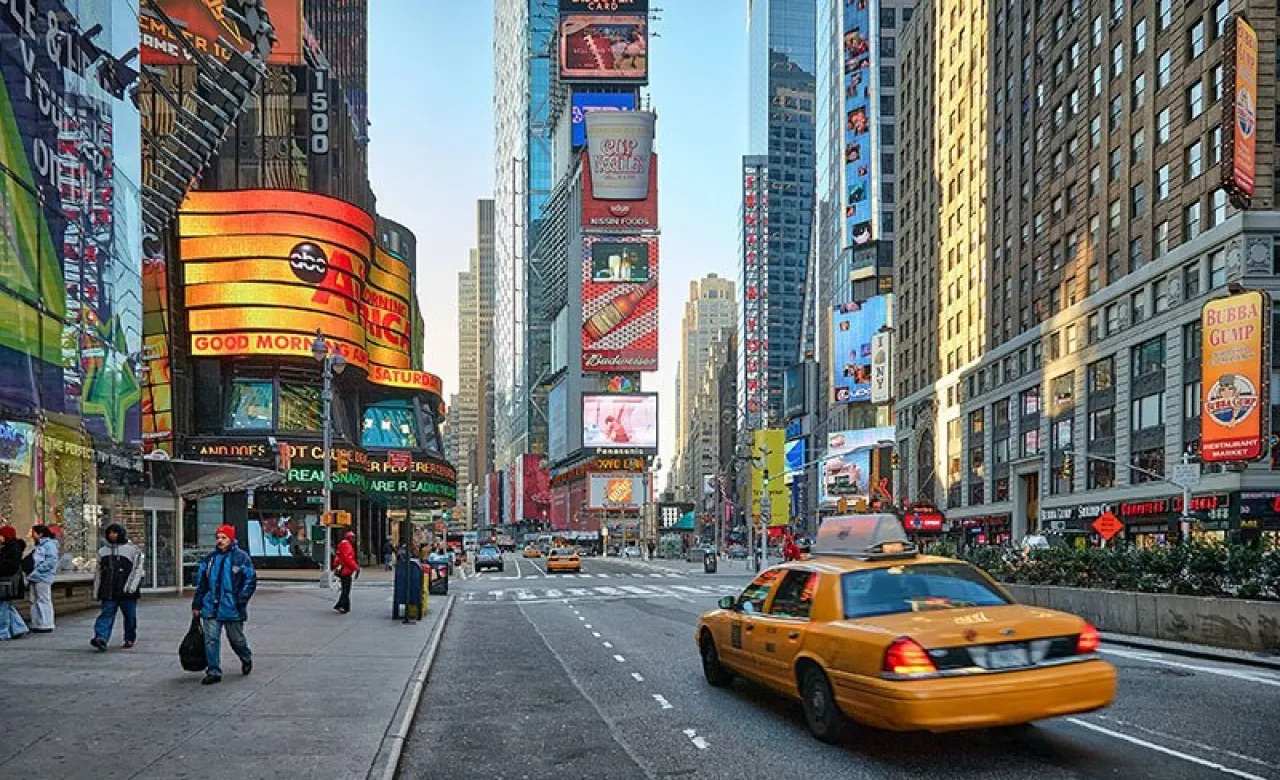
Khaberni - Rising living costs in New York have forced artists and creatives to leave one of the world's most prominent cultural capitals, a crisis that has prompted the new mayor Zehran Mammadani to prioritize it.
After working for 20 years as a makeup expert in cinema and television, Noel Jacoboni fears she must leave New York, where she can no longer afford the high cost of living, much like her fellow artists in the field.
Significant Decrease
A report issued in December by the "Center for the Future in the City", an independent public policy organization, stated that the number of New Yorkers working in the fields of arts and creativity, whether in audiovisual production, fashion, advertising, or otherwise, has decreased by 6.1% since 2019.
As Eli Dvorkin, one of the report's authors, explained, "artists suffered during the COVID pandemic more than almost any other workforce group in the city," according to AFP.
He continued, "Since then, the cost of living has been rising much faster than income, and artists are really starting to feel the pressure."
About 326,000 people work in the cultural and creative sector in New York, but many of them are moving to other cities, such as Miami, Dallas, and Nashville.
One of the main factors mentioned in the report to justify this is that what they earn in New York is about 23% lower than the national average after accounting for the cost of living, compared to 15% a decade ago.
What exacerbates the problem is that inflation across the United States remains at high levels since the end of the health crisis.
New York, specifically, has seen a rise in rents due to several factors, the most notable being high demand, a shortage of available housing, and a disproportionate increase in the wages of workers in the arts.
According to the report, the average rent for housing in New York increased by 42% over the past decade, while the wages of workers in the arts sector increased by no more than 25%, far lower than the national average of 44%.
Initiatives and Proposals
In a statement before the Committee on Cultural Affairs in New York in February, Jacoboni complained about a "shortage of work due to the high cost of production in the city," adding: "We are losing talented people in our city."
The center's report indicated a decrease in the number of workers in cinema, television, advertising, and design over the past decade.
The report also noted the closure of more than 50 theaters, music clubs, museums, and galleries since 2020, citing increases in rents, wages, and insurance costs.
Mammadani affirmed that he is working to address the cost of living for artists and creatives, and Rafael Espinal, his team's media and entertainment sector official, said in January that he intends "to keep New York the creative capital of the world."
Another initiative supported by the chairperson of the New York City Council, Julie Menin, is working to allocate a greater number of rent-stabilized homes for artists.
The "Center for the Future in the City" also proposed organizing a large cultural festival that would span the city's five boroughs with the aim of revitalizing the arts sector there.