Khaberni - Iraqis remember every year what they call the "Black Day" when the night bared its fangs towards children, women, and the elderly, moments before the first light of dawn at 4:30 AM on Tuesday, February 13, 1991. It was then that two American fighter jets bombed a shelter in the Ameriyah neighborhood in the heart of Baghdad as part of Operation Desert Storm, which was carried out by an international coalition to expel Iraqi forces from Kuwait.
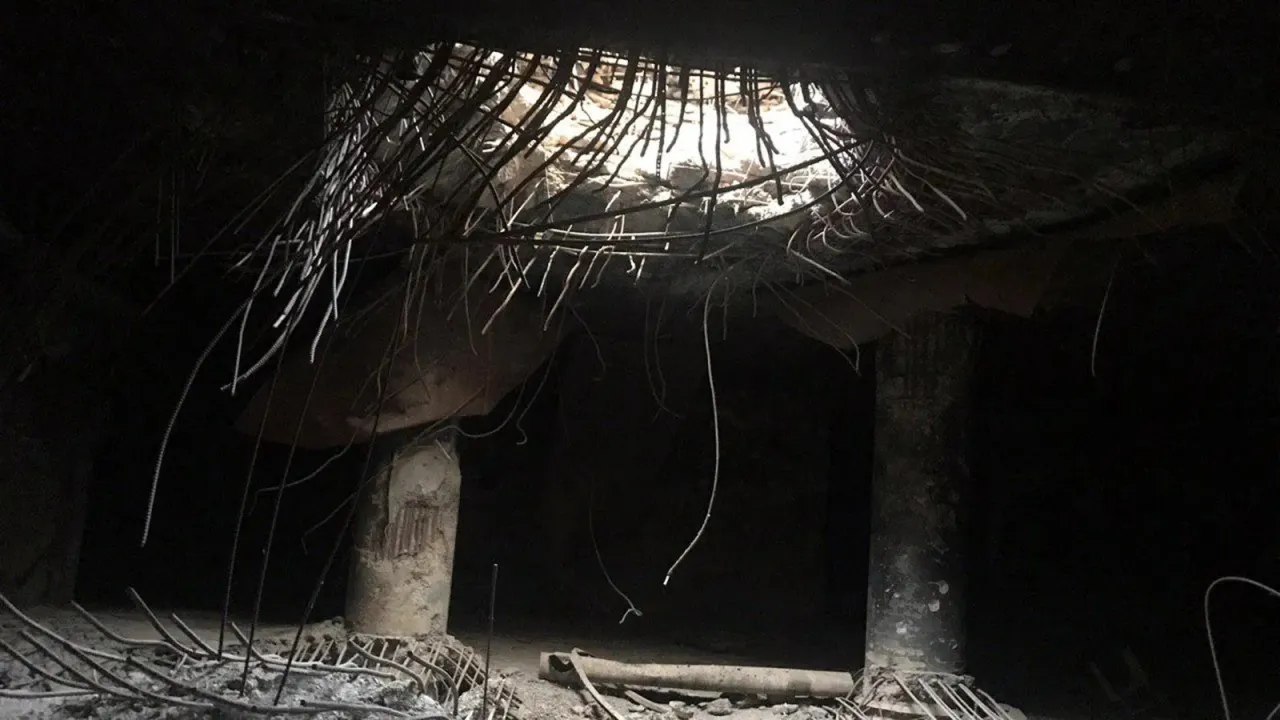
The American bombardment was executed with two smart bombs specifically designed to strike the concrete shelter number 25. The first penetrated the fortified roof, while the second reached inside, together claiming about 408 lives, including 261 women and 52 children, the youngest of whom was just 7 days old, in addition to 26 Arab citizens.
The shelter was built along with other shelters by Western companies during the Iran-Iraq war (1980-1988), designed to be resistant, equipped for protection against cluster strikes including unconventional chemical or germ warfare, as well as sealed against nuclear and radiation contamination, hosting up to 1500 people who could survive inside for days without needing the outside world, equipped with water, food, electricity, and clean air.
The building consists of 3 stories, each floor covering an area of 500 square meters, with walls thicker than one and a half meters. Its roof is reinforced with iron beams 4 centimeters thick, and its rear emergency doors lead to a cellar, whereas its internal stairs lead to the ground floor where the refugees resided.
Regarding the Ameriyah shelter massacre, journalist Ali Karim Idhaib says that one of his relatives, Abu Taybah (40 years old), was there with his family comprised of 3 children and his wife, and his memory still holds what his father told him about those horrific moments when they could not find any remnants of the family except the necklace of a 4-year-old girl.
Idhaib adds, quoting his father, "The scenes in the shelter after it was bombed were gruesome, as hundreds of bodies were turned to ashes, and other completely burnt bodies were recovered, their features obliterated."
The painful incident has been represented in sculptural and artistic works, notably the sculptural memorial monument which depicts a human head emerging among robust stone blocks surrounding it, excessively tightening the skin of the face with tense superficial features and many shadows, while the mouth's formation suggests a perpetual, rigid scream.
The Mournful Dawn
A feature film titled "The Mournful Dawn," written by the Iraqi writer Sabah Atwan, directed by Salah Karam, with the soundtrack by Naseer Shamma, was produced to embody this tragedy. Atwan based it on witness accounts from the families of the victims to truly represent the symbolic value of the tragedy, shooting scenes inside the shelter itself.
Atwan sees in the film a faithful historical symbolism of the incident, as it did not distort the truth, not even by a single letter, considering it a duty of human, ethical, and national responsibility.
He said that the film was very successful, has been translated into English and French, and was well-received by the Iraqi people, embarrassing the United States, which used various excuses to evade responsibility for its crime.
In his discussion with Al Jazeera Net, Atwan confirmed that he wrote the screenplay based on logistical support he had received from outside the broadcasting and television institution at that time.
Questions and Ambiguity
Despite more than three decades since the American bombing, numerous questions still hover around the incident without clear answers; notably, how did the American intelligence obtain precise information about the shelter? Where did they get that special information from? And what is the likelihood that there were sources close to Saddam Hussein who leaked it and cooperated with them through espionage?
Security expert Adnan Al-Kinani responds to these questions and others by acknowledging the prior cooperation between sources from Saddam Hussein's regime and the American administration, reinforcing his statement with an incident that occurred minutes before the bombing when one of the late president's personal attendants informed him of the need to leave the place due to intentions to bomb the shelter from American aircraft, and indeed, it happened few minutes after his departure from the shelter.
Al-Kinani - who served as a colonel in the Republican Guard before the American invasion of Iraq in 2003 - sees these details and others as clear indicators of cooperation with the American administration in bombing the shelter, along with a penetration of the regime.
He enhances his statement by questioning the reason behind Saddam Hussein being informed by one of his attendants about the need to evacuate the shelter due to bombing intentions, and how the information about the bombing reached the office of the late Iraqi president. He adds - in his discussion with Al Jazeera Net - that these indicators confirm the communication between the American administration and sources close to Saddam's regime.
As for the justifications of the United States that the shelter was a military headquarters, Al-Kinani confirms that the Iraqi Armed Forces General Command used the lower floor of the shelter as its headquarters.
Historical Perspective
American history pages are filled with many horrifying scenes against defenseless civilians, whether through bloody wars or aerial bombings, and the Ameriyah shelter crime is one of those evidence, as stated by a History professor at Baghdad University, Abdel Karim Al-Araji. He describes this crime as a "stain of shame" on the face of the military and political decision-makers in America.
Al-Araji - in his dialogue with Al Jazeera Net - states that the United States obtained secret information about the shelter through its high-tech technologies, and he believes that the American strike was not random but was very painful and aimed solely at killing the innocents.
He recalls scenes like most Iraqis lived in those moments, and how Iraqis were living in terror due to the bombing and the sounds of American shells falling on them, targeting civilians and innocents.