Khaberni - DP World faced a major shaking after many major institutions suspended their deals with (DP World), the company managing Jebel Ali and Rashid ports, following the disclosure of recent judicial documents about connections of its CEO, Sultan Ahmed bin Sulayem, with the convict American businessman Jeffrey Epstein.
The scandal began with the disclosure of emails showing communication between bin Sulayem and Epstein after the latter’s conviction in 2008, involving discussions in business dealings and potential partnerships, prompting investment entities to withdraw as a precaution.
According to Reuters yesterday, Thursday, members of the US Congress said that bin Sulayem's name appeared in the files, leading to renewed scrutiny into his past interactions with the late Epstein. The files suggest the close relationship between the two men continued for more than a decade after Epstein’s conviction in 2008. These files are among millions published by the US Department of Justice, revealing Epstein’s wide network of relationships with prominent figures in politics, finance, academia, and business. DP World has refrained from commenting until yesterday evening. Bin Sulayem has not yet responded to a comment request sent to him by "Reuters" to his "LinkedIn" account.
The repercussions extend to other activities
Estimates suggest that the effects will not stop at DP World, but will extend to other commercial and investment activities in the UAE, according to observers, where bin Sulayem is considered one of the most prominent economic figures in the Gulf state, holding several strategic positions that make him a pivotal player in the trade, ports, and logistics sectors globally.
In addition to leading "DP World," he holds the position of president of the Ports, Customs, and Free Zone Corporation (PCFC): an umbrella that encompasses vital government entities, such as Dubai Customs, and Dubai Maritime City Authority. He also chairs the "Dubai Chamber for Global Economy," one of the three chambers under the Dubai Chambers umbrella, aiming to enhance Dubai's status as a global trade center and attract foreign investments. He is also a member of the "Dubai Economic Affairs Council": to contribute to the formulation of financial and economic policies for the emirate.
Bin Sulayem, one of Dubai's most prominent businessmen, who leads the DP World group during a period of massive expansion, making it one of the largest logistics companies in the world. The group manages about 10% of the global trade, with operations spanning various parts of the world, including Canada, Peru, India, and Angola. The group also sponsors a leading professional golf tour in Europe, and it has been a logistics partner for the McLaren Formula 1 team since 2023.
According to his biography on the group's website, some of bin Sulayem’s other projects include establishing Nakheel, the real estate developer behind the famous palm-shaped Dubai Islands, as well as his contribution to creating the Dubai Multi Commodities Centre.
Rigorous testing and multiple withdrawals
Between the repercussions of reputation and increasing pressures, "DP World" remains before a rigorous test, whether it succeeds in containing the storm and rebuilding trust, or whether the crisis becomes a pivotal station in redrawing the logistics influence map in the region.
According to Bloomberg, "British International Investment," a British development and finance institution valued at $13.6 billion and wholly owned by the UK government, announced the day before yesterday the suspension of its investments with "DP World" due to what it described as horrifying statements found in the Epstein files regarding Sultan bin Sulayem. A spokesperson stated in an email: "We are shocked by the allegations in the Epstein files regarding Sultan Ahmed bin Sulayem. Based on these allegations, we will not make any new investments with DP World until the company takes the required actions."
This announcement came just one day after the "Caisse de Depot et Placement du Quebec," Canada's second-largest pension fund, announced suspending its future investment plans with DP World, and a spokesperson for the Canadian fund said: "We have made it clear to the company that we expect a clarification of the situation and taking necessary actions. Until then, we stop any further capital deployment in partnership with them." The Canadian fund, amounting to $366 billion US dollars, holds large stakes in several assets of the Dubai World group, with investments focused on port projects, not the parent company.
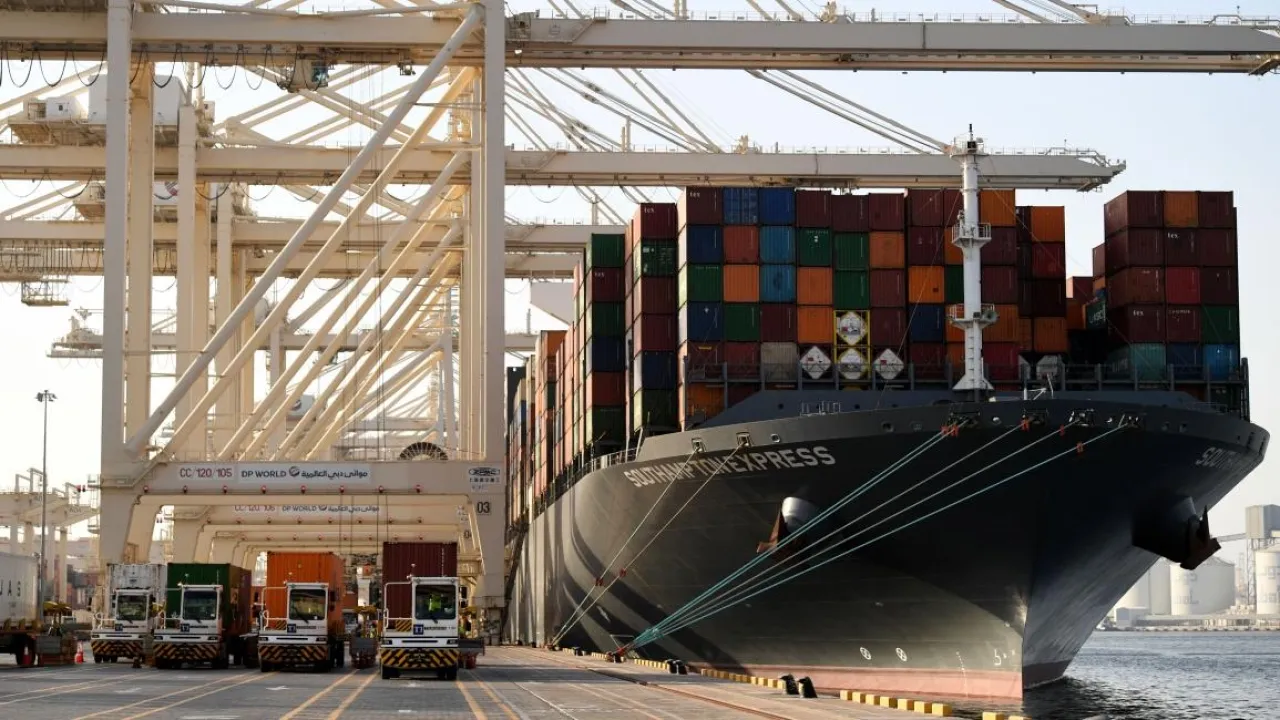
These steps highlight increasing pressures on DP World, which manages about 80 global ports and is considered the backbone of Dubai's economy, where foreign investment is a pillar for diversifying the economy away from oil. Observers expect negative impacts on investor confidence, especially in the context of competition with ports in Singapore and China. In a broader context, this may lead to a reevaluation of Dubai's international partnerships, with risks of losing billion-dollar deals in the logistics sector.
As the fallout from the Epstein scandal continues, British International Investment announced that it had suspended new investments with the DP World group. A spokesperson for (B.I.I.) stated in an email: "We are shocked by the allegations that emerged in the Epstein files regarding Sultan Ahmed bin Sulayem, in light of these allegations, we will not make any new investments with DP World until the company takes the necessary actions." B.I.I. invests in four ports in Africa alongside DP World.
Tools of the international conflict
The expert in political economy, Raed Al-Masri, believes that it is impossible to separate the reading of these developments from a broader context of international geo-economic competition. He says, "The timing of the leaks related to the Epstein case, and the subsequent quick investment moves, raise questions about whether we are facing traditional fallout from the documents that were disclosed, or a form of organized economic pressure." Al-Masri sees the use of ethical or judicial files in sensitive economic timings as a tool within the tools of international conflict, adding that "there are major economic files revolving in the world, politically exploited to pressure certain countries, especially those that hold strategic positions in global supply chains, such as the UAE through Dubai ports."