Khaberni - Ramadan 2026 will not be a traditional drama season; it will take us on a branched journey through Syrian memory, where politics intersect with humanity, and the past meets the present, reality mingling with fantasy.
The works appearing this year on Syrian screens are no longer just entertainment, but an attempt to retell history and understand what happened, and a space for collective liberation of the camera from the shackles of fear and censorship. According to the critic Aram Bashir, the season's mood leans toward a symbolic “trial of the previous regime,” revealing a clear direction in confronting the painful past and rediscovering long-silenced voices.
For his part, Mansour Al-Deeb sees the season as a moment of liberation for Syrian drama, where the screen openly discusses arrests, torture, and enforced silence, fearlessly, as a delayed scream for collective memory.
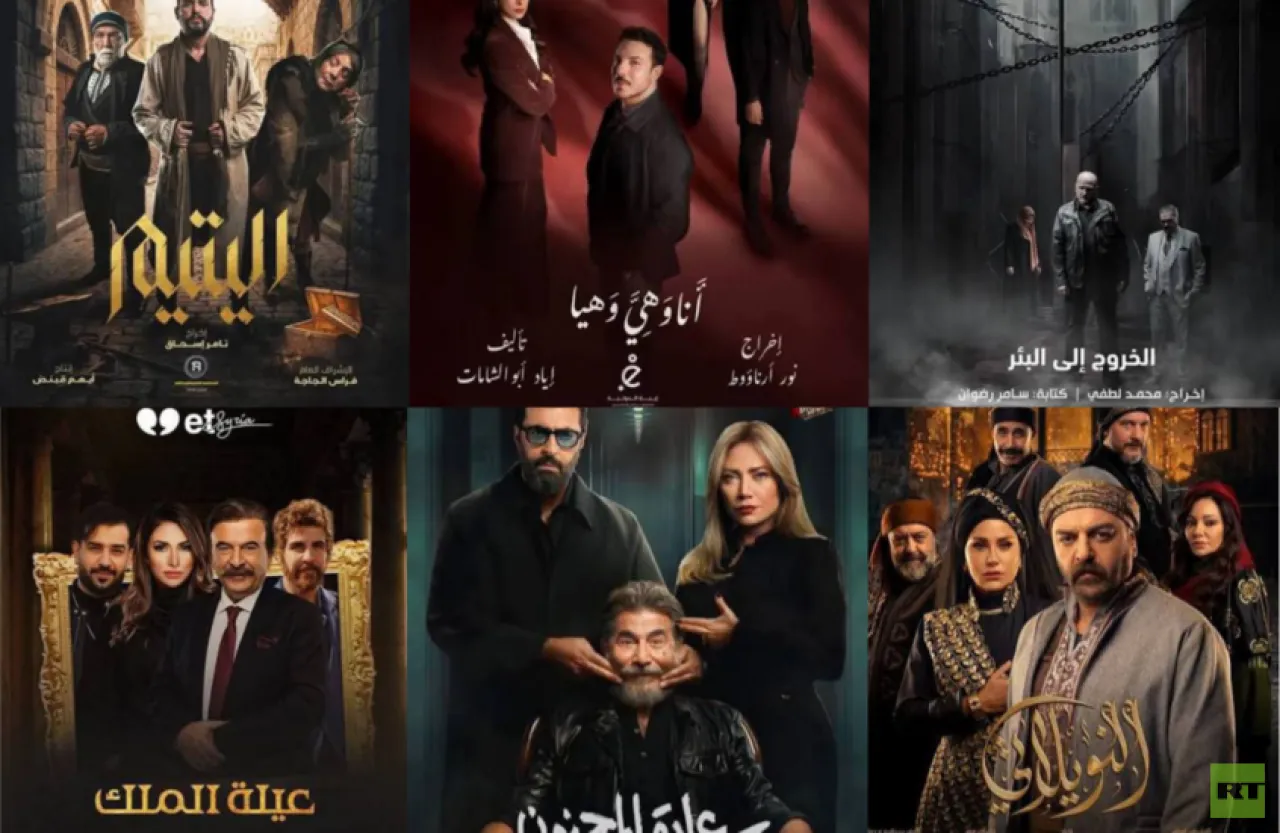
At the forefront of the productions, the series "The Syrian Enemies" by director Laith Hajjo takes us back to the eighties and the Hama massacre, confronting the viewer with a bloody and complex history, while Mohammad Lotfi revives the Sidnaya prison rebellion in 2008 in "The Exit to the Well", and Mustafa Namou transforms the testimonies of political detainees into a collective narrative in "The Caesar: No Place No Time", conveying individual pain into collective awareness. This tragedy is completed through the trilogies "No Place No Time", depicting stories of arrests and enforced disappearances to present a mosaic of voices that have long awaited documentation on screen.
Between the distant past and the events before the fall of the regime, Rasha Sharbatji in "City Kitchen" presents a restaurant in the heart of Damascus as a metaphor for a boiling country, where politics mix with love and betrayal with silence, and where chefs and customers face daily battles reflecting major social and political conflicts, while Mohammad Abdel Aziz in "King's Family" portrays a family ruled by the lust for money, becoming a microcosm of a society collapsing from within, making the viewer experience feelings of fear, anger, and disappointment before the major change in the Syrian scene.
Excitement and suspense are present in works like "Mawlana" by director Samer Al-Barqawi, where power intersects with fragility, and religious authority with social influence, embodied by Tim Hassan controlling the minds of an entire village. In "Madman's Bliss" by director Saif Al-Sbei'i, the story begins with a murder to uncover widespread corruption, while director Mudar Ibrahim takes the audience back to the world of tobacco market in "Underground 2: Account Review", where money, power, and blood entangle in various conflicts. And "Al-Hariqa" by Ahmad Ibrahim Ahmad adds a dimension beyond money and power, while "Curse of Love: Al-Maliya" by director Mohammad Zuhair Rajab presents a tangled story of a popular neighborhood, where romance and betrayal intersect with greed and everyday life, transforming each event into tangible psychological and human tension.
Historical and heritage works flood the screen with their depth, as Saloum Haddad in "Hatim Al-Tai" redraws the Age of Ignorance and values of generosity and bravery amidst political and social conflicts, while "Al-Nowailati" by Yazan Hisham Sharbatji and "Shams Al-Asil" by Ammar Tamim reflect the heritage life of Damascus, attempting to reinvest folk identity without indulging in old nostalgia.
Even the laughter this season carries the weight of reality, as in "Daughter of Nu'man" by Saif Sheikh Najib where Mohammad Osso reveals the contradictory relationship between father and daughter within satirical comedy, while Wael Abu Sha'a presents in "We Did Not Disagree 3" comic sketches inspired by everyday life details. And Fadi Wafa returns the torn family in the second part of "It's Either Me or Her" to the scene with a blend of comedy and drama, while Abdul Rahman Yassin presents "House of Dreams" through dark comedy in which five eccentric characters intersect in a humorous and surprising way.
Social works capture the details of daily life and contemporary societal changes, like "Me, Her, and Haya" by Nour Arnaut, which observes the daily relationships of Syrians, while Hossam Salameh through "The Last Seat" follows the challenges of women and the impact of social media on the youth. This gray area, far from explicit politics, is often the most fertile artistically, where humanity mixes with drama without turning the screen into a platform of accusation.