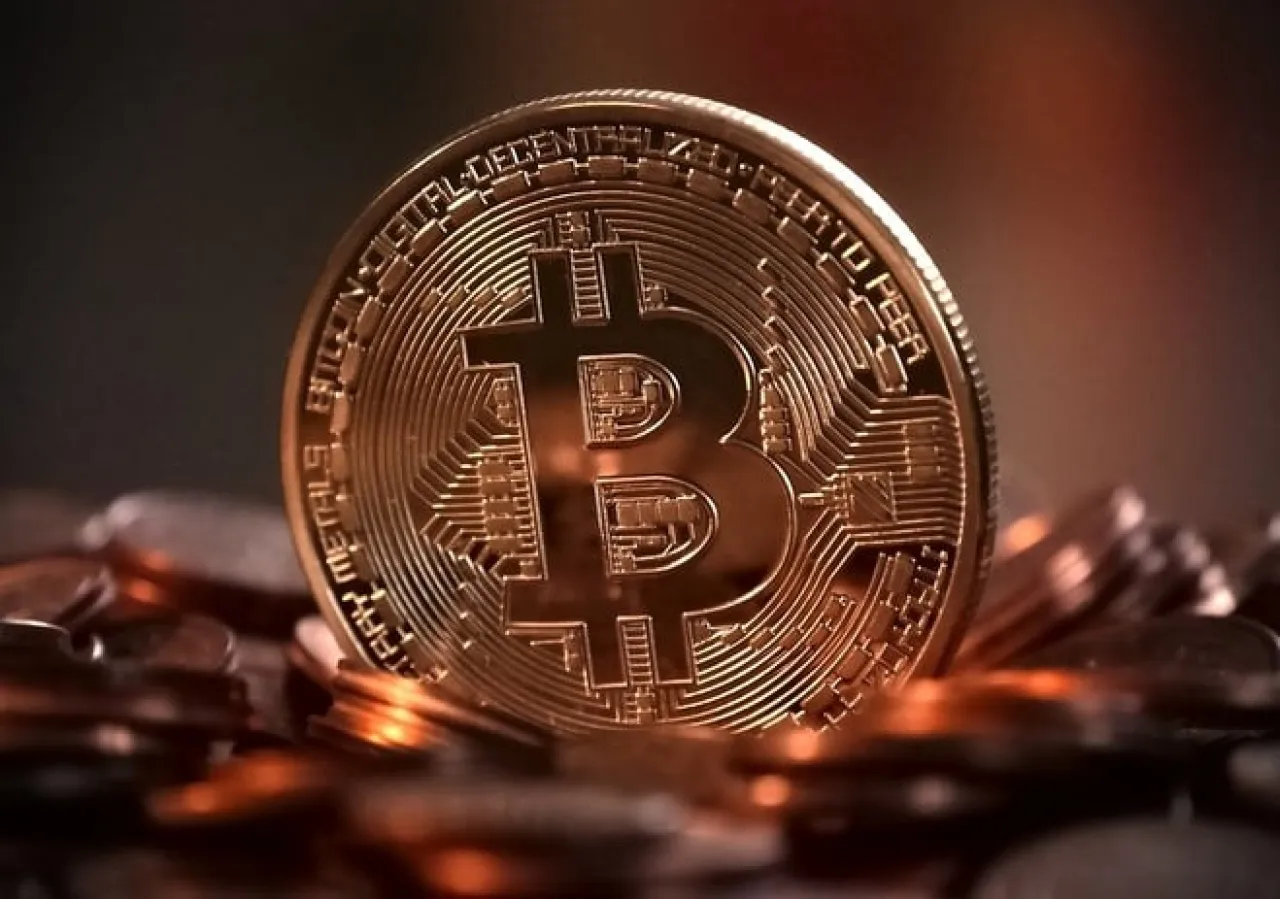
Khaberni - Nobody expected when Bitcoin appeared in 2009 that this currency would become the talk of the world, and that its value would exceed tens of thousands of dollars per unit. Bitcoin is not just a digital currency, but a revolution in the world of finance and technology, and a bold idea that challenges traditional financial systems and opens new horizons for economic transactions.
Today, millions around the world follow Bitcoin's movements with passion, while others try to understand the secret behind this phenomenon that has become an integral part of the global economic scene.
The essence: Understanding the true nature of Bitcoin
In order to understand the essence, it is necessary to know what Bitcoin is and how it works. Bitcoin is a decentralized digital currency that operates without the need for a central bank or financial intermediary. It relies on blockchain technology, a distributed database that transparently and securely records all transactions. The Exness platform provides a comprehensive analysis of Bitcoin, its challenges and trading, and provides all the information for its trends and benefits.
Unlike traditional currencies printed by governments, Bitcoin is mined through powerful computers that solve complex mathematical equations, granting it a specified digital scarcity of only 21 million units. This programmed scarcity is somewhat similar to the limitedness of precious resources like gold, which leads many to call it digital gold. Transactions take place directly between users without intermediaries and are permanently recorded on the network, providing unprecedented transparency and preventing manipulation or forgery.
Why are investors flocking to Bitcoin?
There are several reasons why Bitcoin is attracting the attention of investors from various backgrounds and interests. First, many see Bitcoin as a hedge against inflation, especially in the light of the expansionary monetary policies followed by central banks around the world. Secondly, Bitcoin offers an opportunity for investment diversification, just as new investors look for varied opportunities such as trading gold for beginners or stocks or real estate.
The emergence of advanced trading tools such as Contracts for Difference (CFDs) has made investing more flexible and easier, as these contracts allow traders to speculate on price movements without actually owning the currency or commodity. CFDs enable investors to benefit from both price rises and falls, and also offer the possibility of using leverage which can amplify potential profits (and losses). The Exness site helps in understanding the mechanics of trading gold, commodities, and currencies, and provides sufficient analysis for effective investing for beginners and professionals.
A double-edged sword in the world of Bitcoin
If there's one thing that distinguishes Bitcoin, it's its sharp price volatility which amazes and worries at the same time. Bitcoin's value can soar by thousands of dollars in just days or minutes, and it can fall just as quickly. These fluctuations represent a golden opportunity for active traders who can take advantage of rapid price movements, but at the same time pose a significant risk for beginner investors or those who prefer stability. Bitcoin prices are influenced by multiple factors: regulatory news, statements by influential figures, technological developments, and overall market sentiment. Despite these fluctuations, believers in Bitcoin believe its real value will emerge in the long run, and that the current volatility is just a natural maturation stage for an emerging financial asset.
Technological innovation and blockchain as a driving force
What truly makes Bitcoin special is not just its status as a digital currency, but the revolutionary technology it is based on: the blockchain. This technology represents a data recording system that is nearly impossible to hack or modify retroactively, as information is stored in connected and encrypted blocks across thousands of computers worldwide. Every transaction is permanently and transparently recorded, creating a reliable ledger that cannot be tampered with. This security feature has attracted the attention of multiple sectors beyond finance, from healthcare to supply chains and real estate.
Interestingly, the blockchain solves the problem of double-spending, which was a hindrance for previous digital currencies, guaranteeing that each Bitcoin is spent only once. This technological innovation is a radical reimagining of how value is recorded and preserved in the digital age.
The social dimension of Bitcoin
Bitcoin holds an important social promise that is often overlooked in discussions of profits and losses, and that is the potential to achieve financial inclusion for billions of people. In many parts of the world, people lack bank accounts or access to basic financial services, whether due to poverty, weak infrastructure, or regulatory restrictions. Bitcoin offers an alternative: all you need is a smartphone and an internet connection to become part of the global financial system. In countries suffering from rampant inflation or collapsing currencies, Bitcoin has become a safe haven for preserving savings and protecting purchasing power.
Bitcoin allows migrant workers to send money to their families at lower costs than traditional bank transfers. This human dimension adds depth to the Bitcoin story, for it is, in addition to being an investment tool, a means of economically empowering individuals and providing equal opportunities to participate in the global digital economy.
Institutional adoption: From the margins to the center
In recent years a radical shift in the stance of major financial institutions towards Bitcoin. After years of skepticism and hesitation, giant companies have started investing in Bitcoin or offering services related to it. Hedge funds and investment banks have entered the market, and global exchanges have launched financial products linked to Bitcoin. This institutional adoption has conferred greater legitimacy on the digital currency and expanded the investor base.
Even some countries have begun exploring Bitcoin as a strategic reserve or as a means for official transactions. This shift from the margins to the center reflects the market's maturity and growing confidence in Bitcoin as a serious financial asset.
Security and Privacy: A delicate balance in the digital world
Bitcoin represents a unique model in the balance between transparency and privacy, which makes it attractive to various user groups. On one hand, all transactions are publicly recorded on the blockchain and can be tracked by anyone, providing a high level of transparency and accountability. But on the other hand, these transactions are not linked to real names but to encrypted digital addresses, providing users a reasonable degree of privacy.
This feature makes Bitcoin more private than traditional credit cards, where a person does not need to share their personal information with each party they deal with.
The Global Economic Impact: Redrawing the map of money
Bitcoin is no longer a marginal phenomenon or a limited technical experiment; it has become an influential factor in the global economy in ways no one expected. The entry of Bitcoin has forced central banks to rethink their monetary strategies, as many of them have started exploring central bank digital currencies in reaction to the popularity of decentralized currencies. Major companies that previously ignored Bitcoin are now considering it as a serious investment asset, and some have included it in their general ledger as a value reserve.
This shift reflects a deep change in institutional awareness, as Bitcoin is no longer seen as a threat but as an opportunity. Even the International Monetary Fund and the World Bank are now discussing the impacts of digital currencies on global financial stability, indicating that it has reached a stage of recognition and serious study.
Challenges: Obstacles in the rise
Despite the significant success achieved by Bitcoin, it faces serious challenges that cannot be ignored. Starting with government regulation, where different countries have varying positions ranging from encouragement to complete prohibition. Secondly, the high energy consumption in the mining process raises increasing environmental concerns. Thirdly, cybersecurity issues and breaches of digital wallets pose risks to investors.
The Future:
Will Bitcoin become widely accepted as a currency? Will its value continue to rise?
The new generation of investors and users is more open to digital currencies, suggesting an expansion of the popular base. What's certain is that Bitcoin has already radically changed how money and value are thought about, and regardless of its future path, it has already left an indelible mark on the economic and technological history of humanity.