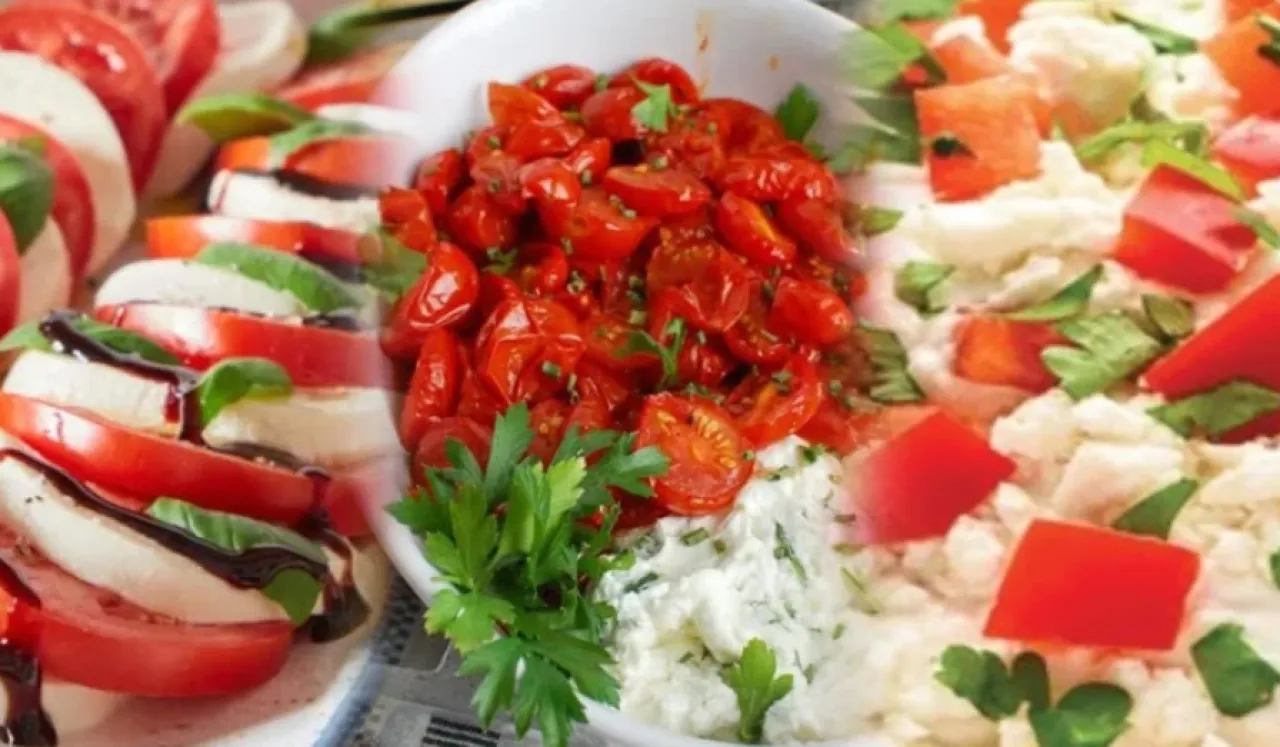
Khaberni - Egyptian nutrition expert Mari Shahid sparked widespread controversy in recent hours across social media platforms, after making statements during a television interview warning about consuming cheese with tomatoes, asserting that this mix prevents the body from benefiting from the calcium in the cheese.
Shahid, a consultant in therapeutic nutrition, stated that cheese contains calcium beneficial to the body, but tomatoes contain an acid that absorbs this calcium and prevents its benefit, suggesting that this mixture may cause heartburn and gas and bloating in the stomach, and advised consuming each item separately.
Widespread reactions on social media
Social media platforms witnessed significant division among followers; some affirmed the validity of this information based on personal experiences with acidity, while others met it with ridicule and objection, confirming that this meal has been a daily staple in the Arab diet for decades without notable harm, amid questions about the conflicting medical advice recently circulated.
One follower commented sarcastically: "Do you think we are children? Won't they meet inside the stomach and mix?" While another wrote: "Life has become exhausting because of these warnings, no beans for breakfast, no cheese with tomatoes, you are addressing another nation"
Consuming calcium with acids is important
Tawasal 24 spoke with Dr. Shaimaa Hakim, an expert in therapeutic nutrition and public health in Egypt, who scientifically refuted these warnings in detail, confirming that many have heard similar warnings like not eating cheese with tomatoes, or milk with fruits, or tea with milk, but most of them lack a true scientific basis.
Hakim started by clarifying the concept of "oxalates," noting that they are natural substances found in many plant-based foods such as spinach, tomatoes, guavas, strawberries, and dates, pointing out that the problem is not their presence, but their absorption in large quantities and their entry into the blood, where they can deposit in the kidneys and form salts or stones.
The expert explained that the role of calcium is completely contrary to what is rumored; it protects against the effect of oxalates and prevents oxalate stones, which constitute 70 to 80% of kidney and ureter stones, noting that calcium, when present in the intestines with food, binds with oxalates to form the compound "calcium oxalate," which exits the body through feces instead of going to the kidneys and depositing there.
Hakim also confirmed eating reduced calcium means absorbing more "oxalates" and therefore a higher risk of stones, pointing out that natural calcium with a meal represents protection and not a risk, and this is clearly mentioned in modern therapeutic nutrition references.
Is cheese with tomatoes harmful?
Shaimaa Hakim refuted the warning of eating cheese with tomatoes, explaining that tomatoes contain very little oxalates, which are not enough to reduce the absorption of calcium, confirming that the combination is very safe and even more beneficial for those with oxalate salts, considering the warning about it to be unscientific.
Hakim concluded that the presence of calcium with plant-based foods reduces the absorption of "oxalates" and protects the kidneys, confirming a simple rule: "Oxalates are afraid of calcium," warning that random prohibition is more dangerous than the food itself, and that proper nutrition depends not on separating foods but on balance, quantity, and timing.