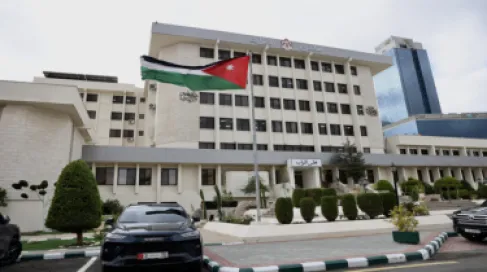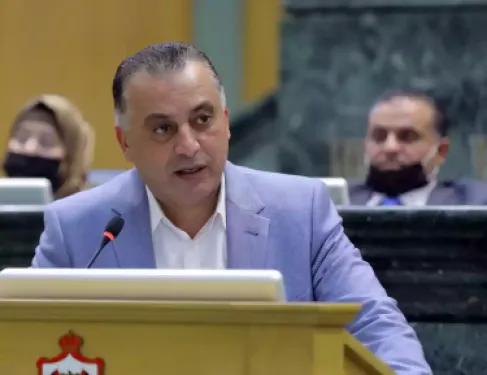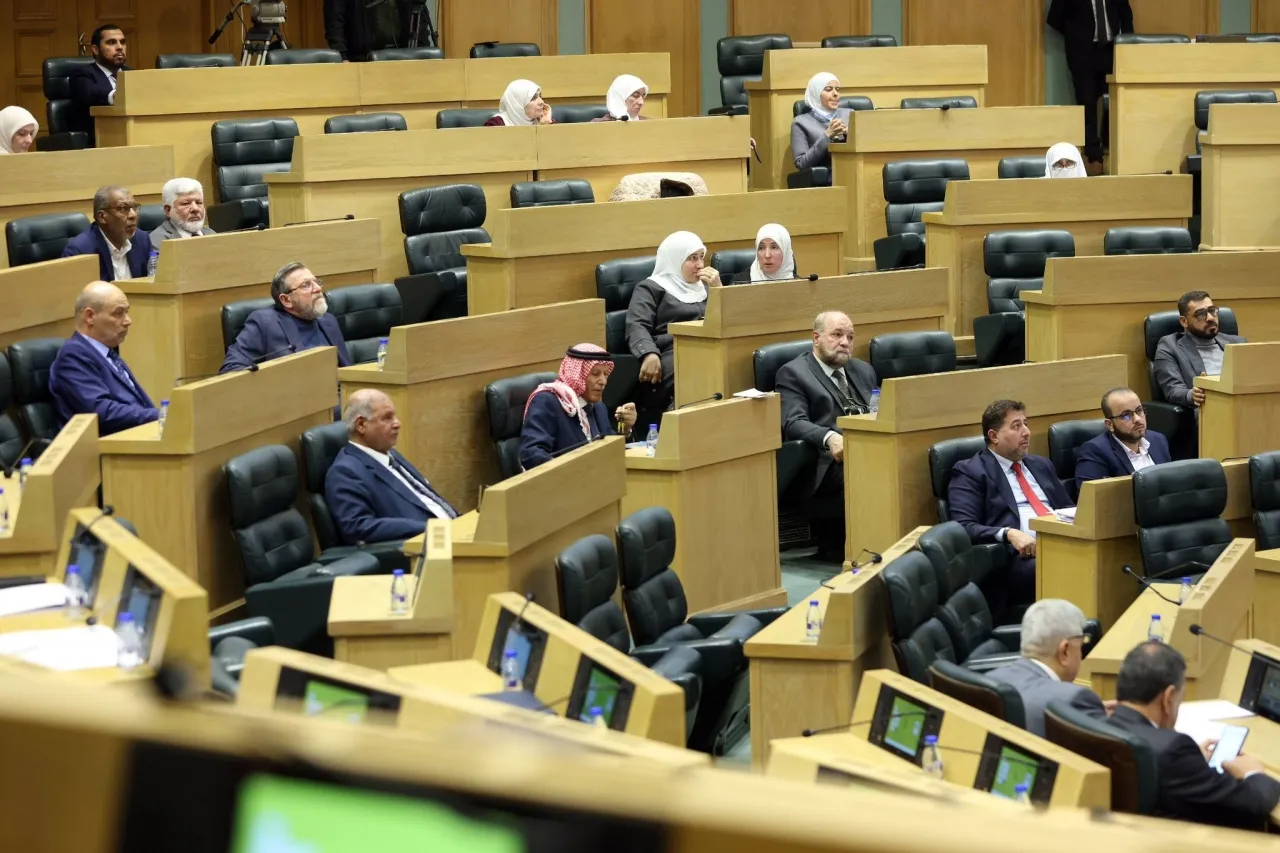
Khaberni - The House of Representatives, by a majority, approved two articles in the Gas Law Project for the year 2025, as submitted by the government, out of a total of 32 articles of the draft law.
This took place during a legislative session held today, Monday, chaired by the council president Mazen Al-Qadi, with the presence of the Prime Minister Dr. Jafar Hassan and members of the government team, and lasted for two consecutive hours.
Regarding the first article included in the draft law, the House of Representatives endorsed the decision of the Parliamentary Energy and Mineral Resources Committee, which includes the enforcement of the law after its publication in the Official Gazette.
The Parliamentary Energy Committee recommended approval to "amend (2025) to become (2026), by deleting the phrase (after one hundred and eighty days)".
This article stipulates: "This law shall be named (Gas Law for the year 2025), and shall come into effect one hundred and eighty days after its publication in the Official Gazette"; the deputies also approved the second article included in the draft law, thus supporting what was decided by their Parliamentary Committee regarding this article.
The Minister of Energy and Mineral Resources, Saleh Kharabsheh, stated that the draft Gas Law was prepared a year ago, noting that natural gas represents a less expensive fuel, which means increasing reliance on natural gas.
Kharabsheh revealed that the distribution of gas would commence in the governorates of Amman and Zarqa, for use in transport and domestic consumption.
For their part, a number of deputies stated that the draft law is the first national legislation that frames green hydrogen and hydrogen derivatives, through creating a legal basis, adding that this project gives Jordan a competitive legal advantage to attract major foreign investments in the field of energy and sustainable security, in addition to placing Jordan on the map of clean energy exporting countries.
The deputies explained that the draft law provides a regulatory framework for activities, transport, distribution, storage, registration, and resupply, which facilitates the delivery of gas to industrial, commercial sectors, citizens, the transport sector, and domestic consumption, affirming that the law supports the expansion in using gas as a primary fuel enhancing the Jordanian economy.
They noted that the draft law represents a key milestone in managing a strategic national wealth, emphasizing the pivotal role of natural gas in energy security, enhancing economic competitiveness, and supporting energy transition.
They emphasized the need for the draft law to balance investment appeal and energy sovereignty, between economic efficiency and environmental sustainability, serving the country's supreme interest, pointing out that the draft law is a fundamental pillar to regulate the energy sector and develop hydrogen derivatives in the kingdom.
The House of Representatives had approved by majority, during a session on November 24, the referral of the Gas Law Project for the year 2025 to the Parliamentary Energy Committee, which in turn approved it on January 20, as submitted by the government, while making some amendments to it.
The Council of Ministers had approved, in a session held on August 10, the draft law, where the new "Gas Law" forms a modern legislative framework that regulates the activities of the gas sector and hydrogen derivatives in the kingdom, and enhances the national energy infrastructure.
The law covers various types of gas, such as natural gas, biogas, biomethane, and hydrogen, reflecting legislative flexibility that accommodates the global shift towards clean energy.
The draft law covers the main gas activities, including import, transport, distribution, storage, wholesale and retail, within an integrated system that allows shared or self-use of facilities, as well as enables the implementation of major economic and strategic projects, and encourages investment in the sector through a clear regulatory environment and simplified licensing procedures that include all project stages.
The new draft law will contribute to stimulating the transition to natural gas, thanks to the presence of a regulatory law and simplified procedures that encourage investment in transportation, distribution, and storage networks.
The draft law establishes clear mechanisms for calculating fees, and grants license holders the freedom to sign investment and sales agreements within a transparent environment based on fairness and competitiveness.