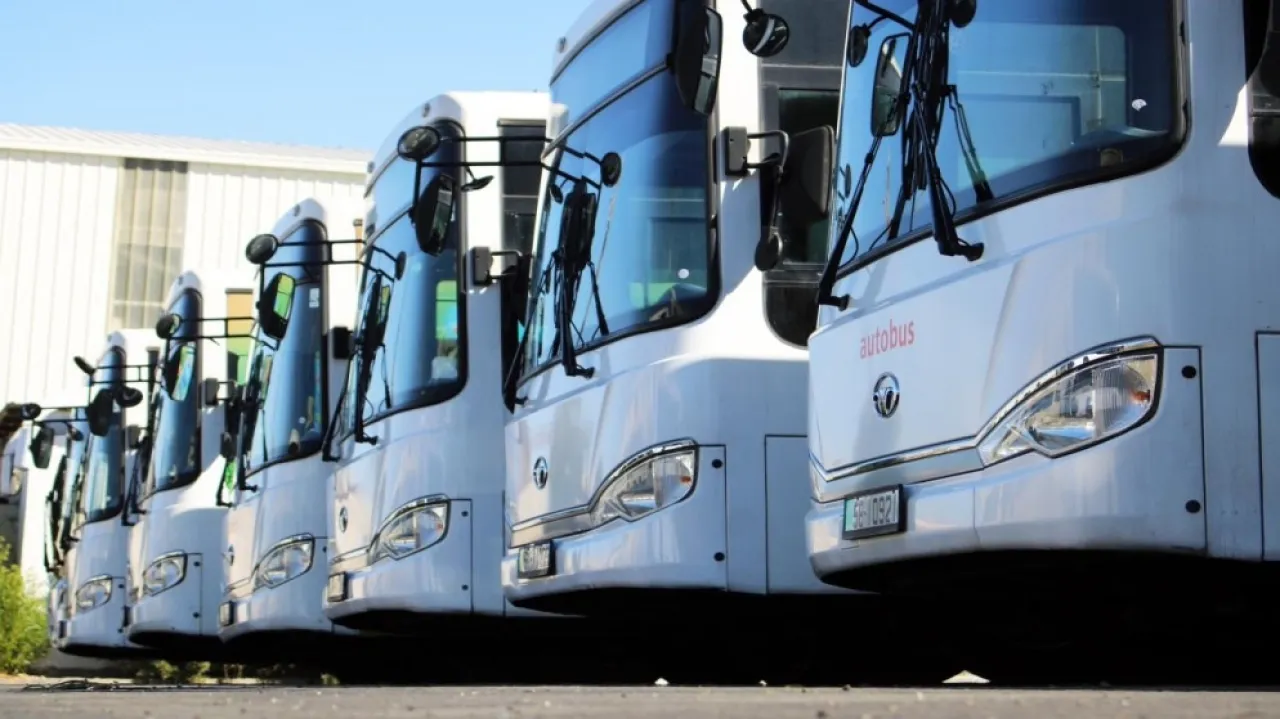
Khaberni - Salah Al-Louzi, the chairman of the board of directors of the Integrated Multi-Modal Transport Company, said that the total number of buses listed within the project to service and structure public transport between the provincial centers and the capital amounts to about 307 buses, distributed as 127 buses in the first phase and 180 buses in the second phase of the project.
Al-Louzi explained in a press statement that the first phase contributed to transporting more than 1.4 million passengers since the start of operation, while the second phase was designed to serve approximately 13,000 passengers daily according to the proposed operational plans, taking into account workdays, weekends, and public holidays.
He pointed out that the project currently covers main lines connecting the capital Amman with Irbid, Jerash, Salt, and Karak, in addition to the second phase’s expansion to include additional lines connecting provinces directly without going through the capital, including Tafilah, Ma’an, and Ajloun, as well as lines from Zarqa to Mafraq, Zarqa to Irbid, Jerash to Mafraq, and Irbid to Jerash, providing a regular transport network that covers most of the major provinces in the kingdom, and enhances connections between areas and facilitates the mobility of citizens.
He mentioned that the main benefit offered by the company in this project is comprehensive management and operation, as the Integrated company is responsible for managing and monitoring the transport project between the capital and provincial centers under the contract signed with the Land Transport Regulatory Commission, which ensures effective regulation of buses and routes.
He added that the company possesses high technical and administrative expertise in operating networks, services, and systems, which reflects on scheduling trips, regularity, and enhancing user satisfaction.
Al-Louzi confirmed that the Integrated works within an operational plan that adopts smart transportation systems including bus tracking via GPS, electronic payment applications, and improving passenger experience according to modern standards, in addition to its role as an investment arm supporting the integration of the national transport system and enhancing the partnership between the public and private sectors, which contributes to reducing reliance on private vehicles and alleviating traffic congestion.
He noted that the positive impact of the project has become apparent through improving operational efficiency and organizing services according to regular schedules, which raised the level of reliability and commitment to timeliness, enhanced the quality of service in terms of safety and comfort, and increased public interest in using public transport. The unified operational management also helped improve the utilization of buses and resources, and supported integration with other modes of transport, contributing to a sustainable public transport system nationwide.
In terms of human resources, Al-Louzi explained that the number of employees working on the project amounts to 24 personnel, including field monitors, operations analysts, and electronic surveillance monitors.
He added that the coordination mechanism with the Ministry of Transport and the Land Transport Regulatory Commission is carried out through an organized institutional framework that includes periodic meetings to monitor the progress of work and discuss operational plans and performance indicators, in addition to continuous coordination to approve routes and schedules and ensure compliance with regulatory instructions, and raising regular operational and technical reports that allow performance evaluation, addressing observations, and making necessary decisions to improve the level of service and ensure the project's sustainability.