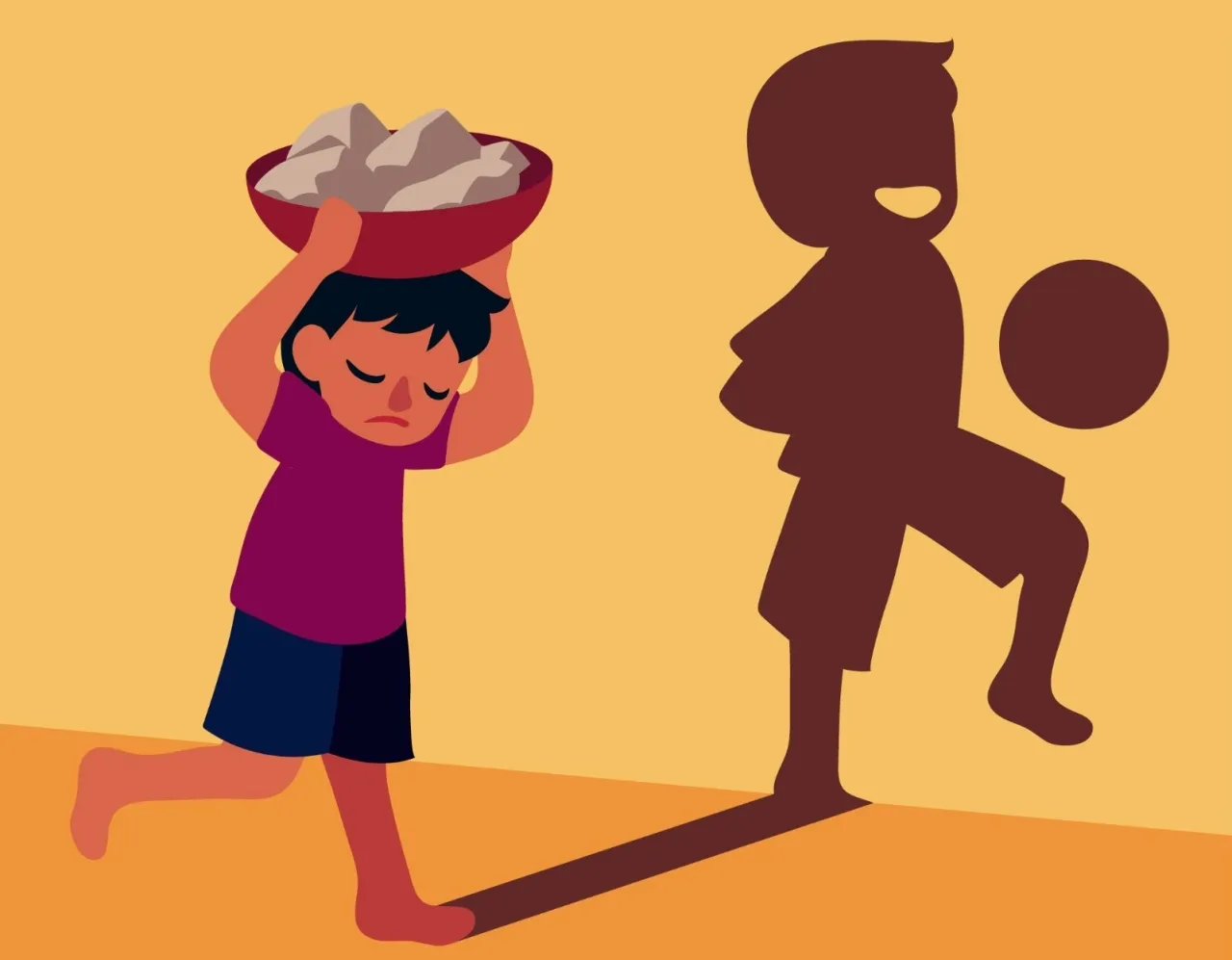
Khaberni - A study published a few days ago titled "The Current Situation of Child Labor in Jordan" concluded that 51% of children work from 5 to 8 hours daily, exceeding legal limits. Syrian children, particularly those not enrolled in school, work longer hours, reaching 10-12 hours daily during peak seasons.
The study confirmed that child labor in agriculture is widespread and represents a "complex and persistent" problem, with an increase in this phenomenon coinciding with the economic difficulties faced by both refugees and Jordanians, in addition to cultural acceptance and systemic institutional gaps.
The study, conducted by "Terre des Hommes in Jordan," which targeted the agricultural sector in Irbid, Madaba, and Balqa with a particular focus on children and teenagers under eighteen, found that the number of children working in agriculture increased from 75,982 children in 2016 to an estimated 100,000 children by 2022, making agriculture the second-largest sector employing children.
One of the most significant findings, which presents a substantial challenge, is the societal perception of child labor, which is not treated as "work" but as "support" or "help" for the family. The study noted that "this new definition, rooted in a culture of solidarity and economic necessity, normalizes this practice" and incites considerable resistance to external intervention.
Quantitatively, the survey revealed that 76% of working children are still enrolled in schools, though this figure conceals significant disparities, with Syrian children facing much higher dropout rates.
Regarding wages, the study indicated that children earn between 3 and 7 dinars per day, significantly less than the 8 to 12 dinars adults earn for similar work.
Transportation poses a significant challenge, as 44% of the children have to walk to distant farms, with Syrians disproportionately affected due to the serious overcrowding often experienced by vehicles.
"Educational failures" are another reason for child labor, as poor quality of education, bullying in schools, and inappropriate curriculums push children away from school and into work, where they can achieve immediate economic gains.
The study listed multiple dangerous and diverse effects on children, particularly educational impacts, where work severely hinders education through exhaustion and absenteeism, ultimately leading to dropping out.
55% of caregivers surveyed reported that their children had suffered work-related injuries or health issues. Syrian children were twice as likely as Jordanian children to be involved in tasks involving dangerous chemicals.