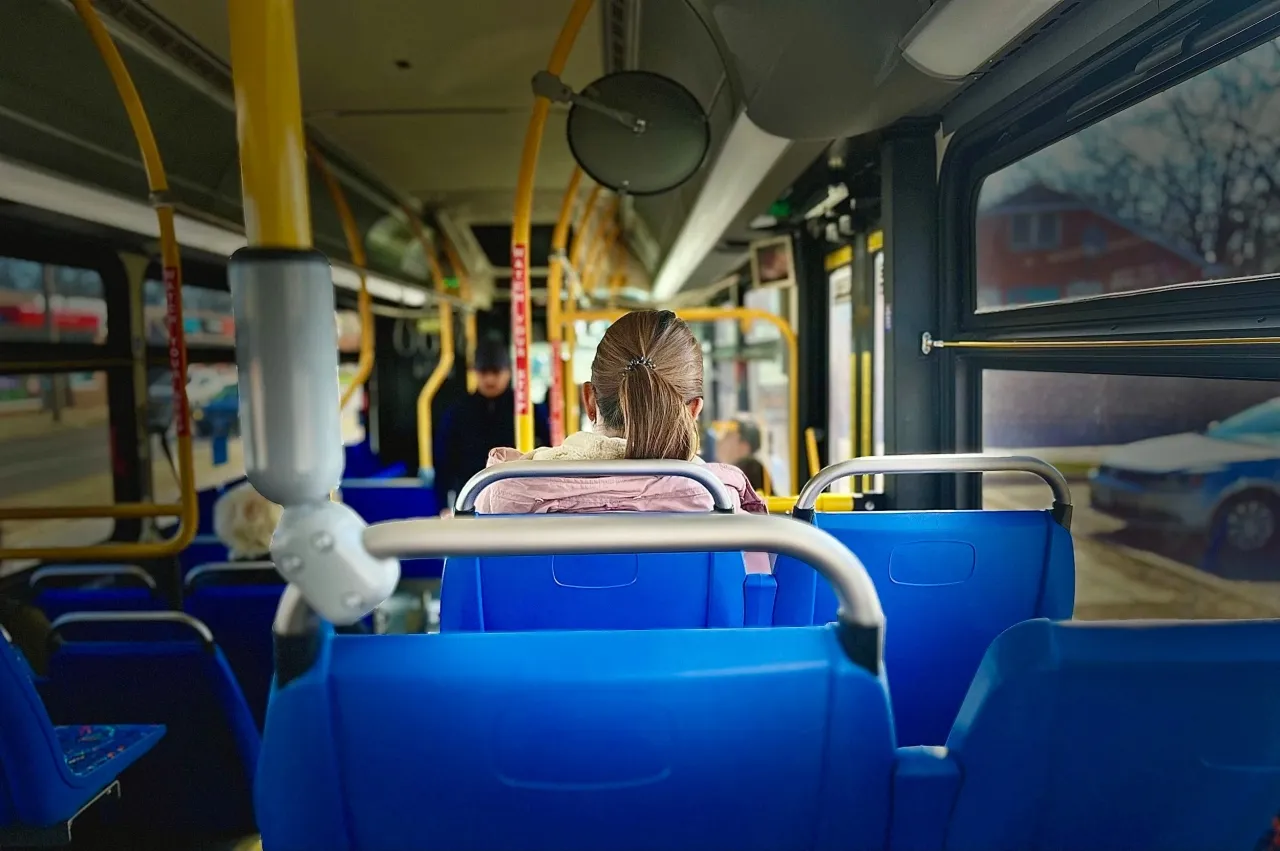
Khaberni - The "We Arrived Safely" project was recently launched to enhance the safety of girls and women in public transport, as a national initiative in partnership between the private and public sectors.
The project was based on a field study that monitored multiple patterns of harassment and abuse women and girls face as a form of gender-based violence in public transport over the past three years, demonstrating the need for structured institutional intervention to address this phenomenon comprehensively and sustainably, according to Al-Ghad.
The project was launched by the Feminist Economy Foundation under the patronage of the Ministry of Transport and civil society institutions, and will span 4 years aiming to reduce this violence. It will be implemented in its first phase in the capital, Amman, as a scalable and expandable practical model in the coming weeks.
The Project is a Pressing Necessity
Dr. Mayada Abu Jaber, the director of the Feminist Economy Foundation, stated that the project targets both Jordanian women and girls and refugees alike, clarifying that about 30% of the project's beneficiaries are Syrian refugees, asserting that the risks of harassment and abuse in public transport affect all women indiscriminately, and pose a direct barrier to their safe access to work, education, and services.
Abu Jaber pointed out that providing a safe transport environment contributes to enhancing women's participation in economic and social life, making this project a pressing necessity rather than an option.
She highlighted that the project arose from a lack of support for women with limited income and their feeling of insecurity during transportation, and the absence of clear rules or protocols or effective applications against gender-based violence in public transport.
She emphasized that the project establishes easy and effective reporting mechanisms that protect the privacy and identity of complainants.
Abu Jaber explained that the "We Arrived Safely" project to enhance the safety of girls and women in public transport is based on a comprehensive approach that focuses on prevention and protection, developing official policies and procedures, and raising community awareness, asserting that the project aims not only to respond to incidents after they occur but also to prevent them from happening in the first place by building a clear system for reporting and institutional handling of complaints.
She further clarified that the project was launched after conducting a field study involving hundreds of women and girls in various areas of the capital, Amman, and noted that a large proportion of them were subjected to various forms of harassment over the past three years, in all its different forms.
Smart Application for Complaints
The results of the study conducted by the foundation showed that verbal harassment was the most common, followed by visual harassment, then physical harassment, which formed the basis in determining the types of complaints handled by the project and the design of intervention and response mechanisms.
Abu Jaber said that one of the main components of the project is the launch of a smart application specifically designed to receive complaints related to harassment and abuse in public transport, noting that the application receives three main types of complaints including verbal harassment, visual harassment such as stares or inappropriate gestures, and physical harassment, and this application is listed on the public transport application.
She affirmed that the application is not limited to recording the complaint, but includes clear and specific procedures for dealing with each type of these complaints, ensuring prompt response from the staff and specifically the drivers, and not leaving the handling of cases to individual judgments.
Abu Jaber explained that the reporting mechanism allows women and girls to submit complaints either as victims or as witnesses, with the possibility of reporting either anonymously or not, enhancing trust and encouraging breaking the silence, noting that the reports received through the application are directly referred to the operating authorities according to a predetermined and agreed-upon path.
Collective Participation
In the same context, Abu Jaber confirmed that the project was developed in partnership with several entities through an advisory committee, including the Land Transport Regulatory Authority, the Public Security, the Ministry of Social Development, the National Committee for Women's Affairs, and the Greater Amman Municipality, alongside transport operating companies, at the forefront of which is the Amman Modern Vision Transport Company with which a memorandum of understanding was signed.
The memorandum of understanding included specifying an "icon or indicator" on the company's smartphone application to record complaints in detail with the documentation of the picture and the bus line number among other required details while ensuring the complainant's confidentiality, and the application will be officially operated within weeks according to Abu Jaber.
She clarified that this cooperation aims to develop official protocols that clearly outline how drivers and staff handle harassment and abuse incidents within public transport.
She added that the project also includes training 400 drivers in public transport in the capital, Amman, on these protocols, ensuring a professional uniform response that protects the victims and respects the rights of all parties.
The project also includes training 60 middle management officials at transport operators, aimed at establishing institutional response and ensuring the permanence of the procedures and their independence from individuals.
Abu Jaber mentioned that the project will also train about two thousand girls and women through training sessions to be executed by 11 civil society organizations, geographically distributed around transport stations in northern, central, and southern Amman, asserting that these women constitute a basic segment in community awareness campaigns, and in supporting the culture of reporting, and contributing to monitoring the reality and improving policies.
She indicated that the subsequent phases of the project will include assigning 50 undercover passengers to monitor the effectiveness of the safe transport system and its responsiveness to gender-specific needs and to enhance accountability.
She stressed that the "We Arrived Safely" project will be accompanied by an intensive awareness campaign through media and social media platforms, targeting public transport users in general, and women and girls in particular, to educate them about passengers' rights, reporting mechanisms, and to affirm the intolerance for any form of harassment or abuse, considering that changing the community culture is just as important as developing the technical tools.
Abu Jaber affirmed that the project represents a significant step towards a safer and fairer transit environment, based on transparency, accountability, and partnership between official institutions and civil society, emphasising that its success depends on all parties' commitment to transform these policies and procedures into daily practices that protect women and girls and ensure their right to safe mobility.
Minister of Transport Nidal Qatamin announced during the sponsorship of the "We Arrived Safely" project launch ceremony funded by the United Nations Trust Fund, a direction by the ministry to establish a specialized unit within the Land Transport Regulatory Authority to receive women's complaints related to using public transport in the context of supporting the project.