Khaberni - The Qatari Ministry of Commerce and Industry has launched a national initiative to support the prices of sheep meat during the upcoming Ramadan, aimed at reducing the financial burden on citizens and ensuring the availability of red meat at affordable prices during peak consumption.
The initiative, which will start from today, Sunday, and last until the end of Ramadan, is part of a program to encourage local production. Qatari farms and private estates contribute part of their production to supply the market with quantities of local sheep alongside imported quantities, enhancing food security and supporting price stability.
Under the annual national initiative, sheep are offered at a fixed price of one thousand riyals (274.7 dollars) per head, whether the sheep is locally bred or imported, with only one sheep allocated per ID card. The buyer is required to present the original ID card at purchase, to ensure the subsidy reaches the widest possible segment of the benefiting Qatari citizens.
The fees for loading, slaughtering, and packaging are set at 50 riyals, divided as 34 riyals for loading fees and 16 riyals for slaughtering and packaging. This allows consumers to get a comprehensive service at subsidized and clear prices.
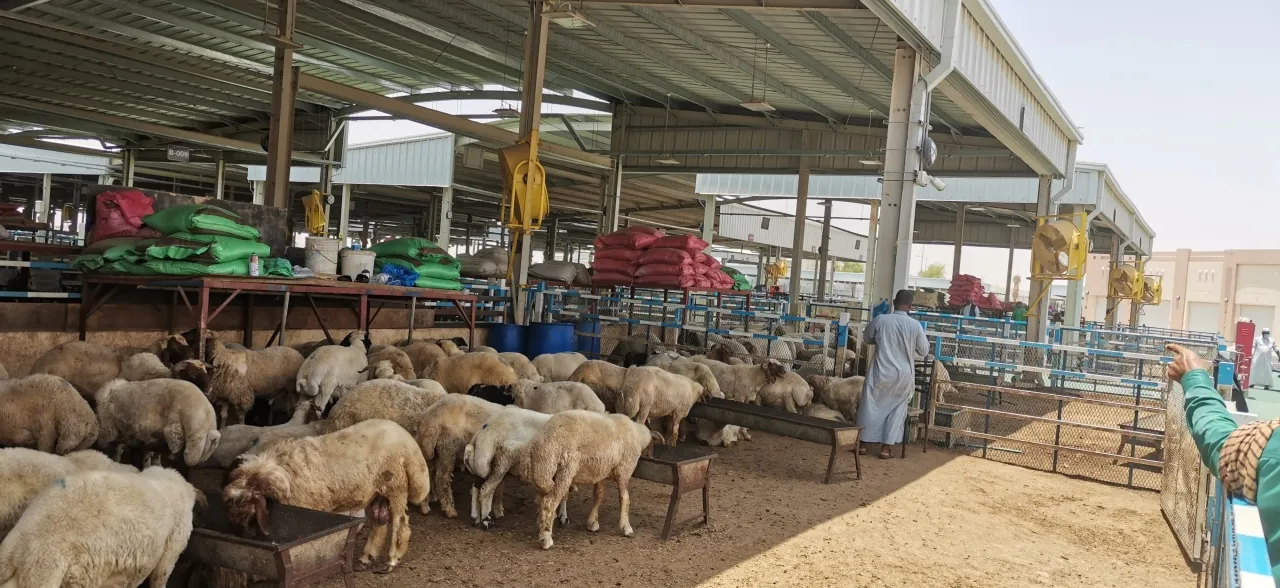
The sheep are sold through the slaughterhouses affiliated with Widam Food Company, in the areas of North, Khor, Umm Salal, and Wakrah-Shahaniya, with an option to purchase through the company's electronic app, facilitating access to the service and diversifying the channels of benefitting from the initiative.
Regarding the supply and types of sheep, the Public Relations Manager of "Widam," Musa Al-Othman, said in a televised statement, "The initiative relies on two main supply paths, local production of Qatari sheep from the Hawasi, Arab, and Hari breeds, which were received from farm owners and private estates after being inspected and confirmed to meet health and technical specifications, ensuring the quality of meats offered to the citizens." In addition to quantities of sheep imported from Syria, to support abundance in the market and cover the increased demand during Ramadan.
This dual supply model aligns with the incentive initiative to support local sheep production, aiming to offer preferential prices to breeders in return for supplying to the state, thereby making a rewarding return for them and encouraging them to expand in breeding and fattening.
Qatar experiences high demand for red meat, especially sheep meat, during Ramadan and Eid al-Adha, prompting authorities to launch annual support programs to ensure the availability of sufficient quantities and maintain price stability for the end consumer.
Data from the Food Security Department of the Qatari Ministry of Municipality indicates that self-sufficiency in red meat in Qatar is about 15%, while the government works to increase this percentage through fattening projects and expanding the base of breeders, within a national strategy for food security aimed at increasing local production and providing a strategic stock of meats.
The total livestock in Qatar exceeds 1.2 million heads, distributed between 60% sheep, 29% goats, 3% cattle, and 8% camels, reflecting the relative importance of sheep meat in the food consumption basket of citizens and residents.
The initiative to support the prices of sheep meat achieves a balance between two integral dimensions, alleviating living costs for citizens during Ramadan, and enhancing the economic viability of livestock breeding by providing guaranteed marketing channels for local breeders at profitable prices.