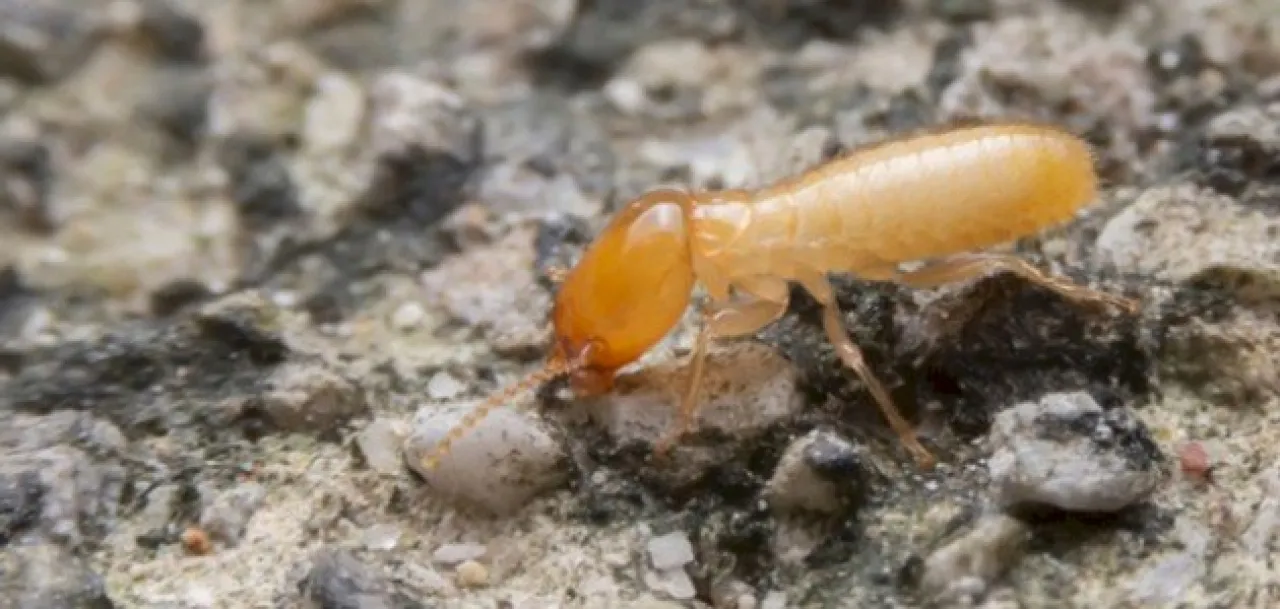
Khaberni - A recent scientific study published on the "Science Alert" website revealed an unexpected biological transformation in the evolutionary journey of white ants (termites), where the commitment of these insects to a "monogamous mating" system caused their sperm to lose tails and mobility.
The researchers explained that the adoption of a monogamous marriage system (one male for one female) by white ants led to the absence of fierce competition among males to fertilize females. Over millions of years, the evolutionary pressures that maintained the genes responsible for sperm movement faded away, eventually leading to a complete loss of a set of these genes.
In this context, Nathan Lo, an evolutionary biologist at the University of Sydney and participant in the study, stated, "The evolution of social behavior does not always mean acquiring new traits; sometimes it requires abandoning traits and genes that are no longer necessary. The loss of sperm mobility was an 'evolutionary cost' for building large, organized societies."
From "cockroaches" to complex societies
According to the research, white ants evolved from ancestors resembling cockroaches, which started their lives by living inside wood and feeding on it. Due to the poor nutritional value of wood, these insects were forced to organize their lives intensely socially to survive, which led to a complete remapping of their genetic map.
Contrary to popular belief that more complex societies require more complex genetic codes, comparing the genomes of cockroaches and white ants proved the opposite; it was found that white ants have:
Fewer genes associated with metabolism and digestion.
A decline in reproductive genes compared to their ancestors.
High efficiency in managing the remaining genetic resources.
The study also revealed an astonishing mechanism for determining social classes within the colony, where the future of the "larva" depends on the amount of food it receives:
Abundant nutrition: rapid growth and transformation into a "worker" to serve the colony.
Limited nutrition: slow growth and turns into a "reproductive individual" (future king or queen).
The researchers concluded their study by pointing out that this unique model, based on close kinship and monogamous marriage, was the primary driver for the emergence of the most sophisticated social systems in the insect world, and it was a model "not advisable for mammals to mimic" due to its biological specificity.