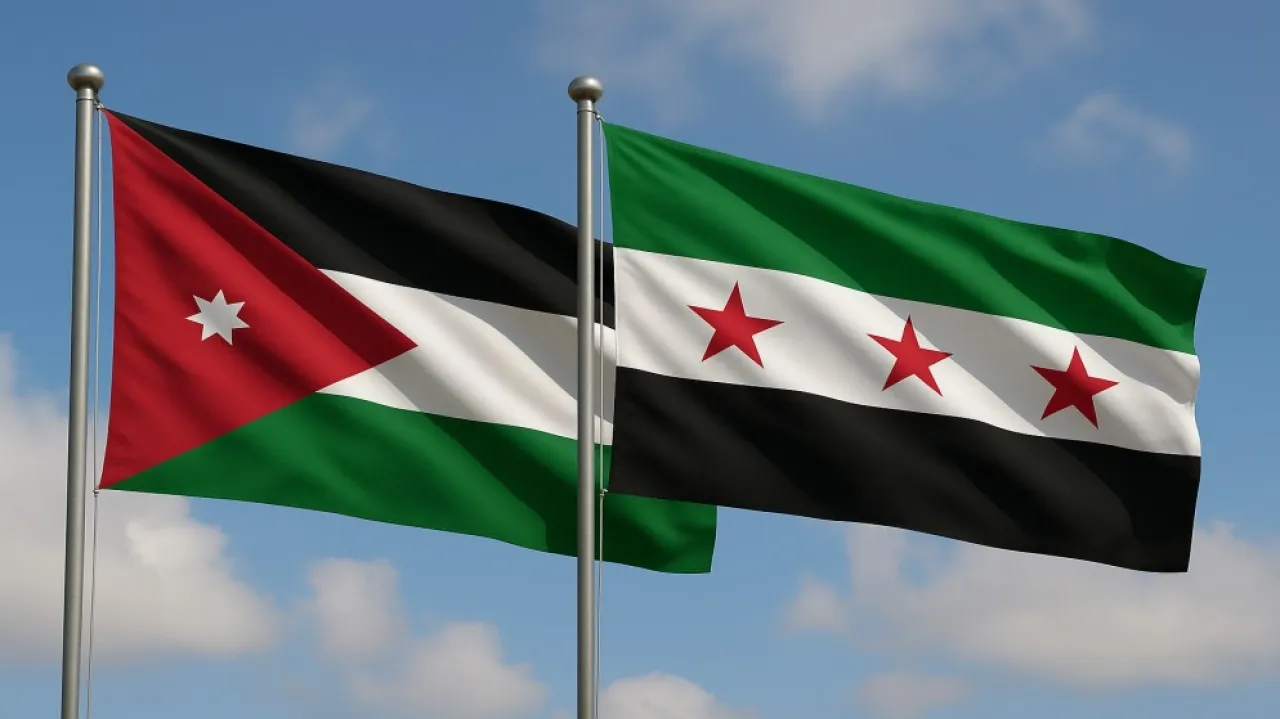
An official source confirmed that the government is communicating with the Syrian side regarding the decision related to the regulation of the entry of trucks, as well as the attacks that Jordanian trucks were subjected to in Raqqa province.
The source explained on Saturday that the decision of the Syrian authorities not to allow trucks to unload goods within Syrian territory applies to all non-Syrian trucks and does not specifically target Jordanian trucks, according to the kingdom.
The head of the clearing and cargo transportation companies, Daifallah Abu Aqoula, warned about the repercussions of the decision issued by the Syrian government to prohibit the entry of foreign trucks into its territory, describing the decision as sudden and confusing for trade and transport movements between the two countries.
Abu Aqoula said in a statement on Saturday that the decision stopped the work with the previously adopted "door-to-door" system and replaced it with a "back-to-back" system at the Jaber - Nassib border crossing, resulting in significant confusion in truck movement. He explained that the daily exchange volume reaches about a thousand trucks between Jordan and Syria, a number that the current infrastructure of the Jaber - Nassib customs center cannot accommodate.
He explained that the continuation of the decision would lead to truck delays for tens of days, the accumulation of goods, and an increase in transport costs, as well as the possibility of some shipments getting damaged, especially construction materials and Jordanian exports, and goods arriving via the port of Aqaba or coming from Gulf countries on their way to the Syrian market.
He pointed out that the decision has harmed all parties in the supply chain, confirming that the Syrian trader is the biggest loser due to the delay in the arrival of goods and the increased costs, in addition to harming Jordanian and Gulf carriers, and the Jordanian exports which may lose their competitive edge in the Syrian market due to increased shipping costs.