Khaberni - As the waves of Islamophobia rise across the European continent, and societal divisions deepen due to political and economic crises, a new generation of British Muslims has successfully shaped an exceptional Ramadan model that transcends the traditional walls of mosques to create inclusive and open spaces for everyone. However, this inspiring model today faces an existential threat that endangers its continuity, according to a report in The Guardian newspaper.
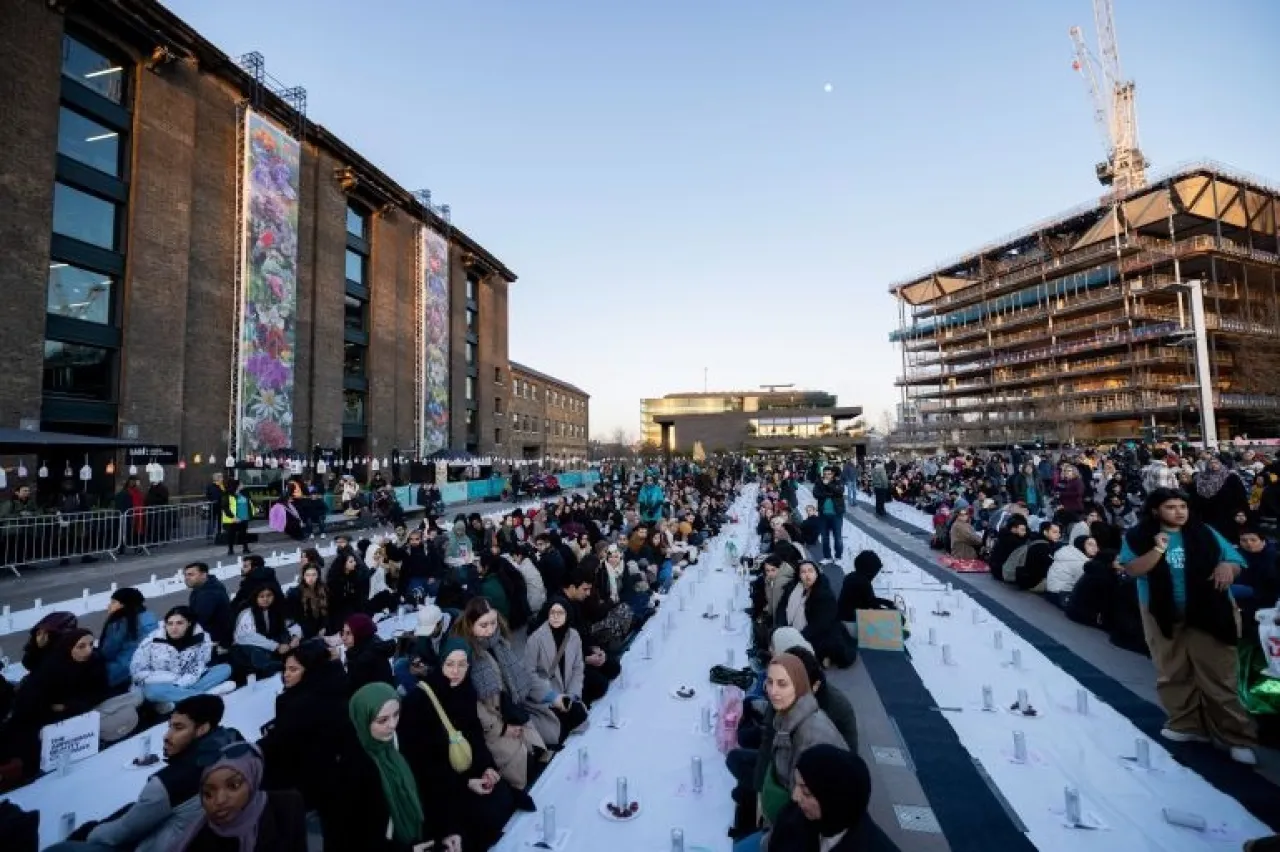
Last year in London witnessed a qualitative shift in how the holy month was celebrated, where it was no longer limited to family iftars or mosque rituals, but saw the emergence of youth initiatives like "Ramadan Space" and "Rumi's Cave," creating a vibrant social environment in neighborhoods like "Shoreditch."
These spaces, described by one student as being "like oxygen at a time when it was hard to breathe," were not just places to eat but were centers for enhancing mental health, volunteering, and political solidarity with issues like Gaza, thus embodying fundamental principles of a month centered around compassion and mercy.
"Last Ramadan was different, it broke traditions to be new, open, and extremely necessary," says Nousheen Iqbal, a writer at The Guardian in her report.
The "Third Space" Crisis
According to Iqbal today's real crisis lies in these initiatives losing their actual venues. As the holy month approaches, leading projects like "Ramadan Space" face the specter of closure after losing a location for their iftars, reflecting the crisis of "Third Spaces" (places that bring people together outside of home and work) in major cities.
The writer warns that viewing this setback as merely a "logistical problem" is a grave mistake. The issue relates to the collapse of a model of belonging that Londoners desperately need to combat the epidemic of loneliness and polarization, pointing out that "social connections are not formed by chance, but are created night after night through people choosing to be together."
The lessons learned from this initiative, according to the report, can be summarized as follows:
The spirit of self-driven Islamic effort: These initiatives have been distinguished by a self-driven (DIY) spirit, led by women and diverse groups away from the "Olympics of apparent piety."
The importance of inclusive spaces: These centers serve to soften the "sharp edges" of a divided society and provide a haven for creative and entrepreneurial Muslims.
Sustainability and funding: The challenge lies in how to secure sustainable support for these grassroots initiatives to ensure they do not disappear under the burden of administrative duties or the absence of venues.
Until the time of writing this report, as the writer says, no actual venue for this year's Ramadan gathering has been provided, and the founding committee is working hard to secure an alternative location - we hope that any generous donor will come forward - the lack of such a place is a strong blow to all of us trying to create something on the grassroots level, as she says.
Ramadan, as the writer says, is coming again, and less than two weeks remain until its start. We must do our utmost to find a space for it, not the other way around, as she expresses.