Khaberni - Hibiscus is a favorite herbal drink for many, as it provides warmth to the body when consumed hot in winter, and offers vitality and energy when consumed cold or iced in the summer. But have you ever heard about its amazing benefits for your hair and skin?
This flower is considered a natural ingredient rich in nutrients effective in skin and hair care routines. It contains strong antioxidants, vitamin C, and natural organic acids such as citric and malic acids, which act as gentle exfoliators and support cell renewal and skin appearance improvement.
Benefits of Hibiscus for the Skin
1 - Exfoliation and removing dead skin cells: The organic acids in hibiscus mimic the effects of a mild chemical peel, helping to dissolve dead skin cells and stimulate cell renewal for smoother and brighter skin.
2 - Fighting signs of aging: Due to its rich content of antioxidants and vitamin C, hibiscus helps stimulate collagen production, which supports skin elasticity and reduces the appearance of wrinkles and fine lines. This is why some have dubbed it "natural Botox" in the beauty world.
3 - Improving skin texture and evening skin tone: The natural acids in hibiscus help purify pores and regulate sebum secretion, and they also contribute to lightening dark areas and evening out skin tone with regular use.
4 - Moisturizing and soothing the skin: Hibiscus contains compounds that help retain moisture and reduce inflammation, making it suitable for dry and irritated skin, especially when used with moisturizing ingredients like honey or aloe vera.
Ways to Use Hibiscus for the Skin
Besides drinking it, you can use hibiscus topically in several ways to reap its full benefits:
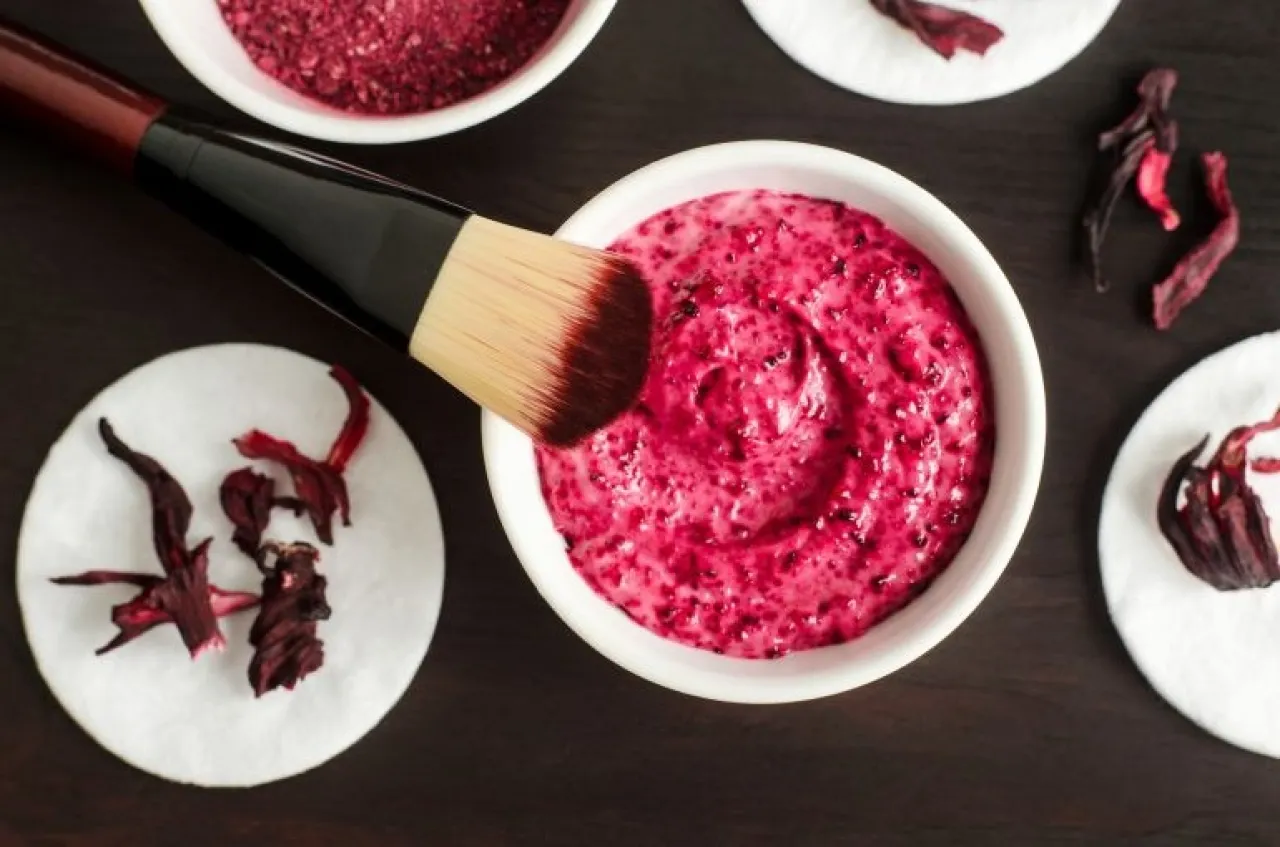
Hibiscus Exfoliating Mask
For smoother skin:
- Mix dried hibiscus petal powder with a bit of yogurt or honey to make a paste.
- Apply it to your face and leave it for 10-15 minutes before washing.
This mask works to remove dead cells and purify pores thanks to the natural acids it contains.
Refreshing Hibiscus Toner for Improved Skin Appearance
Boil hibiscus petals in water and let them cool, then strain the liquid and put it in a spray bottle. Use the toner after washing the face to tighten pores and moisturize the skin and reduce inflammation.
Hibiscus Body Scrub for Removing Dead Skin Cells
Mix sugar or salt with plant oil and hibiscus powder to prepare a natural scrub. Massage the skin gently in circular motions under the shower to remove dead cells and improve blood circulation.
Various Mask Recipes
You can prepare hibiscus masks by mixing it with other beneficial ingredients:
- Yogurt with hibiscus: Helps moisturize and deeply exfoliate the skin.
- Milk and honey with hibiscus: Provides a nutritious mix for the skin, enhancing its radiance and softness.
Not Just for the Skin – But for the Hair Too
The benefits of hibiscus are not limited to the skin alone, but its positive effects also extend to the health of the hair and scalp, making it a common ingredient in traditional recipes and natural hair care products.
Containing amino acids, vitamin C, and antioxidants, hibiscus helps strengthen hair follicles, stimulate hair growth, and improve its overall appearance.
Benefits of Hibiscus for the Hair
1 - Stimulating hair growth and reducing fall: Active compounds in hibiscus help activate blood circulation in the scalp, supporting follicle nourishment and reducing hair fall associated with weakness or stress.
2 - Strengthening hair and improving its density: Hibiscus enhances hair structure, reducing split ends and giving the hair a denser and more vibrant appearance with regular use.
3 - Moisturizing dry hair and improving its texture: Hibiscus acts as a natural moisturizing ingredient, helping to restore smoothness to dry or heat-styled damaged hair.
4 - Scalp care: Its antioxidant and soothing properties may help reduce dandruff and scalp irritation, achieving a better balance of natural oils.
How to Use Hibiscus for the Hair
- Hibiscus hair mask: Prepare by mixing hibiscus leaf or petal powder with coconut oil or yogurt, and apply to the scalp and hair for 20-30 minutes before washing. This mask helps nourish and strengthen the hair.
- Hibiscus hair rinse: Boil hibiscus petals in water, let them cool, then use the liquid to rinse the hair after shampooing. This adds a natural shine and improves scalp health.
- Hibiscus oil for hair: Steep dried hibiscus in plant oil (such as sesame or coconut oil) and use for massaging the scalp, supporting hair growth and reducing dryness.
Important Tips When Using Hibiscus
- Safe repetition: Use hibiscus masks two to three times weekly only to avoid dryness or sensitization, especially for those with sensitive skin.
- Allergy test: Before full use, test the mask on a small area of the skin to ensure no irritation occurs.
- Sun protection: Avoid direct sun exposure after exfoliating, and use sunscreen to protect the newly sensitive skin from external factors.