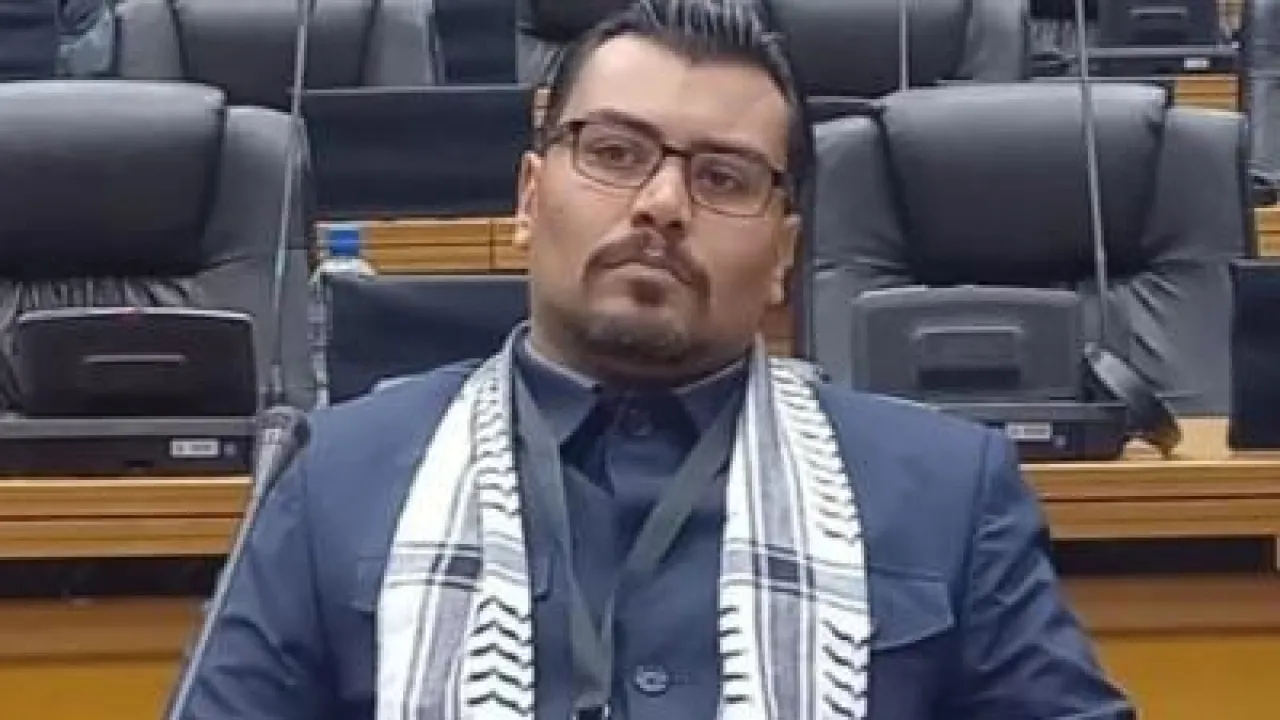
Khaberni - The Tunisian judiciary issued, on Friday, an arrest warrant against the parliament deputy Ahmed Saidani, following a post he published on Facebook where he criticized President Kais Saied in a sarcastic tone, as stated by his lawyer Hussam al-Din Ben Attia.
The security authorities had arrested Saidani on the past Wednesday in the state of Bizerte in the north of the country, before the public prosecutor at the Tunis Primary Court decided to issue an arrest warrant against him on charges of "offending others via social networks," based on Article 86 of the Communications Act.
This article punishes with imprisonment from one to two years and a fine ranging between 100 and 1000 Tunisian dinars (approximately 34 to 345 US dollars).
The lawyer explained that the first judicial session to look into the case was set for next Thursday, noting that his client had been imprisoned pending his trial.
Saidani's Post
The issue goes back to a post Saidani wrote last Tuesday commenting on Saied's meeting with two ministers against the backdrop of heavy rains and floods that caused damage to infrastructure in several regions.
The deputy mockingly wrote that "the president has decided to officially expand his jurisdiction to roads and sewers," adding that "the new title will be the Supreme Leader of Sanitation and Rainwater Drainage," before he continued in an extended post criticizing what he described as the president's direct supervision of service details.
Saidani heads the "National Sovereign Line" bloc inside the parliament, a bloc known for supporting the president's policies, and he was among the supporters of the July 25, 2021, measures, which enabled Saied to obtain all powers, making his arrest raise further questions about the allowable margin of criticism even within the camp supporting the authority.
In a parallel development, the office of the People’s Representatives Council called in a statement for respecting the constitutional guarantees provided to deputies in any judicial proceedings, emphasizing the importance of adhering to legal procedures, although the new constitution ratified in 2022 practically facilitated the lifting of parliamentary immunity.
This case comes amid escalating criticisms from Tunisian and international human rights organizations speaking of a decline in public freedoms since concentrating powers in the hands of the president, which Saied denies, asserting that his measures aim to "protect the state" without infringing on rights.