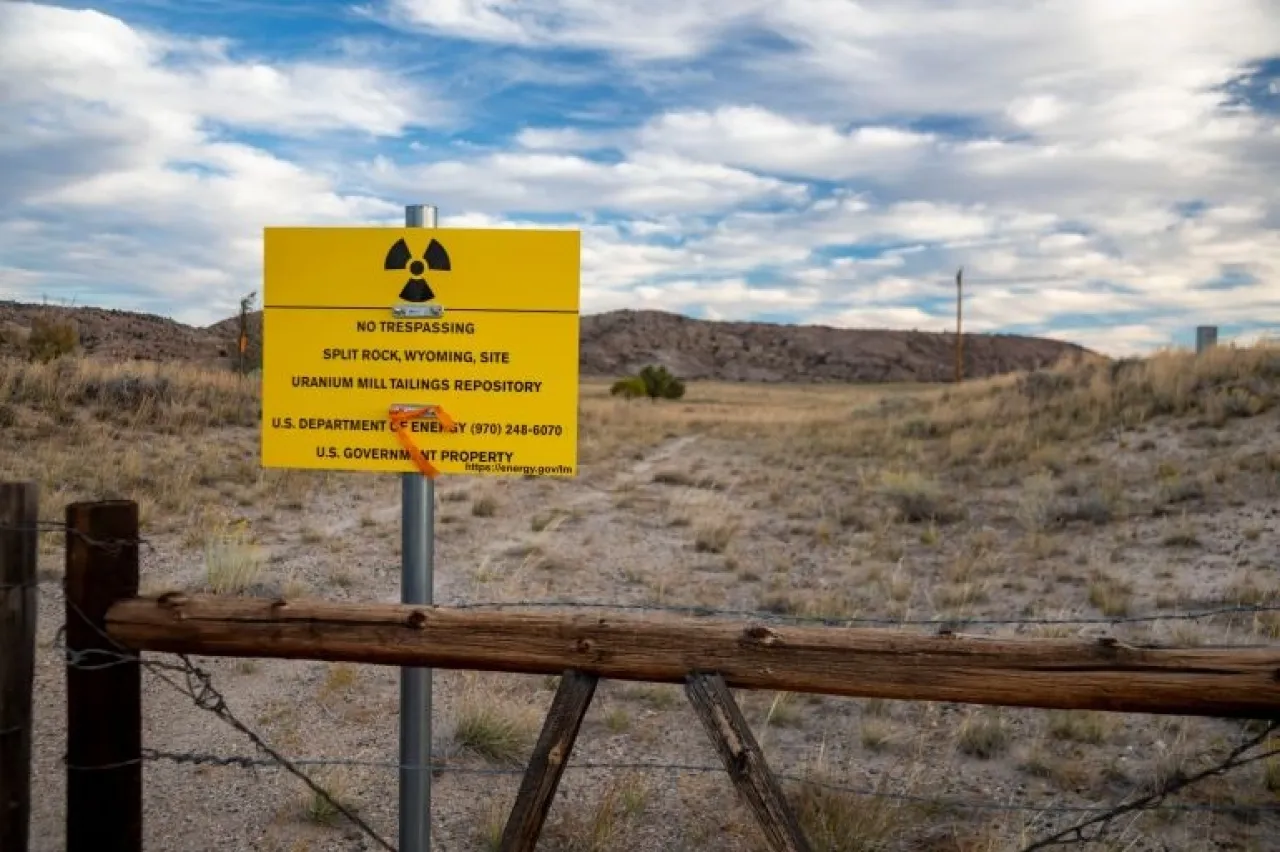
Khaberni - The steps of the administration of US President Donald Trump are accelerating to construct a new generation of small nuclear reactors to meet the huge demand for energy in the "era of artificial intelligence", but this ambition collides with an old and recurring dilemma: where to bury the highly toxic waste?
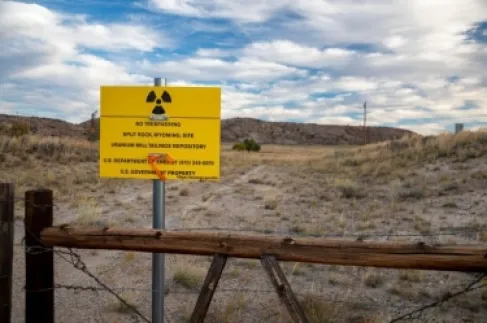
The American plan relies on an old strategy that involves burial in a "very deep hole," but the problem is the absence of a sufficiently deep hole, while the stock of about 100,000 tons of radioactive waste continues to increase.
"Volunteering"
To solve this dilemma, the US Department of Energy has proposed a plan that could be described as the "radiant carrot," where states are asked to "volunteer" to host a permanent geological repository, in exchange for a huge package of incentives including building new nuclear reactors, waste reprocessing facilities, and uranium enrichment, as well as advanced data centers.
States have 60 days to respond to this proposal, which puts decisions in the hands of local communities in exchange for investments worth tens of billions. While states like Utah and Tennessee have shown initial interest, Lake Barrett, a former official at the Nuclear Regulatory Commission, described the move as "placing huge incentives next to an unwanted waste facility."
The 400 Gigawatt Ambition
Trump aims to increase U.S. nuclear power capacity by fourfold to reach 400 gigawatts by 2050 to meet the rising demand from data centers and the shift to electric vehicles.
However, this ambition collides with a legacy of failure, as since 1983, Washington has been searching for a permanent facility and settled on "Yucca Mountain" in Nevada in 1987, before funding was stopped by former President Barack Obama in 2010 due to local opposition and safety concerns, despite spending $15 billion.
Studies in America and Europe affirm that "public acceptance" of nuclear energy remains conditional on an explicit commitment to burying the waste deep underground, while the United States still lacks a permanent deep repository in operation.
International Race and Technical Gaps
Countries like the UK, Canada, China, and Sweden support "small modular reactors" for their ease of construction and quick assembly. Despite Washington's support for 11 new designs, experts warn that designers are not obligated to integrate waste solutions into the initial design.
According to Seth Tuler, a former member of the Technical Panel for Nuclear Waste Review, "This rush to innovate without thinking about the entire system bodes very badly."
Research shows that these reactors could produce amounts of waste comparable to or exceeding large reactors, potentially turning new nuclear sites into "temporary" dumps that could last for more than a century, according to the U.S. Nuclear Regulatory Commission.
The Reprocessing Bet
While France sends part of its spent fuel to reprocessing facilities in "La Hague" in the Normandy region, most American waste remains stored near the reactors themselves, initially in cooling pools and then in concrete and steel containers.
According to Ross Matzkin-Bridger, a former official at the Department of Energy, past attempts at reprocessing have failed and caused security risks and high costs, noting that countries that reprocess succeed at a very low rate (0-2%).
With an addition of 2,000 tons annually, taxpayers continue to bear the bill, having paid $11.1 billion by the end of 2024 as compensation for storing fuel that remains harmful for hundreds of thousands of years.