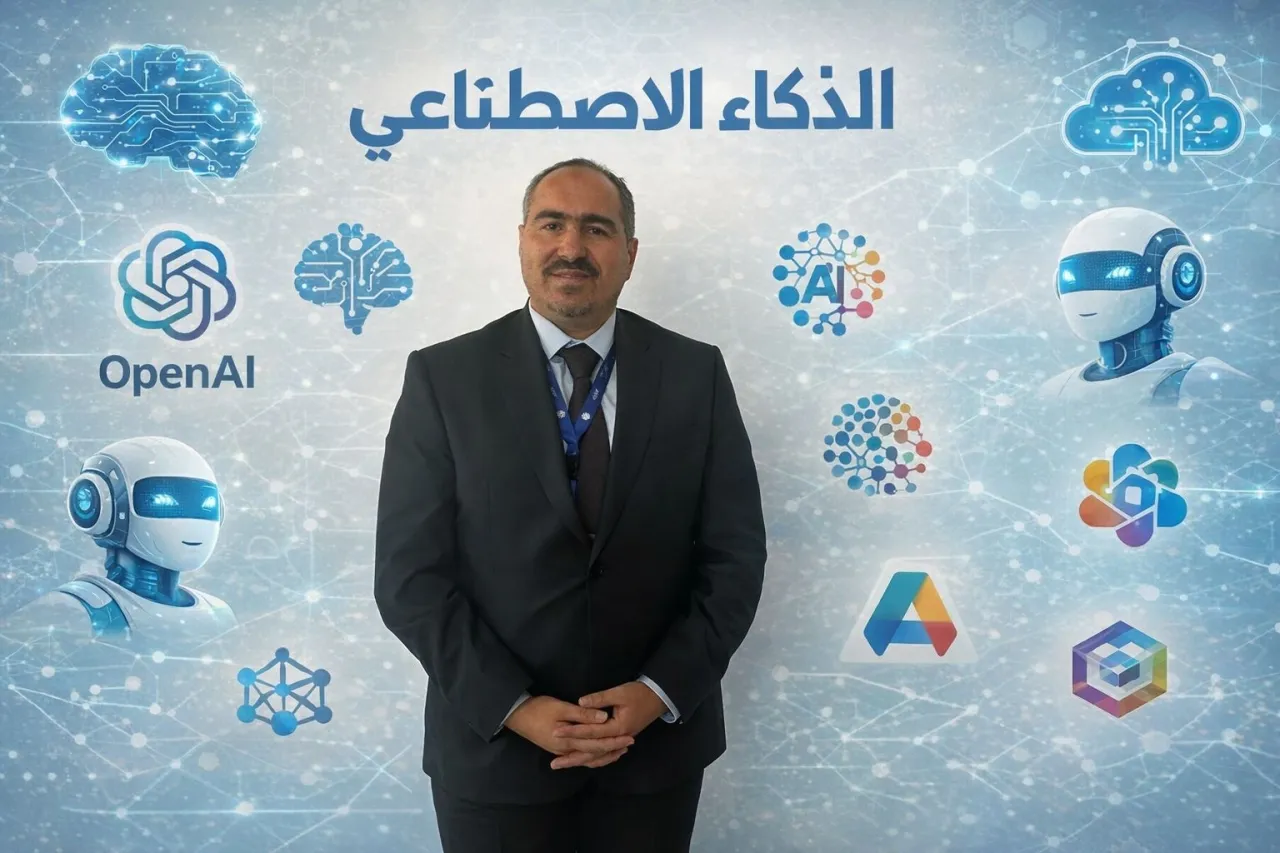
Artificial Intelligence (AI) today is present in nearly everything and our daily work: in education, in administration, in finance, and even in how we think and make decisions. The question is no longer whether we will use AI, but more importantly: how do we use it without losing our role as humans?
AI is fast, accurate, and tireless. It analyzes thousands of data points in moments and suggests solutions that seem “perfect.” But all this does not mean it understands what it is doing. Remember, it doesn’t feel, it doesn’t appreciate circumstances, and it doesn’t bear the consequences of decisions. This is exactly where the responsibility of the human element begins. The problem is not with AI itself, but in the way we rely on it as if its outputs are the absolute truth even though it tells us to check behind it before trusting.
In education, for example, AI can be a magnificent tool. It can tailor content for each student, track their progress, and quickly identify weaknesses. But it doesn’t know when a student is frustrated, when they need encouragement, or how trust between a teacher and a student is built. Education is not just about information; it’s fundamentally a human relationship. AI assists teachers, but it cannot replace them.
In management, the picture is similar. Institutions use AI to analyze performance, predict risks, and measure efficiency. Everything becomes numbers and graphs. But real management is not governed by numbers alone. Management decisions affect employees, teams, and the entire culture. Sometimes the decision that is “right” on paper is the wrong decision in reality. This is where the role of the aware manager comes in, who knows when to listen to technology and when to go beyond it.
AI is excellent at answering, but it is not good at asking questions. It is humans who know what needs to be asked in the first place.
Is the problem real or just a symptom? Is the solution appropriate right now? And are its results consistent with our values and goals? Without these questions, even the strongest algorithms are just meaningless tools.
Excessive reliance on AI can create a dangerous illusion: the illusion of accuracy and impartiality. Models are influenced by the data they were trained on and may carry hidden biases. The human mind here is not a burden, but a necessity for review, balance, and correction.
In the end, AI is not a substitute for humans, but a test for them. A test of their awareness, wisdom, and ability to use technological power without losing their humanity. Powerful technology needs a stronger mind to guide it and clearer values to steer its course.
Using AI with human intelligence means benefiting from its speed without compromising our wisdom, using it as a helper tool, not as a leader, and always remembering that the future is not built with technology alone, but by the humans who know when to use it… and when to stop.