Khaberni - At tens of thousands of meters high, airplanes traverse their routes under harsh climate conditions, making every tiny detail in the plane's manufacturing subjected to precise calculations.
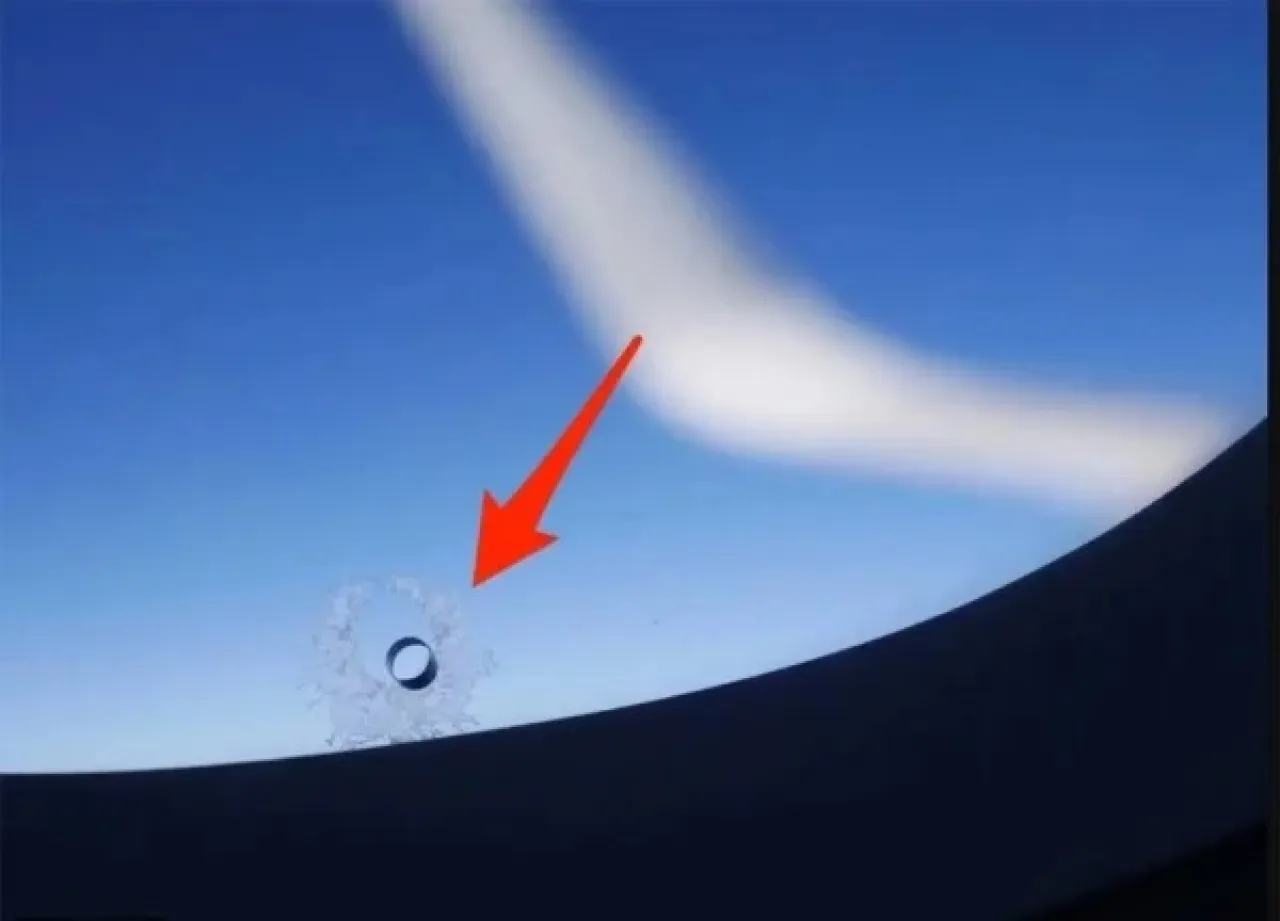
Near the base of the airplane window, there is a small mysterious hole known as the vent hole or air release hole, which is there for a very good reason.
When an airplane flies at an altitude of 10,600 meters (35,000 feet) above the ground, the external air pressure drops to about 1.5 kilograms per square inch, a level too low to allow humans to stay conscious. To maintain passenger safety and prevent loss of consciousness, the cabin air pressure is artificially set at around 3.6 kilograms per square inch.
This causes a physical pressure because high pressure always moves toward low pressure, causing the air inside the cabin to continuously push against its inner walls. Since the windows are weaker than the metal structure, they are weak points where pressure might concentrate, hence engineers designed them with a simple and distinctive technique according to iflscience.
To address the pressure issue, most commercial airplane windows are made of three layers of thick, durable synthetic resin. Only the outer and middle layers are structural, designed to withstand severe temperature changes and the significant difference in pressure between the passenger cabin and the outside world.
The inner layer (which you can touch from your seat) primarily functions to protect the other two layers from scratches, dirt, and impacts that passengers might cause; it essentially acts as a dust cover and is not as tightly sealed as the other two layers, allowing some air to pass around it. It is usually located in the middle glass, and its function is to allow the flow of cabin air into the small gap between the middle and outer layers.
This ensures that the cabin pressure is primarily focused on the outer glass, designed to be the strongest. In the rare event that the outer glass is damaged, the middle glass remains sturdy enough to withstand the pressure.
The small hole also helps regulate the temperature in the gap between the glass panes. When the plane climbs or descends, it experiences severe temperature changes, and if the air gap between the panels were completely sealed, the thermal expansion or contraction of the trapped air could cause additional pressure on the window layers. By allowing small amounts of air to leak through the hole, the pressure inside the gap can be slightly adjusted with temperature changes, reducing the risk of cracking or deformation.