Khaberni - Stroke survivors often experience long-term problems in their arms, and the condition of both arms may deteriorate together.
When one arm is severely affected, using the other arm also becomes difficult, making even simple tasks exhausting and demotivating.
Compared to the dominant hand of a healthy person, stroke survivors may take three times longer to complete daily tasks using their less affected arm. Many of them have to rely almost completely on this arm for eating, dressing, and doing household tasks.
What is a Stroke?
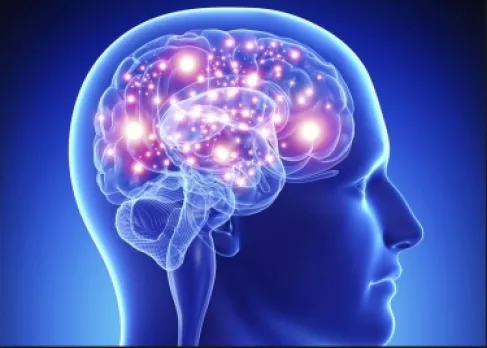
A stroke occurs when the flow of oxygen-rich blood to part of the brain is interrupted due to a blockage in a blood vessel or bleeding, resulting in brain cell death.
Since each side of the brain controls the opposite side of the body, a stroke often causes motor weakness in the arm opposite the affected side. Therefore, traditional rehabilitation programs have focused on restoring movement to the more severely affected arm.
However, recent research has shown that both sides of the brain contribute to controlling the movements of both arms, and damage to one side of the brain can affect both arms. Consequently, the "less affected" arm also becomes abnormal, suffering from reduced strength, slower movement, and poor motor coordination.
Training the Less Affected Arm
In a clinical trial involving more than 50 people with chronic stroke and severe disabilities in one arm, participants were randomly assigned to two groups: one trained the more affected arm, while the other trained the less affected arm. Both groups received five weeks of therapy that included challenging manual movements, realistic tasks, and virtual reality simulations to improve coordination and timing.
The results showed that participants who trained their less affected arm became faster and more efficient in performing daily tasks, such as picking up small objects or lifting a cup, and this improvement lasted for six months after the training.
This lasting improvement is likely due to a feedback loop: as the function of the arm improves, its use in everyday life increases, which reinforces the training and helps to solidify the gains.
While rehabilitation has long focused on the more affected arm, many do not fully recover its function and are forced to rely on the less affected arm. However, this arm is not completely "intact," and any problems it has affect the person's independence and quality of life.
Improving the performance of this arm makes daily tasks faster, easier, and less exhausting, even years after suffering a stroke.
Future research focuses on integrating training for the less affected arm with standard therapy programs for the more affected arm, and how to apply these methods in everyday life at home.
For many survivors, recovery may not mean regaining what was lost, but strengthening what remains.
The report is prepared by Candice Mainza, Project Manager and Associate Director for the Center for Translational Neuroscience in Rehabilitation, Pennsylvania State University; and Robert Sainberg, Professor of Kinesiology and Neuroscience, Pennsylvania State University.