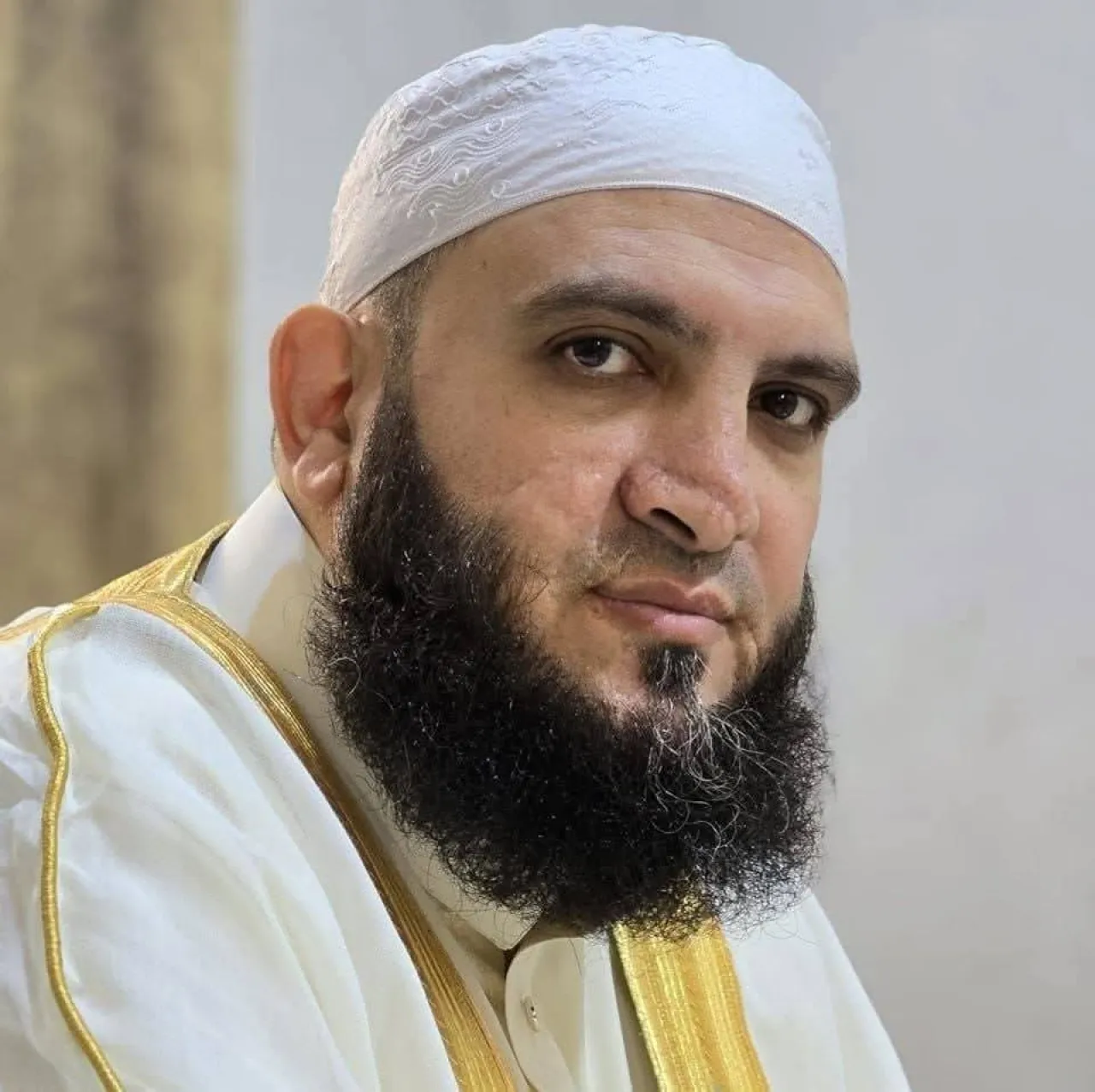
Khaberni - The decision by the Syrian Ministry of Justice to appoint Hassan Al-Aqraa, a graduate of a Sharia institute, as the head of the Military Public Prosecution in Homs governorate has sparked widespread controversy on social media, amidst legal questions about the criteria for appointments in the military judicial corps during the transitional period, especially since the decision was issued without an official announcement or circulation through the ministry's identifiers.
Al-Aqraa previously held judicial positions in both the Ministry of Justice of the Syrian Interim Government and the Salvation Government, which was considered the civilian arm of the "Hay'at Tahrir al-Sham", and later held the position of Chief Justice in Homs before being named to his new position.
The decision was based on the Judicial Authority Law of 1961 and its amendments, and the Basic Employees Law of 1945, in addition to the decision of the Supreme Judicial Council No. (100) issued on February 2, 2026.
The decision also included a series of judicial changes, which included the abolition of the Fifth Misdemeanor Court of Appeals in Homs Judiciary, the merging of several branch courts, the creation of a fifth Sharia court, as well as transfers involving judges in the Supreme Public Prosecution.
In a legal comment, lawyer Samer Al-Diay, the executive director of the Free Syrian Lawyers Association, explained that the appointment of judges in stable conditions requires a degree in law and a competition through the Judiciary Institute, or years of practicing law followed by an examination and an official appointment.
However, he confirmed that the context of the transitional period and the unification of judicial institutions it witnessed led to appointment models that were based on previous qualifications within the justice ministries of the opposition, including judges with degrees in law and others in Sharia, to ensure the continuity of judicial work.
Al-Diay noted that Al-Aqraa's position is an administrative supervisory role within the Military Public Prosecution, and does not include membership in a ruling body or as a judge in a military criminal court, making its description as a "military judge" inaccurate according to his description.