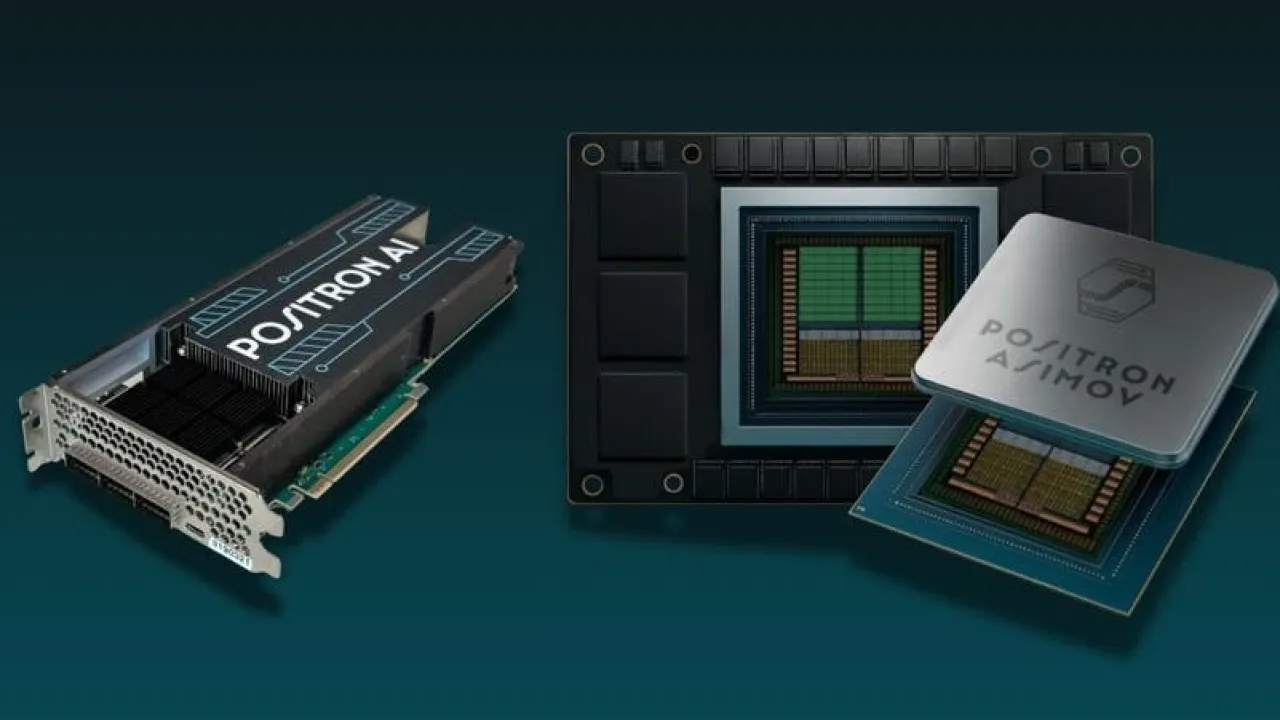
Khaberni - Semiconductor startup Positron has secured $230 million in a Series B funding round.
The company plans to use the funds to accelerate the rollout of high-speed memory chips, a key component in artificial intelligence processing chips.
Among the investors in the round is the Qatar Investment Authority (QIA), which is increasingly focusing on developing artificial intelligence infrastructure, reflecting the country's ambition to transform itself into a major hub for AI services in the region.
This funding round comes as major service providers and AI companies seek to reduce their reliance on “Nvidia,” the pioneering leader in this field, according to a report published by "TechCrunch".
These companies include “OpenAI,” which, despite being one of Nvidia’s biggest customers, has expressed dissatisfaction with some of the company's recent chips and began seeking alternatives last year.
Qatar's support for companies like “Positron” reflects a broader strategy to build sovereign artificial intelligence infrastructure, a priority highlighted at this week's Web Summit Qatar in Doha.
This strategy was manifested through massive commitments, the most notable being a $20 billion joint venture for artificial intelligence infrastructure with Brookfield Asset Management, announced last September.
Thus, the total capital raised by “Positron” since its inception three years ago amounts to over $300 million, after raising $75 million last year from investors like Valor Equity Partners, Atreides Management, DFJ Growth, Flume Ventures, and Resilience Reserve.
“Positron” says that its first generation “Atlas” chip, manufactured in Arizona, is capable of matching the performance of Nvidia’s H100 graphics processing units with less than one-third of the energy consumption.
The company focuses on inference operations, the computations required to run artificial intelligence models in practical applications, rather than training on large models, in a step that responds to the increasing demand for inference devices as companies shift from building large models to deploying them on a broad scale.
Sources indicate that “Positron” chips not only excel in memory but also show strong performance in video processing and high frequencies, placing them in a strong competitive position in a fast-growing market.