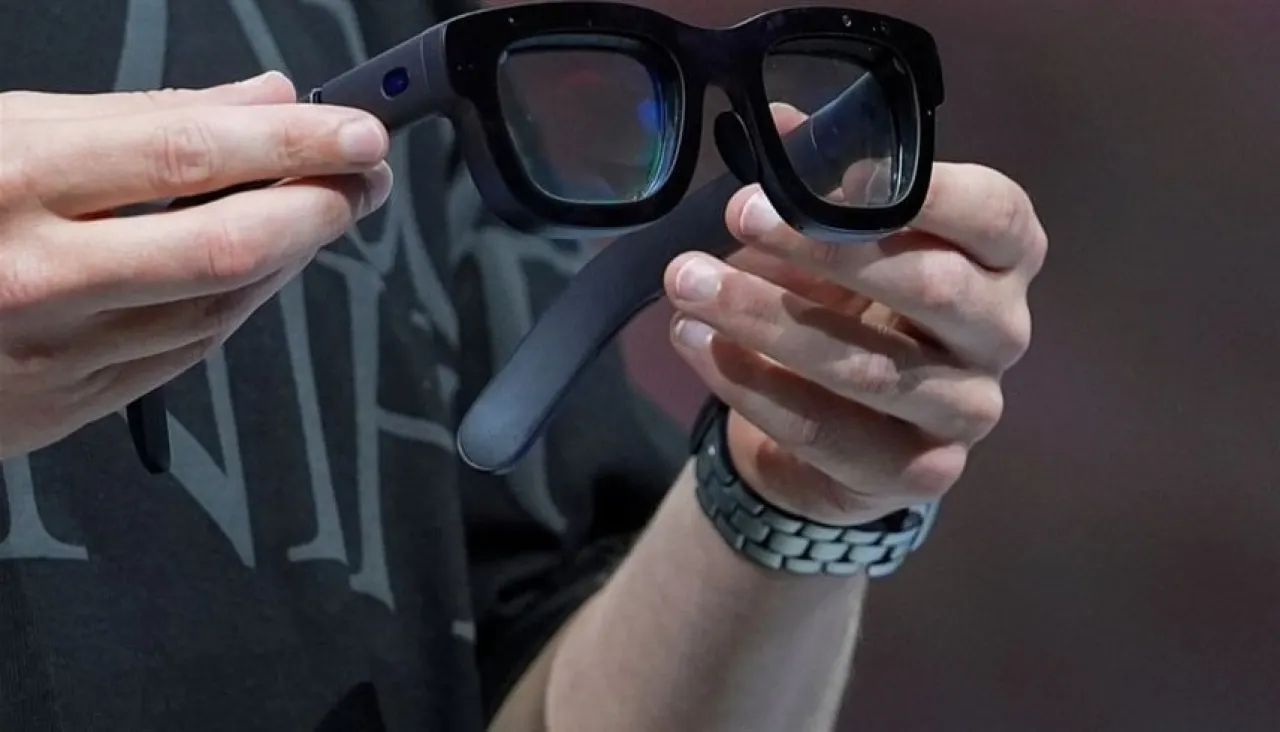
Khaberni - Smart glasses, originally designed to facilitate daily life through hands-free photo capture, instant translation, and voice assistance, have become an increasing source of concern for women in a number of countries, following repeated instances of discreetly photographing women in public places and sharing the footage on social media platforms without their knowledge.
According to the "India Today" newspaper in recent months, complaints have escalated in both the United States and Britain from women who were shocked to find clips of themselves on "Instagram" and "TikTok", filmed via smart glasses equipped with precise cameras, while they were on the public street, the beach, or shopping centers, turning these private moments into material for derogatory comments.
Systematic Targeting
According to media reports, those engaging in this behavior are dubbed "seduction artists", and this practice relies on targeting women in public places, documenting their interactions often in moments of distraction or inattention, then resharing it on social media under the label "social content". Experts believe that these videos, although marketed as "entertainment content", clearly carry a gross violation of privacy and clearly fall under the scope of emotional and verbal harassment.
The concern is no longer hypothetical, as Britain witnessed a shocking case where a woman filed a lawsuit against a man who recorded inappropriate scenes without her knowledge using smart glasses, and despite the proof, he was not sentenced to imprisonment, sparking a wide debate about the weakness of current laws in deterring this type of crime.
In the United States, a popular content creator collapsed after discovering she had been filmed inside a store using smart glasses, describing the experience as "horrific", and confirmed she had not known about the recording at all.
Legal Gap
Experts believe that the fundamental problem lies in the gap between the advancement of technology and the slowness of legislative processes. In many countries, it is legally permissible to film people in public places as long as there is no "reasonable expectation of privacy", a principle that has been widely criticized with the spread of wearable cameras.
Despite some companies, such as those producing Ray-Ban smart glasses, adding small light indicators during recording, experts confirm that these signals are often unnoticeable.
The concerns are not limited to the West, as countries like India have begun facing the same issue, amidst warnings of the absence of legal mechanisms that allow individuals to find out if they have been filmed or to demand the deletion of clips, even in religious places.
This development has led some entities, like cruise ship companies, to ban smart glasses onboard their vessels, reflecting the growing global concern.
In the absence of quick solutions, specialists affirm that community awareness is the first line of defense, by recognizing these devices and being mindful of their uses, without falling into obsession or exaggerated fear.
On the other hand, calls for updating laws, and implementing strict regulations for recording people in public places, and obligating companies to design technologies that truly, not just theoretically, protect privacy are increasing.